
Loading, please wait...

LOT 1170
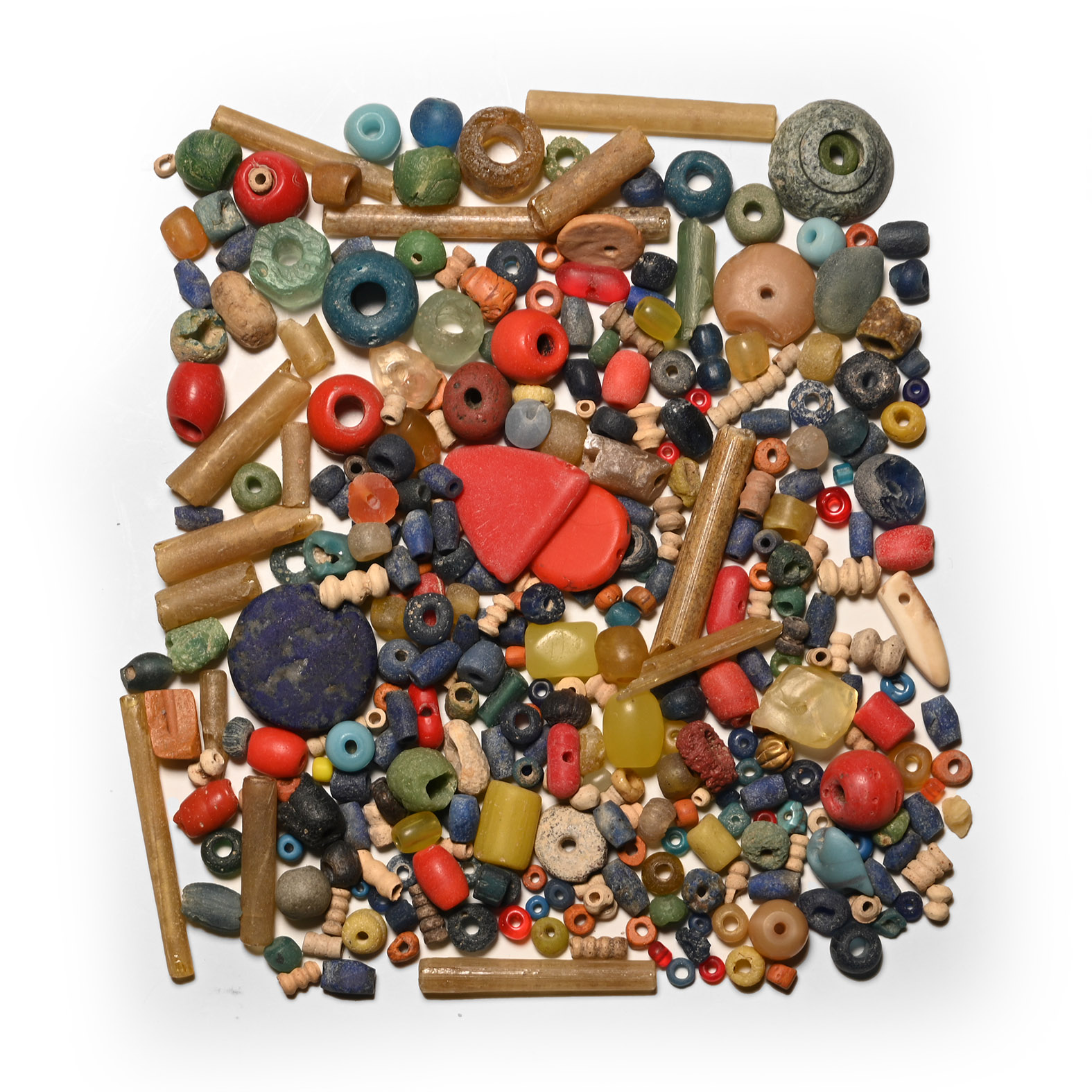
Ancient Bead Group
1ST MILLENNIUM B.C. AND LATER
1/8 - 1 1/2 in. (58 grams total, 2-39 mm).
Comprising beads in various materials and shapes, including some larger beads. [No Reserve]
ProvenanceEx property of a late Japanese collector, 1970-2000s.
CONDITIONTimeLine Auctions follows a vetting process to ensure the authenticity and legality of all items, reinforcing our commitment to integrity and responsible trading. Each antiquity, antique, and coin lot undergoes thorough examination by a vetting committee of at least ten external specialists, professional trade association members, scientists, and archaeologists: Our Vetting Process
AUCTIONS:
TimeLine is a leading auction house specialising in antiquities, ancient art, collectables, natural history, coins, medals, and books. Our auctions offer museums, collectors, historians, and enthusiasts the opportunity to acquire unique and historically significant pieces.
-
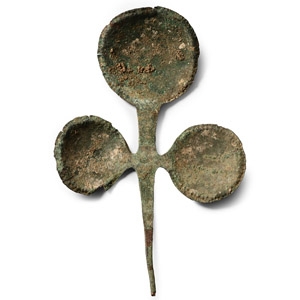
Luristan Bronze Pin with Petals
13th-7th century B.C.Sold for (Inc. bp): £78
Trefoil head of a dress pin with large dished roundel at the top and two smaller ones to the sides. 27 grams, 13.3 cm
From a collection of a gentleman, acquired on the London art market in the 1990s. -

Western Asiatic Terracotta Vessel with Double Strap Handle
Middle-Late Bronze Age, 2nd-1st millennium B.C.Sold for (Inc. bp): £91
Barrel-shaped in profile with double-strap transverse handle, thick spout to the shoulder. 713 grams, 16 cm
From a collection acquired on the UK art market from various auction houses and collections mostly before 2000. From an important Cambridgeshire estate; thence by descent. -
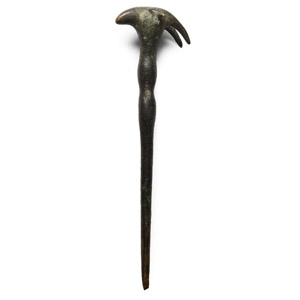
Hasanlu Bronze Pin with Ram's Head Finial
9th-8th century B.C.Sold for (Inc. bp): £130
With a tapering round-section shank, finial topped with a ram's head. 110 grams, 16.5 cm
From the collection of late George Withers, UK. Acquired from Dore and Rees, UK. Property of Mr A.B., an American collector.
The corpus of pins from Hasanlu includes simple plain pins, pins with lion's head and other zoomorphic pins. The zoomorphic pins were either cast onto a bronze shank or the pin was inserted into a hollow of the head. A third category was that of the pins cast in one piece, like our specimen, representing a goat or mouflon, an animal often depicted in the North-West Persian material culture.
