
Loading, please wait...

LOT 2132
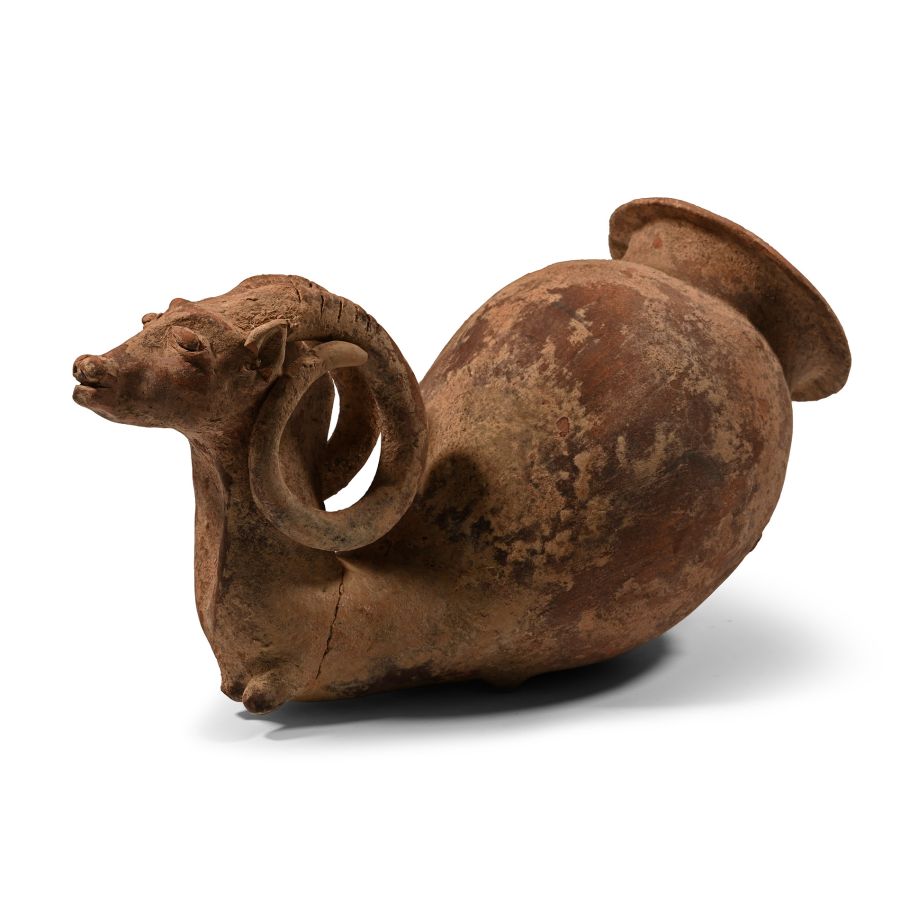
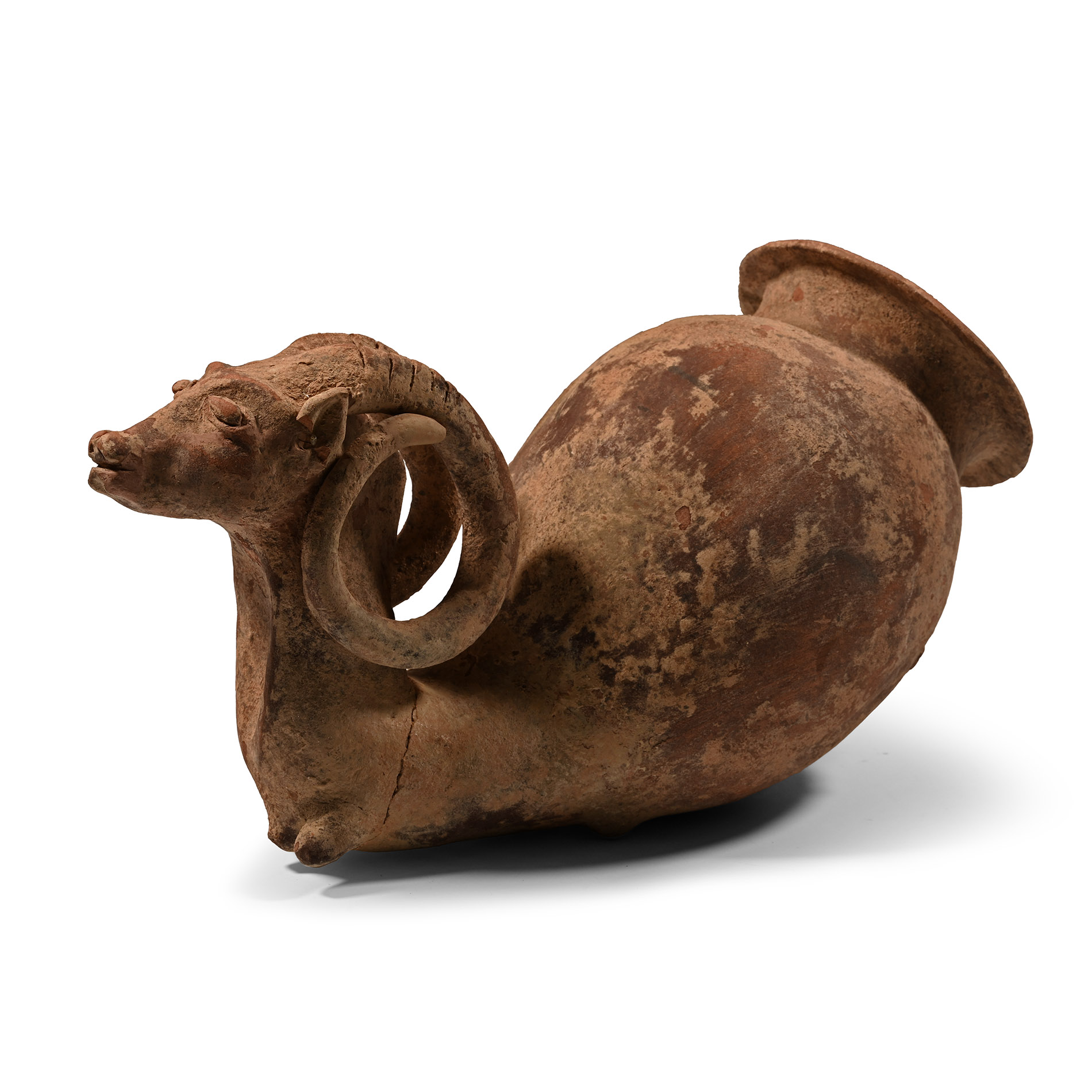
Anatolian Style Terracotta Rhyton
20TH CENTURY A.D.
12 1/4 in. (1 kg, 31 cm).
With trumpet-shaped mouth and barrel-shaped body, ibex-shaped finial with coiled horns and legs folded beneath the body, spout to the chest, repaired; after the antique. [No Reserve]
ProvenanceAcquired on the UK art market.
Property of a North London, UK, gentleman.
TimeLine Auctions follows a vetting process to ensure the authenticity and legality of all items, reinforcing our commitment to integrity and responsible trading. Each antiquity, antique, and coin lot undergoes thorough examination by a vetting committee of at least ten external specialists, professional trade association members, scientists, and archaeologists: Our Vetting Process
AUCTIONS:
TimeLine is a leading auction house specialising in antiquities, ancient art, collectables, natural history, coins, medals, and books. Our auctions offer museums, collectors, historians, and enthusiasts the opportunity to acquire unique and historically significant pieces.
-
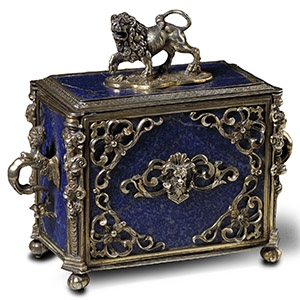
Gilt Bronze Casket with Lapis Lazuli Panels
19th century A.D.Sold for (Inc. bp): £1,105
Rectangular casket with hinged lid and melon-bead feet; four sides and lid with inset lapis lazuli panel in a gilt frame, caryatid to each corner, applied openwork ribbons and rosettes, handle of lid formed as an advancing lion, loop handle on each end formed as a harpy. 645 grams, 14.5 cm wide
Private collection, England. -
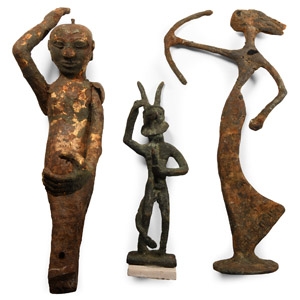
Bronze and Iron Statue Group
20th century A.D.Sold for (Inc. bp): £65
Including a demon gripping his phallus and other types. 4.3 kg total, 21-31 cm
From a collection acquired on the UK art market from various auction houses and collections mostly before 2000. From an important Cambridgeshire estate; thence by descent. -
.jpg)
Bronze Astrolabe
20th century A.D.Sold for (Inc. bp): £390
Composed of three circular quadrants, the body surmounted with an openwork panel incised with a floral motif and set with small blue glass cabochons; suspension loop. 1.25 kg, 24 cm
UK gallery, early 2000s.
