
Loading, please wait...
LOT 1166
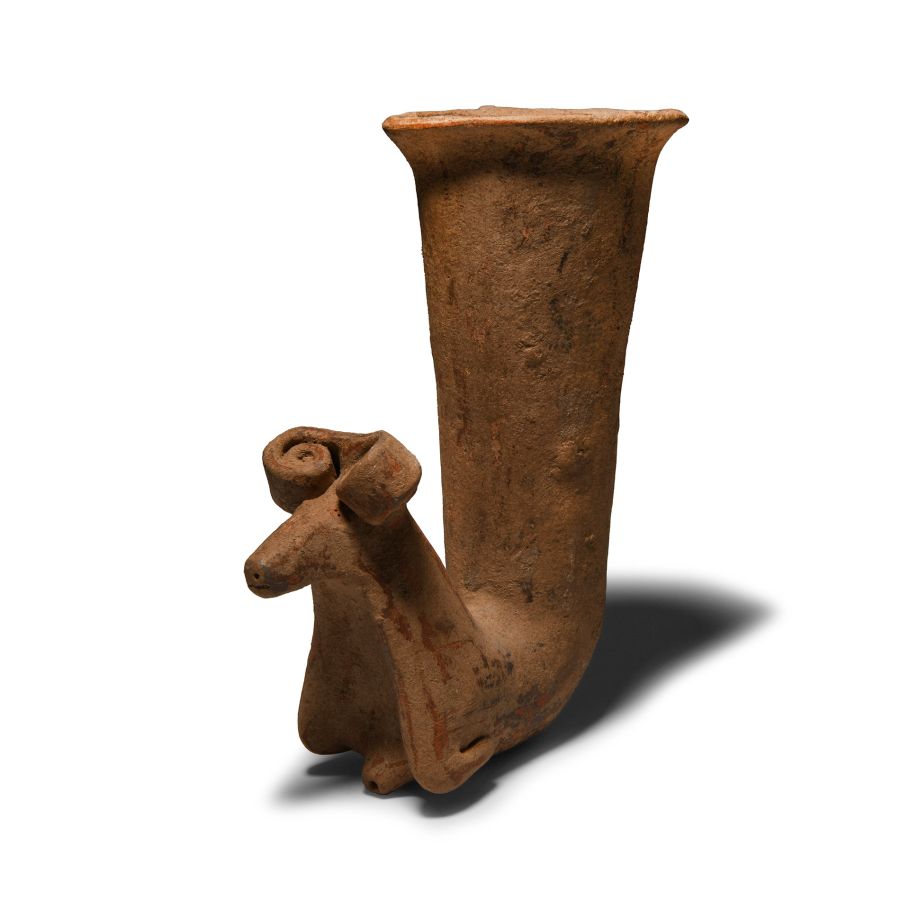
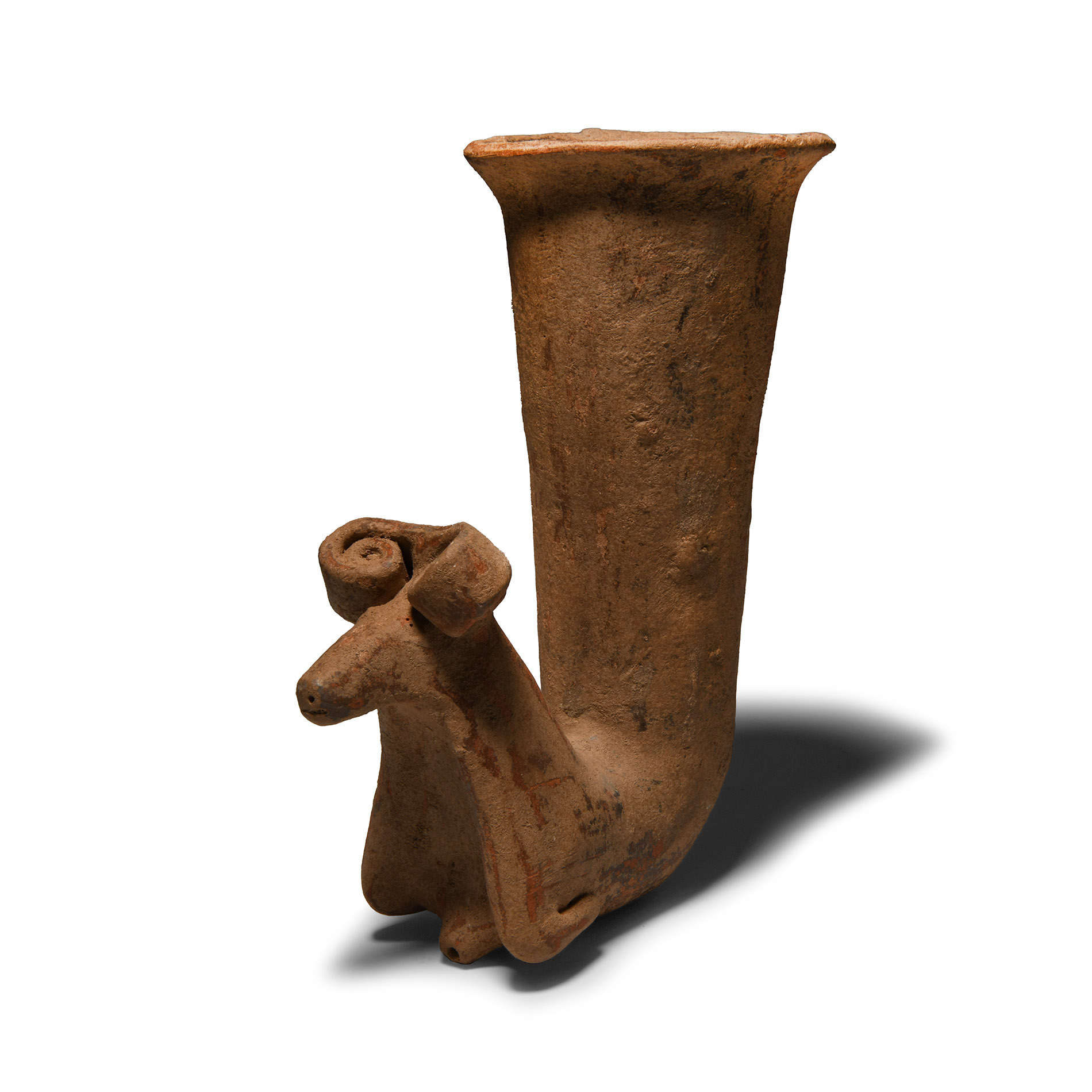
Anatolian Style Terracotta Rhyton
20TH CENTURY A.D.
7 5/8 in. (491 grams, 19.3 cm).
With tapering body and everted rim, zoomorphic finial with legs folded beneath the body, coiled horns and small spout at the chest. [No Reserve]
ProvenanceEx London, UK, gentleman's collection.
Property of a North London gentleman.
TimeLine Auctions follows a vetting process to ensure the authenticity and legality of all items, reinforcing our commitment to integrity and responsible trading. Each antiquity, antique, and coin lot undergoes thorough examination by a vetting committee of at least ten external specialists, professional trade association members, scientists, and archaeologists: Our Vetting Process
AUCTIONS:
TimeLine is a leading auction house specialising in antiquities, ancient art, collectables, natural history, coins, medals, and books. Our auctions offer museums, collectors, historians, and enthusiasts the opportunity to acquire unique and historically significant pieces.
-
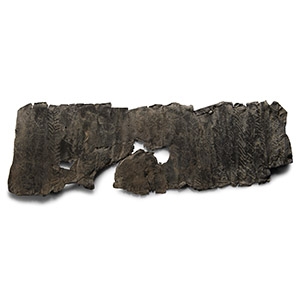
Aramaic Lead Magical Scroll
2nd-8th century A.D.Estimate: £400 - 600 (+bp*)
Opening Bid: £210
An unrolled irregular rectangular lead panel with lightly incised Aramaic script text and figures; herringbone borders. 31 grams, 18.5 cm
Collected from 1969-1999. From the collection of the late Mr S.M., London, UK. -
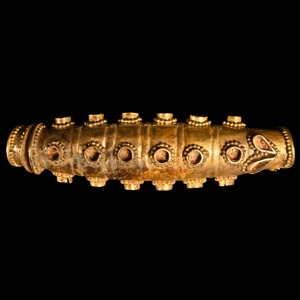
Western Asiatic Gold Necklace Element
2nd-1st millennium B.C.Estimate: £600 - 800 (+bp*)
Opening Bid: £300
Slightly curved hollow-formed decorative element from a necklace or collar, with three rows of cells to the segmented body each with a granulated collar, two lentoid eyes two one end and three flanges to the other, open at both ends and plain to the underside. 9.34 grams, 59 mm
From a late Japanese specialist collector, 1970-2000s. -
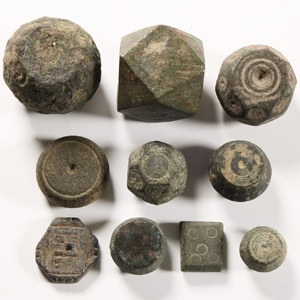
Western Asiatic Bronze Weight Collection
Circa 8th-12th century A.D.Sold for (Inc. bp): £78
Including polyhedral, barrel-shaped, tabular and other types, most with impressed markings. 216 grams total, 9-24 mm
Ex Simmons gallery, London, UK. Ex North London collection, 1990s.
