
Loading, please wait...
LOT 1932
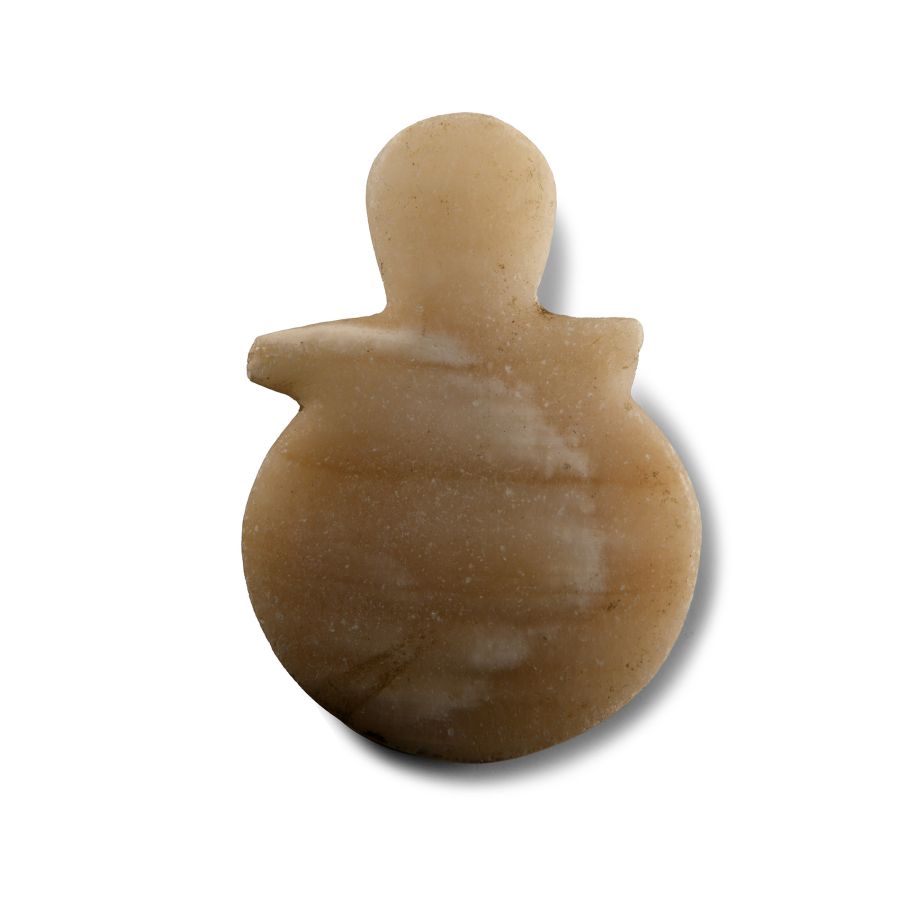
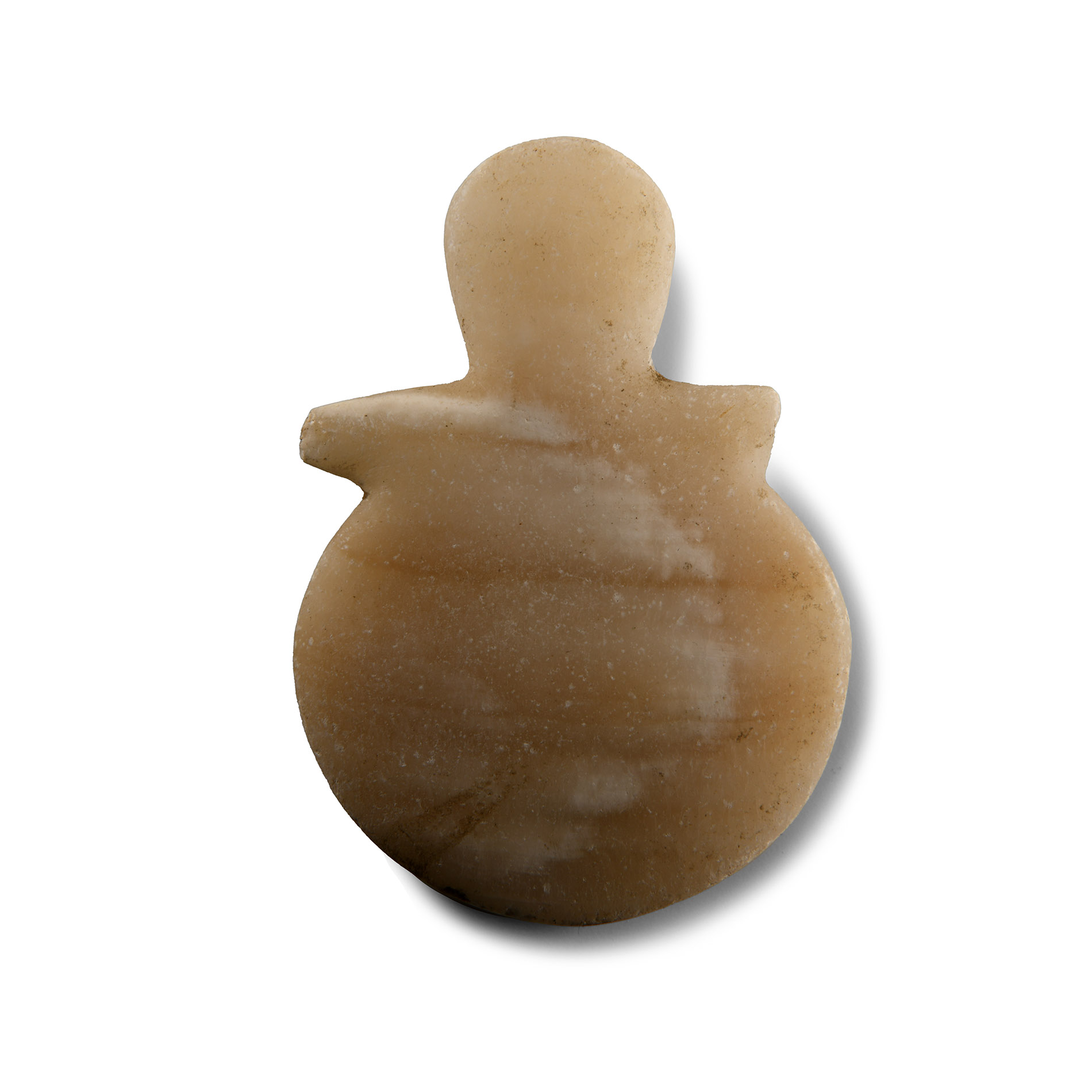
Anatolian Style Alabaster Idol
20TH CENTURY A.D.
3 1/4 in. (86 grams, 84 mm).
Biconvex in profile with discoid body, lateral spurs and saller D-shaped finial; after the antique. [No Reserve]
ProvenanceCollected from 1969-1999.
From the collection of the late Mr S.M., London, UK.
TimeLine Auctions follows a vetting process to ensure the authenticity and legality of all items, reinforcing our commitment to integrity and responsible trading. Each antiquity, antique, and coin lot undergoes thorough examination by a vetting committee of at least ten external specialists, professional trade association members, scientists, and archaeologists: Our Vetting Process
AUCTIONS:
TimeLine is a leading auction house specialising in antiquities, ancient art, collectables, natural history, coins, medals, and books. Our auctions offer museums, collectors, historians, and enthusiasts the opportunity to acquire unique and historically significant pieces.
-
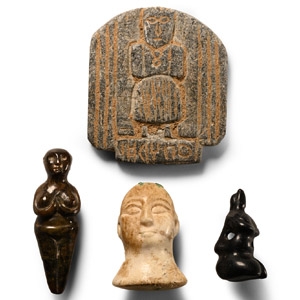
Group of Stone Figurines
20th century A.D.Sold for (Inc. bp): £169
Various types in 1st millennium B.C. style. 41 grams total, 26-45 mm
Collected from 1969-1999. From the collection of the late Mr S.M., London, UK. -
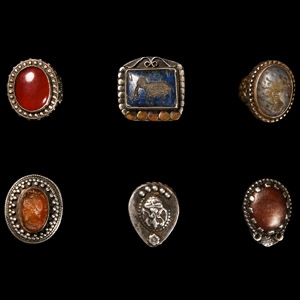
Mixed Ring Group
20th century A.D.Sold for (Inc. bp): £13
Group of silver-coloured metal finger rings including two with inset glass cabochon, one with intaglio profile bearded bust, one with lapis lazuli plaque and incuse elephant, and other types. 105 grams total, 29-32 mm
Property of a South West London gentleman. -
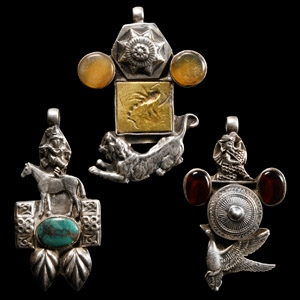
Mixed Pendant Group
20th century A.D.Sold for (Inc. bp): £52
Group of three silver-coloured metal pendants including Ganesha crouching with a drum between two glass cabochons, above a lotiform disc and a goose in flight, and other types. 91 grams total, 75-79 mm
Property of a South West London gentleman.
