
Loading, please wait...
LOT 0235
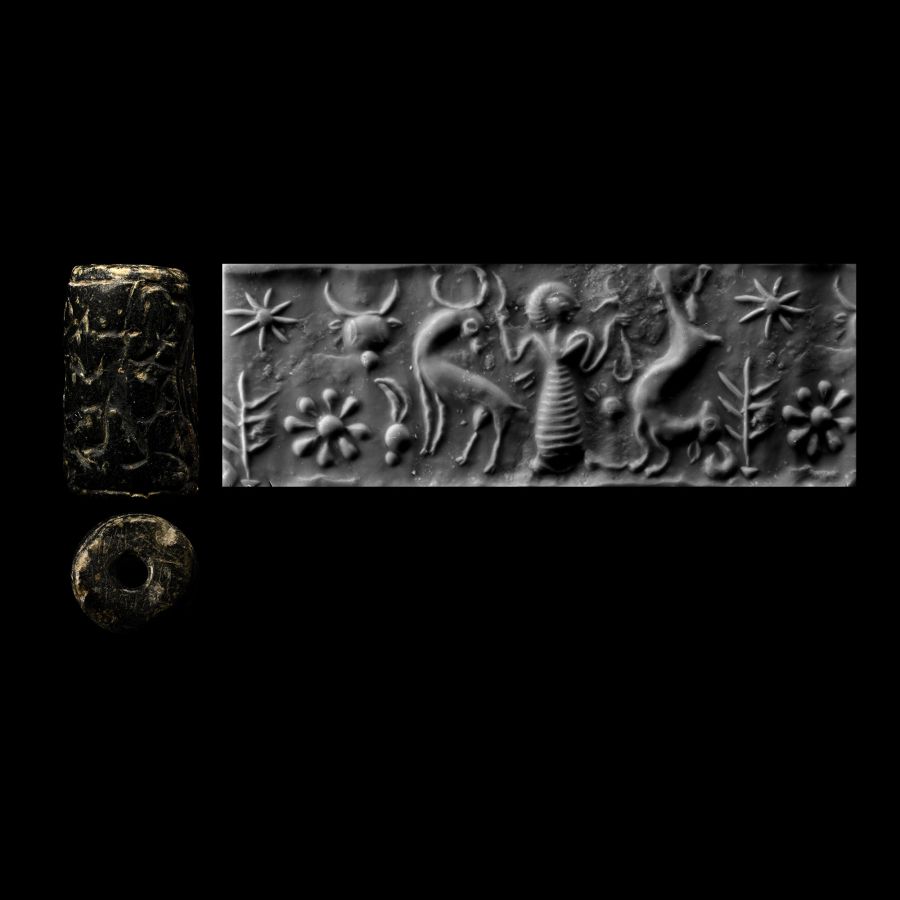
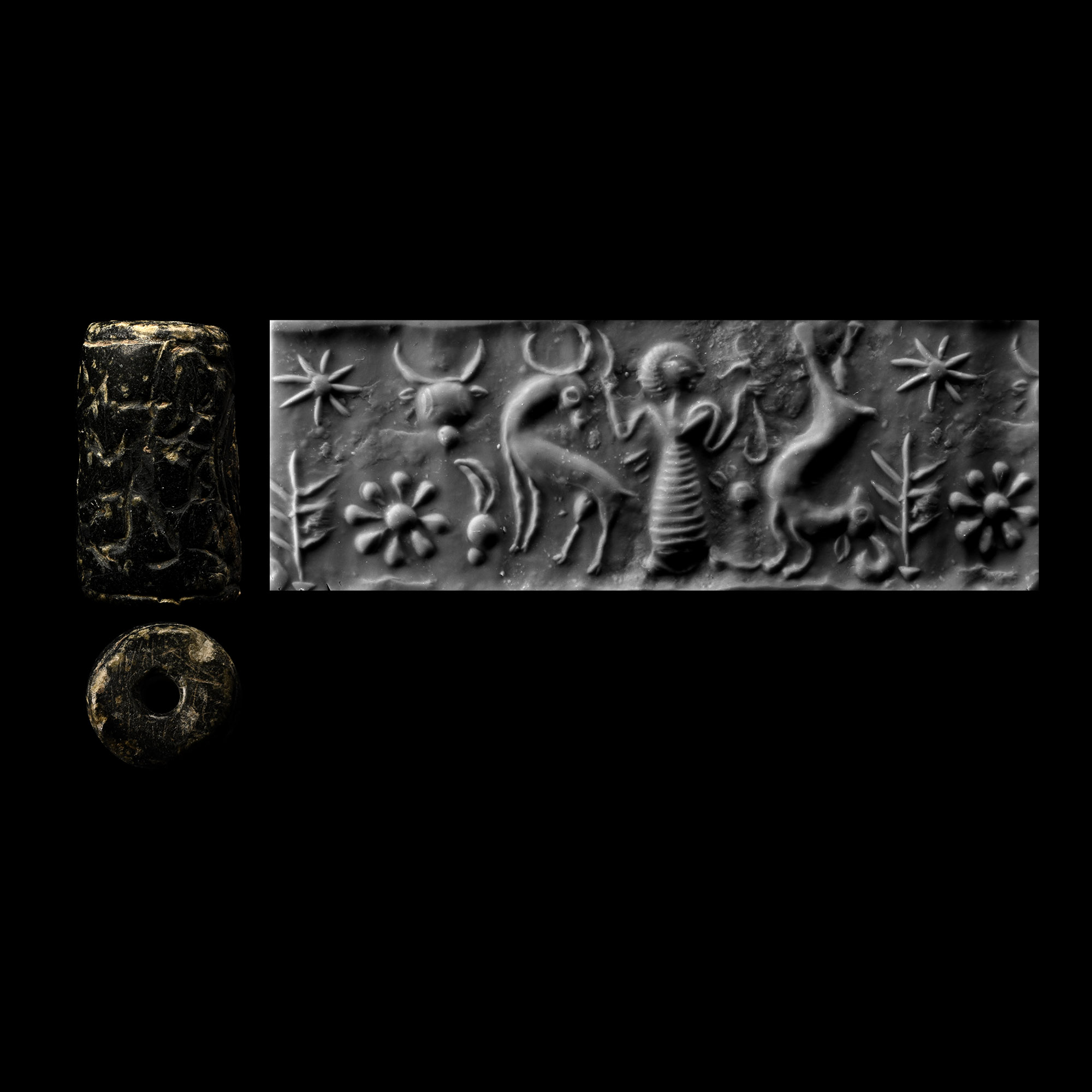
Anatolian Black Stone Cylinder Seal with Standing Hunter
CIRCA 1200-1000 B.C.
1 3/8 in. (35.7 grams, 37 mm).
Cylinder with cord and bead handles; accompanied by a copy of an old scholarly note, typed and signed by W.G. Lambert, late Professor of Assyriology, University of Birmingham, 1970-1993, which states: 'Cylinder seal of black stone, 38 x 22.5 mm., condition very good. The stone is slightly wider at the base than the top. Scene of standing hunter (?), sideways and inverted quadrupeds, scorpion, unidentified four legged creature, lunar crescent, dot with four concentric circles around it; the whole between two rules. Syrian or Anatolian, c. 1200-1000 B.C.'; supplied with a museum-quality impression. [No Reserve]
ProvenanceUK private collection, acquired 1980-1983.
Accompanied by a copy of a scholarly note, typed and signed by Professor Wilfrid George Lambert in November 1988.
This lot has been cleared against the Art Loss Register database, and is accompanied by an illustrated lot declaration signed by the Head of the Antiquities Department, Dr Raffaele D'Amato.
TimeLine Auctions follows a vetting process to ensure the authenticity and legality of all items, reinforcing our commitment to integrity and responsible trading. Each antiquity, antique, and coin lot undergoes thorough examination by a vetting committee of at least ten external specialists, professional trade association members, scientists, and archaeologists: Our Vetting Process
AUCTIONS:
TimeLine is a leading auction house specialising in antiquities, ancient art, collectables, natural history, coins, medals, and books. Our auctions offer museums, collectors, historians, and enthusiasts the opportunity to acquire unique and historically significant pieces.
LOT 0235
Anatolian Black Stone Cylinder Seal with Standing Hunter
Sold for (Inc. bp): £598
-
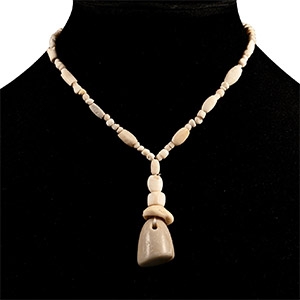
Western Asiatic Bead Necklace String
1st millennium B.C. and laterSold for (Inc. bp): £33
Restrung group of oblate, fusiform, drum-shaped and other beads in stone and shell. 28.2 grams, 28.5 cm
Ex London, UK, collection, 1990s. This lot has been cleared against the Art Loss Register database, and is accompanied by an illustrated lot declaration signed by the Head of the Antiquities Department, Dr Raffaele D'Amato. -
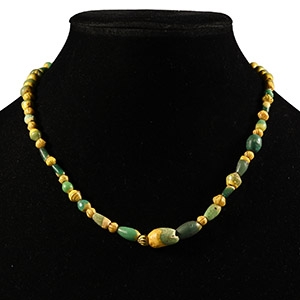
Western Asiatic Green and Yellow Glass Bead Necklace
Late 1st millennium B.C. and laterEstimate: £350 - 450 (+bp*)
Opening Bid: £175
Restrung group of bicone, fusiform, oblate, striped 'date', and other beads with spacer beads. 23 grams, 36 mm
From the collection of a gentleman, acquired on the London art market in the 1990s. This lot has been cleared against the Art Loss Register database, and is accompanied by an illustrated lot declaration signed by the Head of the Antiquities Department, Dr Raffaele D'Amato. -
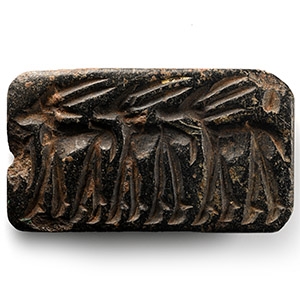
Western Asiatic Steatite Seal with Animals
3300-3000 B.C.Estimate: £800 - 1,000 (‡+bp*)
Opening Bid: £360
Rectangular in plan and triangular in section with median hole, flat face with incuse frieze of ibexes. 38.9 grams, 61 mm
Acquired in the mid 1980s-1990s. Private collection, Switzerland, thence by descent. Private collection, since the late 1990s. This lot has been cleared against the Art Loss Register database, and is accompanied by an illustrated lot declaration signed by the Head of the Antiquities Department, Dr Raffaele D'Amato.
