
Loading, please wait...
LOT 1236
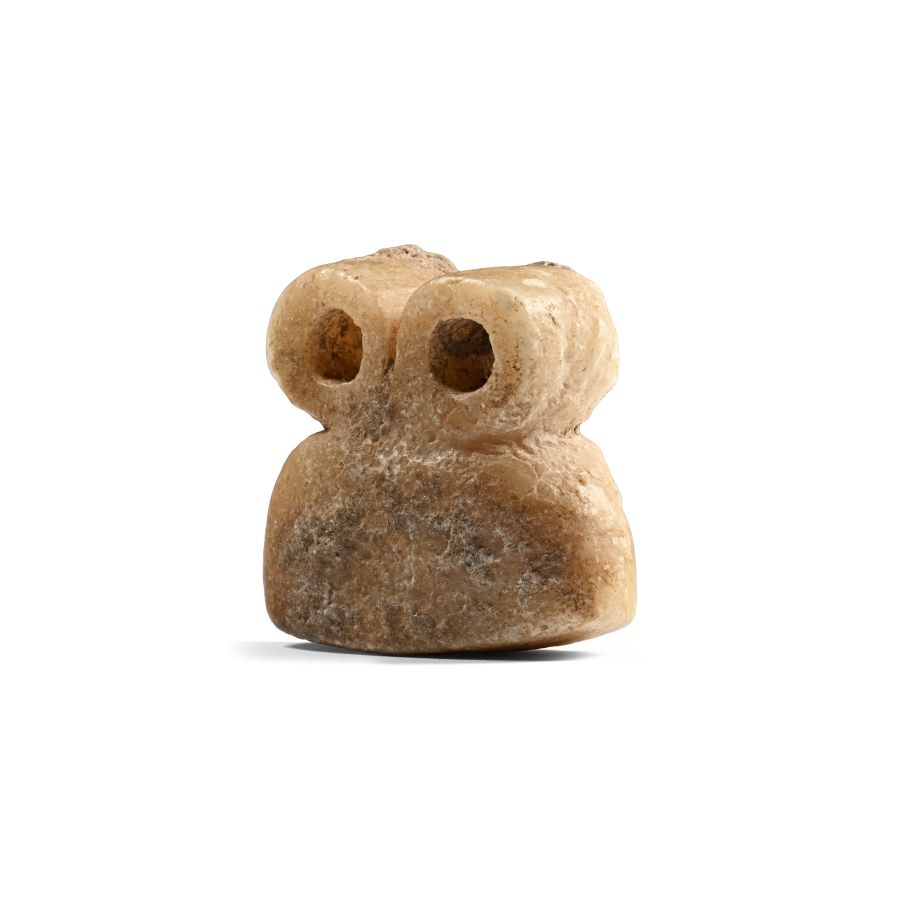
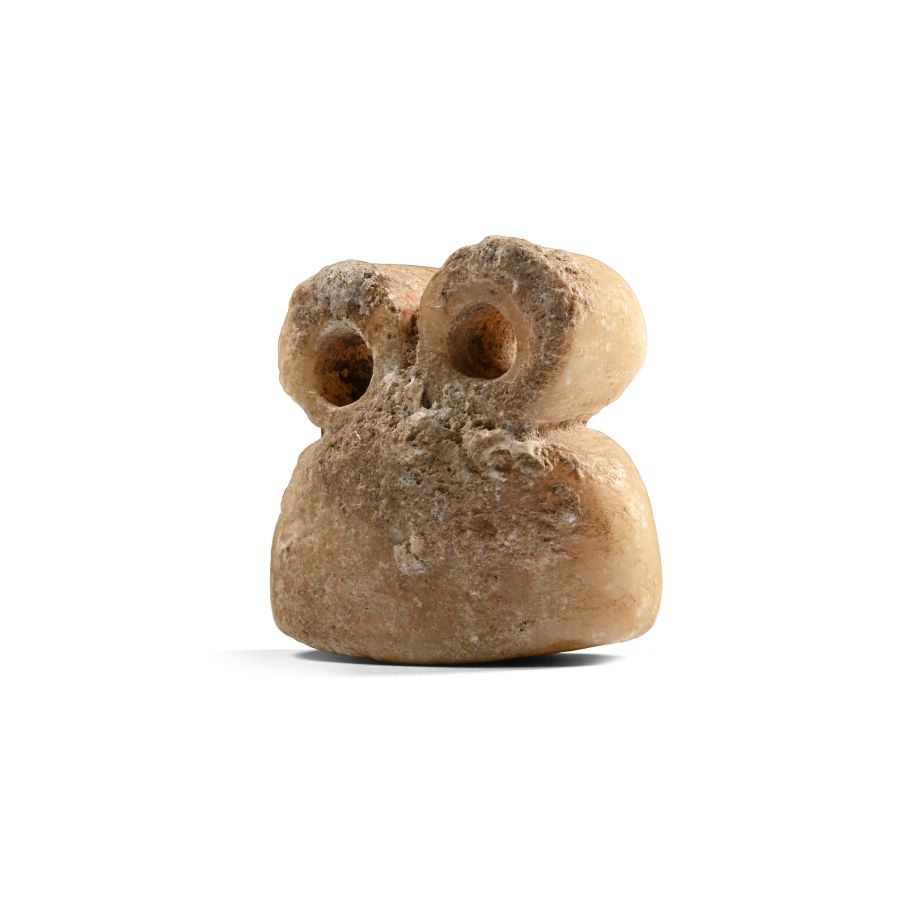
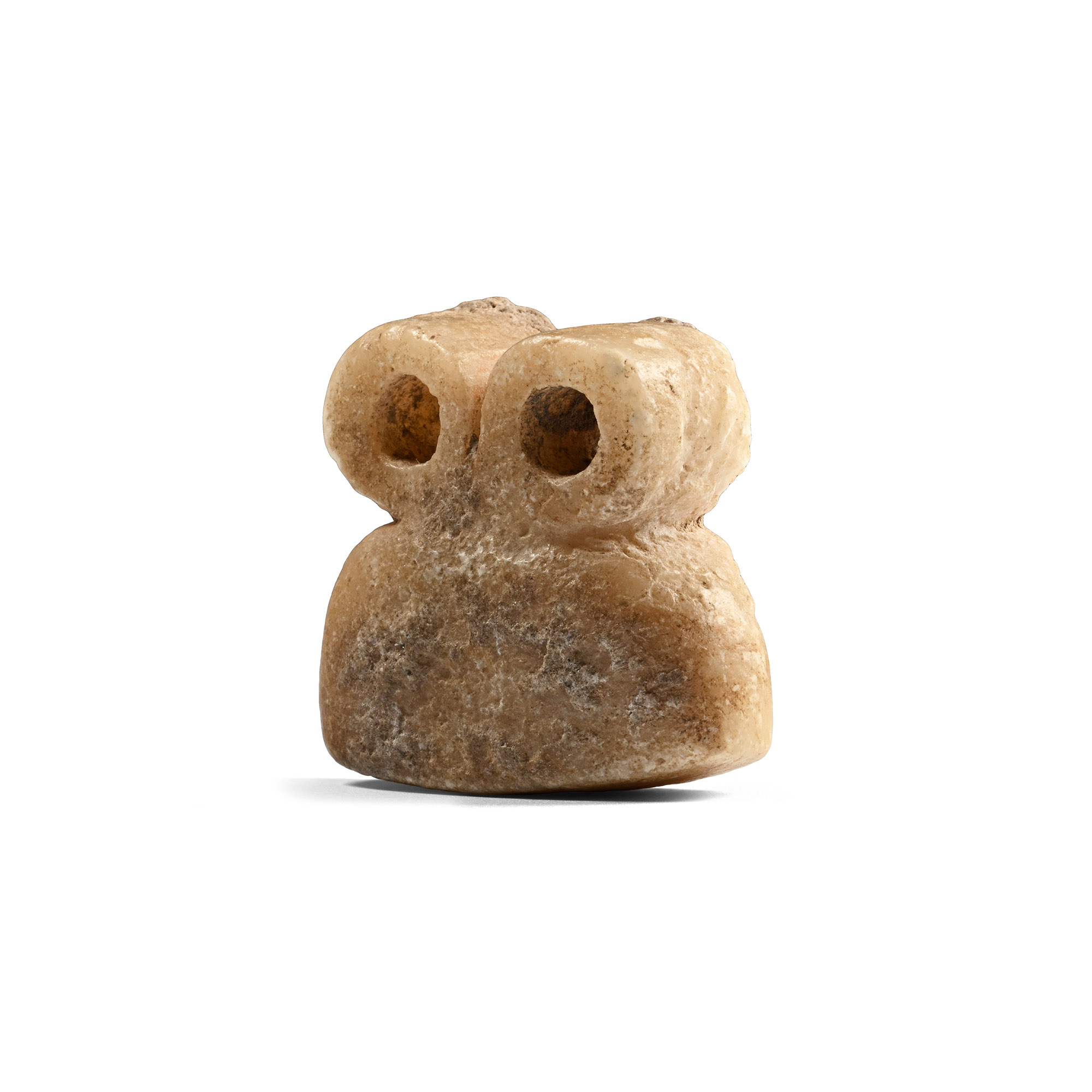
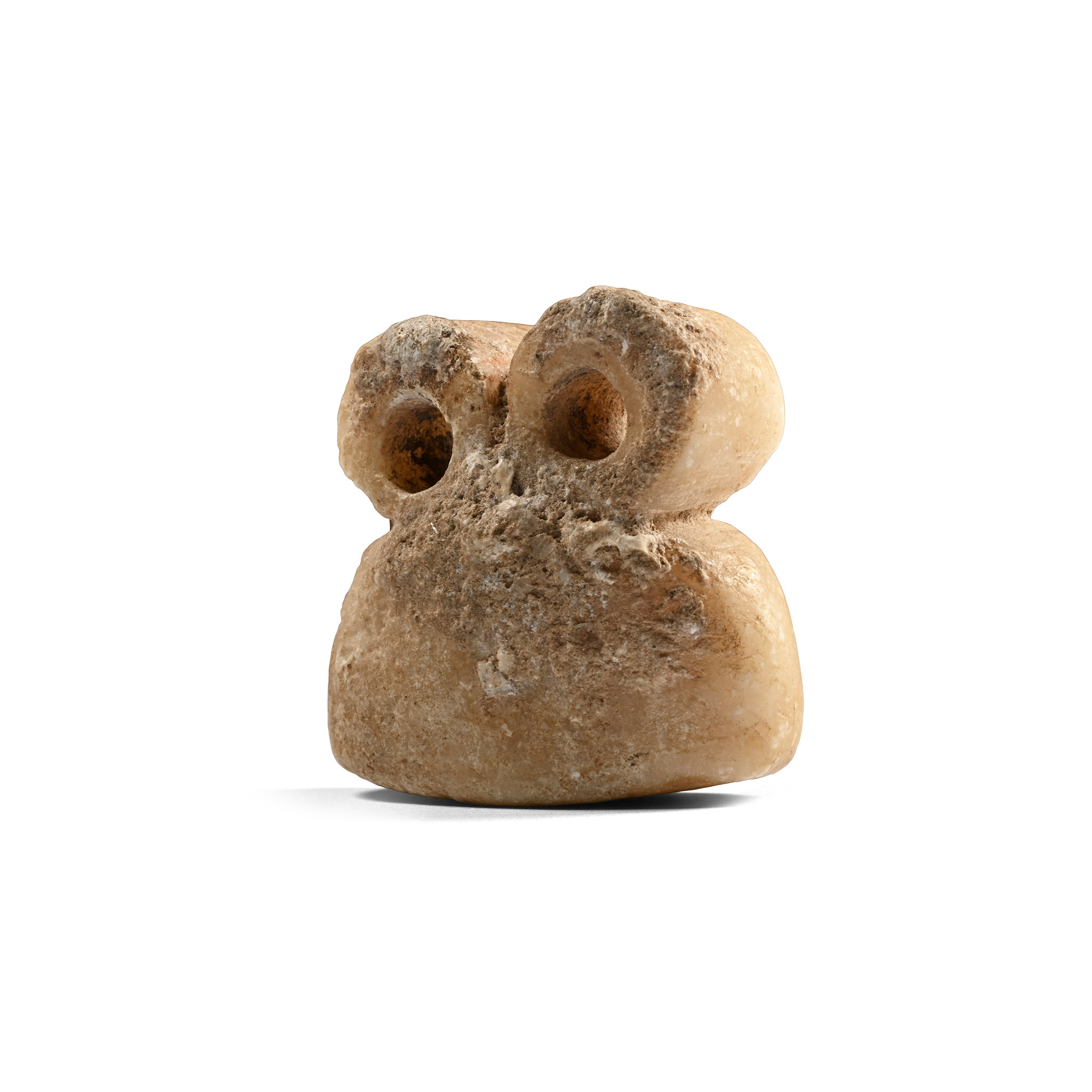
Anatolian Alabaster Eye Idol
4TH-3RD MILLENNIUM B.C.
1 1/2 in. (34 grams, 38 mm wide).
With a squat body and two looped eyes, slightly convex base.
ProvenanceAcquired in the 1980s.
Private collection, Switzerland, thence by descent.
Private collection, since the late 1990s.
This lot has been cleared against the Art Loss Register database, and is accompanied by an illustrated lot declaration signed by the Head of the Antiquities Department, Dr Raffaele D'Amato.
See parallel idols in the Louvre Museum, accession number SB 9141, for similar; Metropolitan Museum of Art, accession no.1988.323.8; British Museum, excavated by Professor Sir Max Edgar Lucien Mallowan, inv. Nos.126473, 126477 and 126479; see also Collon, D., Ancient Near Eastern Art, London, 1995, p.47, for type; for the discussion on Tell Brak, their iconography and the religious meaning of eye idols see Green, J.B. & T.R., Gods, Demons and Symbols of Ancient Mesopotamia, An illustrated dictionary, London, 1992, pp.78-79.
FootnotesThis type of figurine belongs to the type known as an ‘eye idol’ or ‘spectacle idol’, made of stone, marble or alabaster. Usually models having incised eyes (but also examples of open eyes are found) have been excavated mainly at Tell Brak, where thousands were found in a building now called the Eye Temple. There, in the precincts of the temple, excavators have found thousands of little 'eye-idols', schematised humanoid figures fashioned from alabaster, limestone, soapstone and black burnished clay.
CONDITIONTimeLine Auctions follows a vetting process to ensure the authenticity and legality of all items, reinforcing our commitment to integrity and responsible trading. Each antiquity, antique, and coin lot undergoes thorough examination by a vetting committee of at least ten external specialists, professional trade association members, scientists, and archaeologists: Our Vetting Process
AUCTIONS:
TimeLine is a leading auction house specialising in antiquities, ancient art, collectables, natural history, coins, medals, and books. Our auctions offer museums, collectors, historians, and enthusiasts the opportunity to acquire unique and historically significant pieces.
-
.jpg)
Western Asiatic Stamp Seal with Winged God
Circa 800 B.C.Estimate: £250 - 350 (+bp*)
Opening Bid: £125
Conical body with ribbed collar and loop, raised plaque to the underside with incuse image of winged figure; supplied with a museum-quality impression. 6.8 grams, 16 mm
From the collection of a gentleman, acquired on the London art market in the 1990s. This lot has been cleared against the Art Loss Register database, and is accompanied by an illustrated lot declaration signed by the Head of the Antiquities Department, Dr Raffaele D'Amato. -
Persian Painting of a Kneeling Warrior
Early 20th century A.D.Sold for (Inc. bp): £520
Showing a Turkoman archer holding a small cup in his right hand, bow-case and quiver with arrows suspended from his belt, kilij and a dagger resting against his legs; Nastaliq script border with leaves and floral motifs. 47 grams, 29.5 x 21 cm
From the family collection of a Hampstead gentleman; formerly acquired in the 1980s. This lot has been cleared against the Art Loss Register database, and is accompanied by an illustrated lot declaration signed by the Head of the Antiquities Department, Dr Raffaele D'Amato. -
Sumerian Cylinder Seal with Fish
3rd millennium B.C.Sold for (Inc. bp): £468
With frieze of fish in profile within a field of zigzag lines; supplied with a museum-quality impression. 11.5 grams, 37 mm
From the 'S' collection, acquired 1970-1990s. The collection was seen and studied by W.G.Lambert, late Professor of Assyriology at the University of Birmingham, 1970-1993. This lot has been cleared against the Art Loss Register database, and is accompanied by an illustrated lot declaration signed by the Head of the Antiquities Department, Dr Raffaele D'Amato.
