
Loading, please wait...
LOT 1244
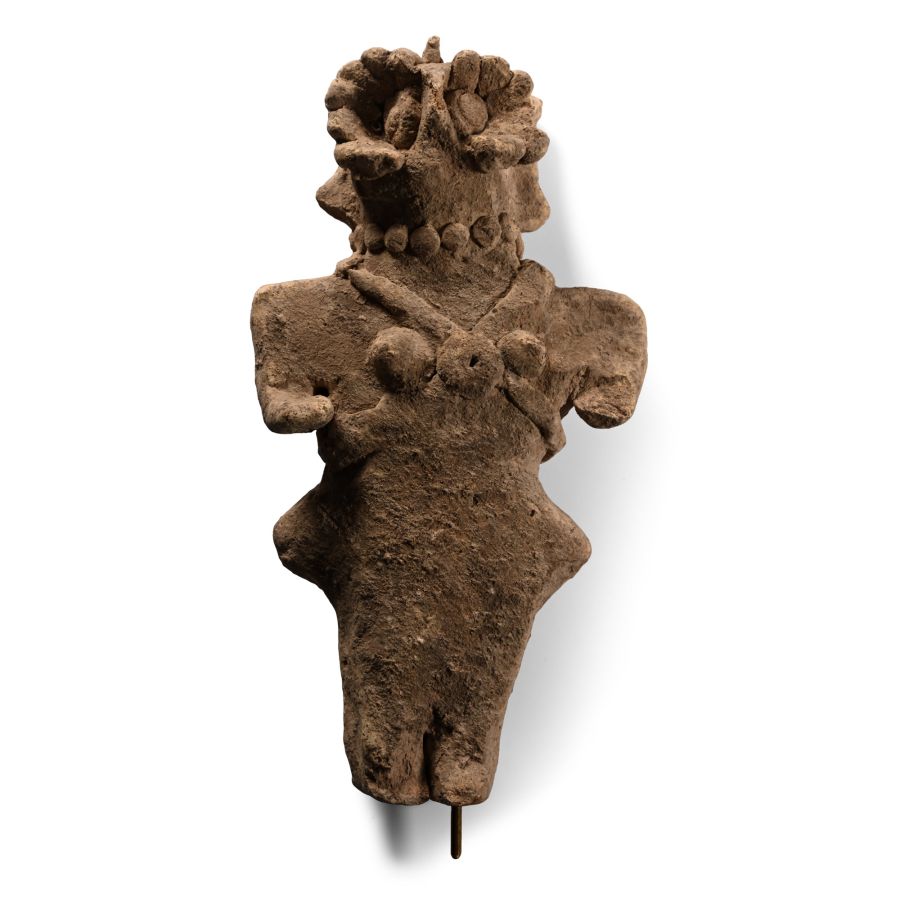
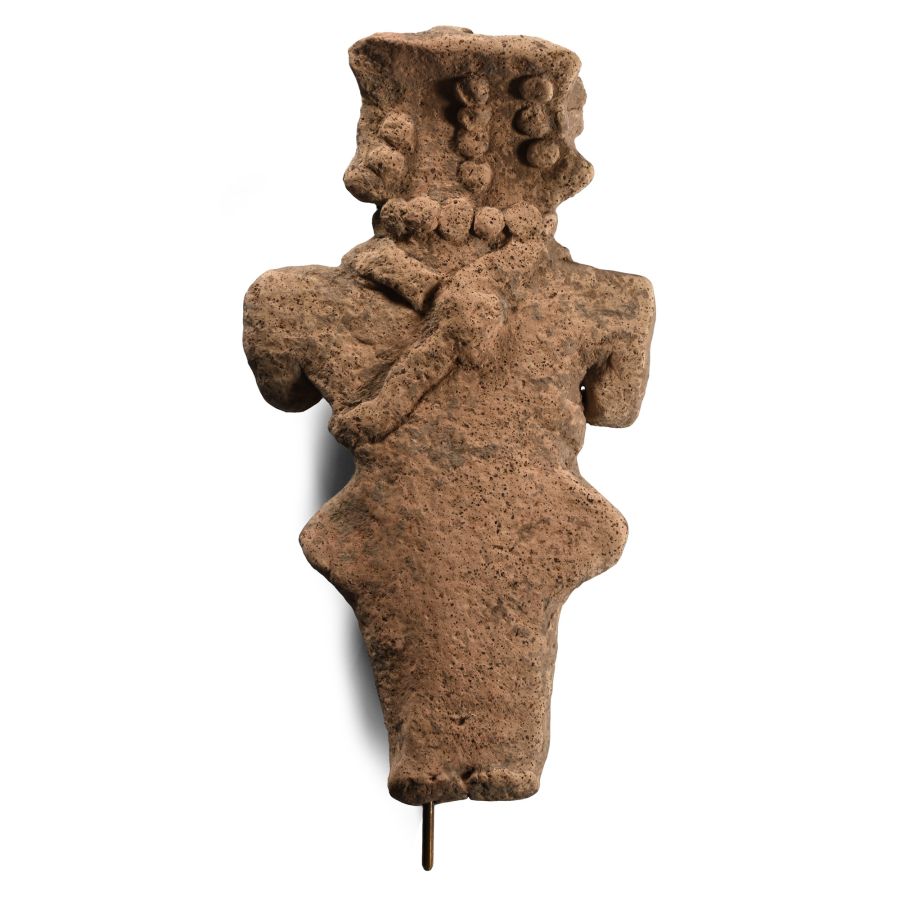
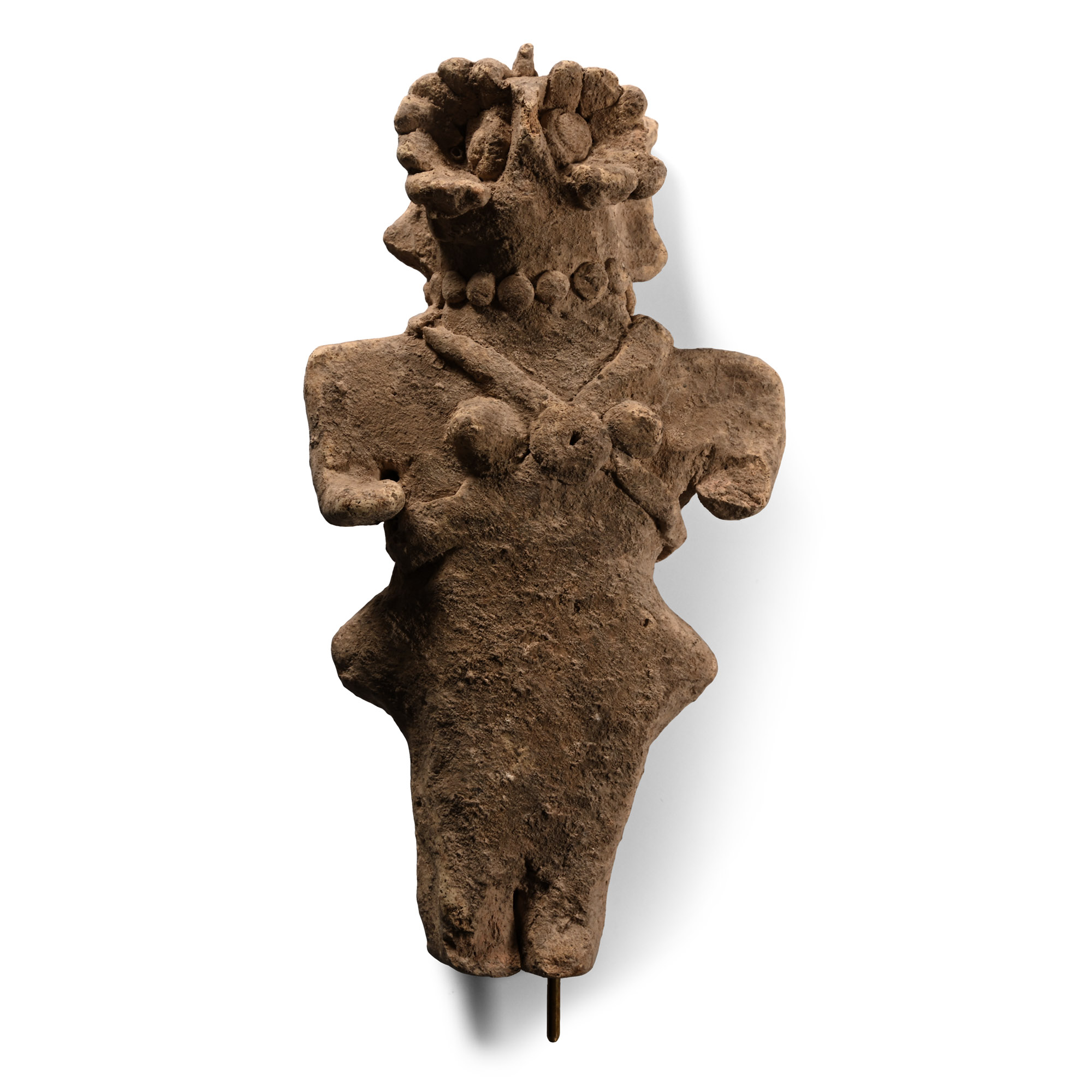
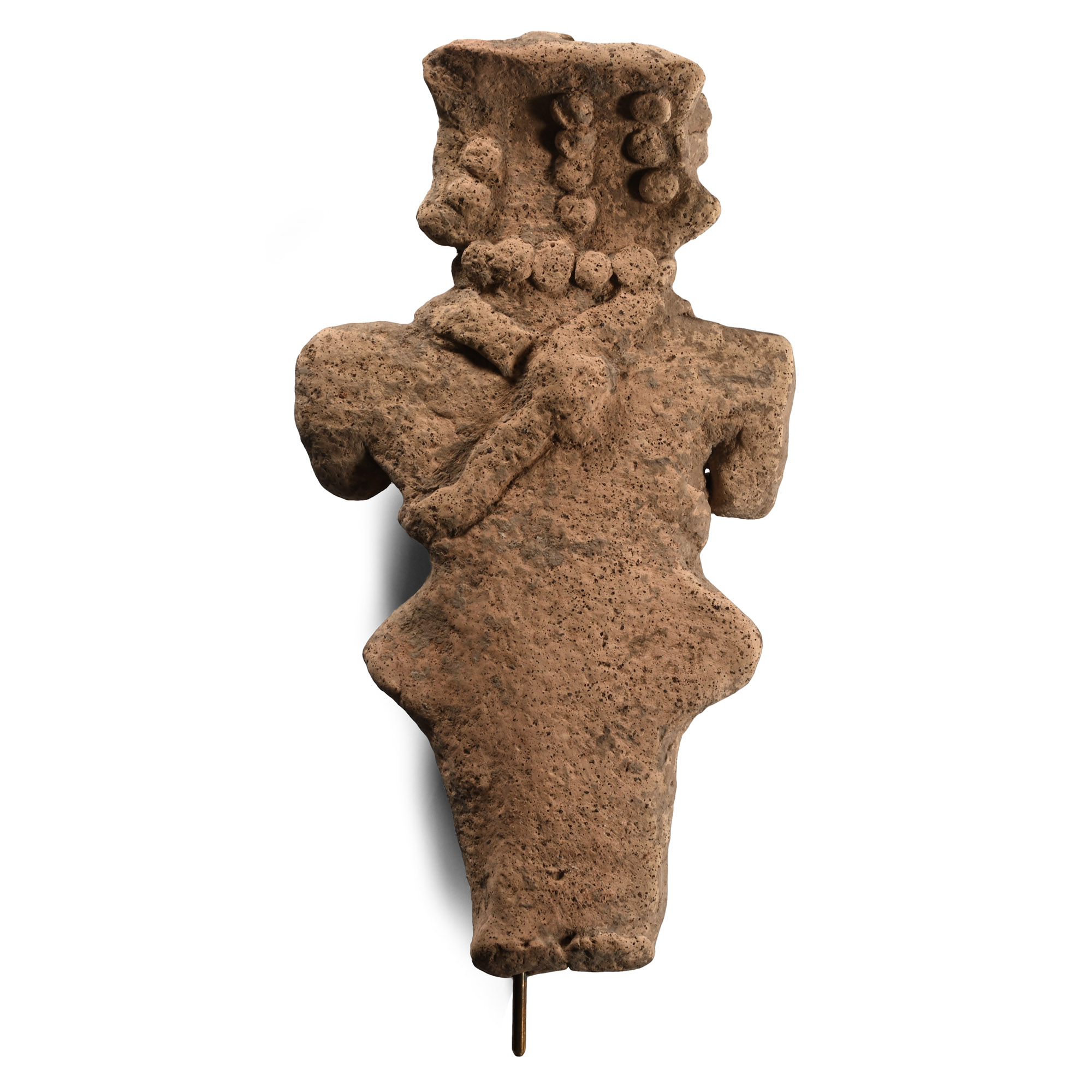
Amorite Terracotta Idol of a Standing Woman
3RD-2ND MILLENNIUM B.C.
5 3/8 in. (153 grams, 13.8 cm).
Modelled in the round female figure standing with stub arms, applied breasts and pectoral cross-straps with central disc; applied collar of discs and mask with segmented detailing to eyes and reverse; mounted on a custom-made stand.
ProvenanceAcquired in 1993.
Private collection, Switzerland, thence by descent.
Private collection, since the late 1990s.
Accompanied by a copy of an Art Loss register certificate, no.S00027857.
TimeLine Auctions follows a vetting process to ensure the authenticity and legality of all items, reinforcing our commitment to integrity and responsible trading. Each antiquity, antique, and coin lot undergoes thorough examination by a vetting committee of at least ten external specialists, professional trade association members, scientists, and archaeologists: Our Vetting Process
AUCTIONS:
TimeLine is a leading auction house specialising in antiquities, ancient art, collectables, natural history, coins, medals, and books. Our auctions offer museums, collectors, historians, and enthusiasts the opportunity to acquire unique and historically significant pieces.
-
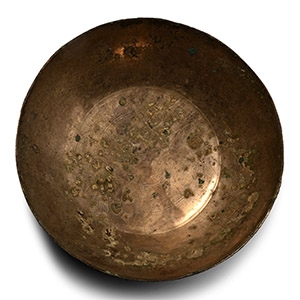
Parthian Bronze Bowl with Concentric Circles
2nd century B.C.-1st century A.D.Sold for (Inc. bp): £117
Broad and shallow with flared sidewall, incised rings to inner face. 140 grams, 14.5 cm wide
Ex 1990s collection and with a central London gallery. -
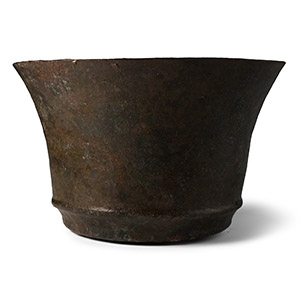
Cypro-Phoenician Bronze Cup
6th-4th century B.C.Estimate: £250 - 350 (+bp*)
Opening Bid: £125
Bell-shaped in profile with carination above the foot. 144 grams, 11.2 cm
Ex property of a London, UK, gentleman, Mayfair gallery, 1990s. -
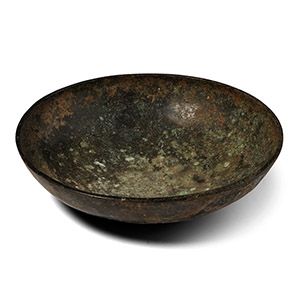
Western Asiatic Bronze Dish
Mid 1st millennium B.C.Estimate: £100 - 140 (+bp*)
Opening Bid: £50
Broad and shallow with lip to the inner face of the rim. 86 grams, 11.4 cm
Ex 1990s collection and with a central London gallery.
