
Loading, please wait...
LOT 0260
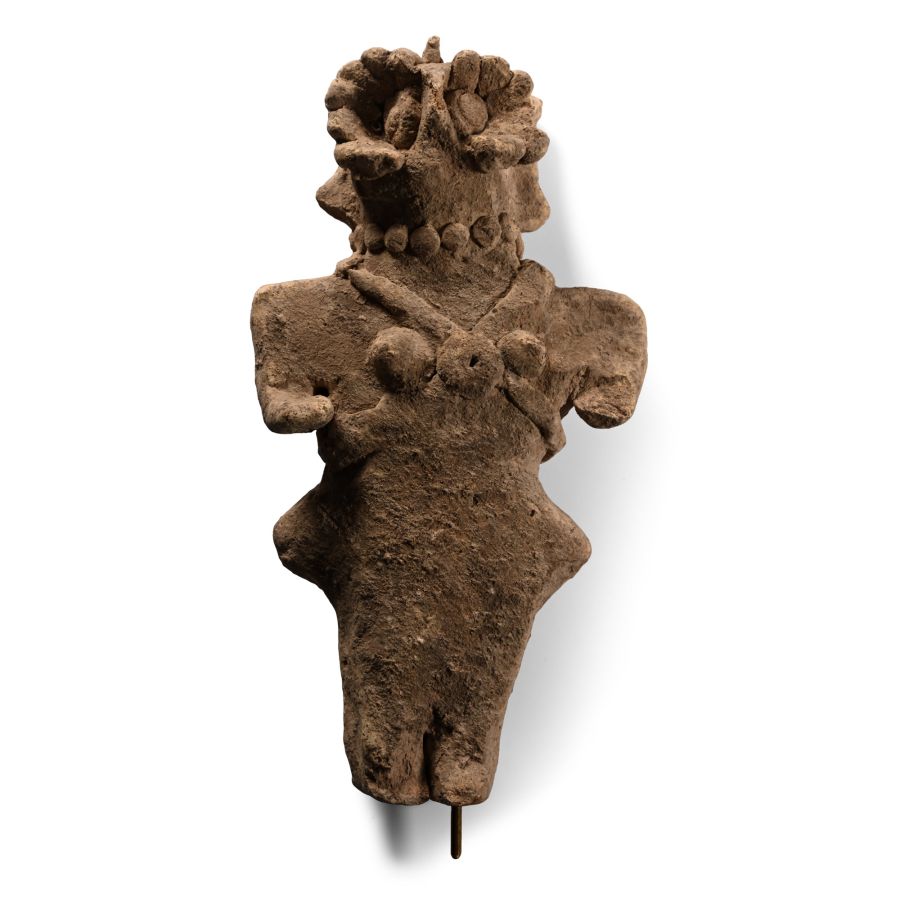
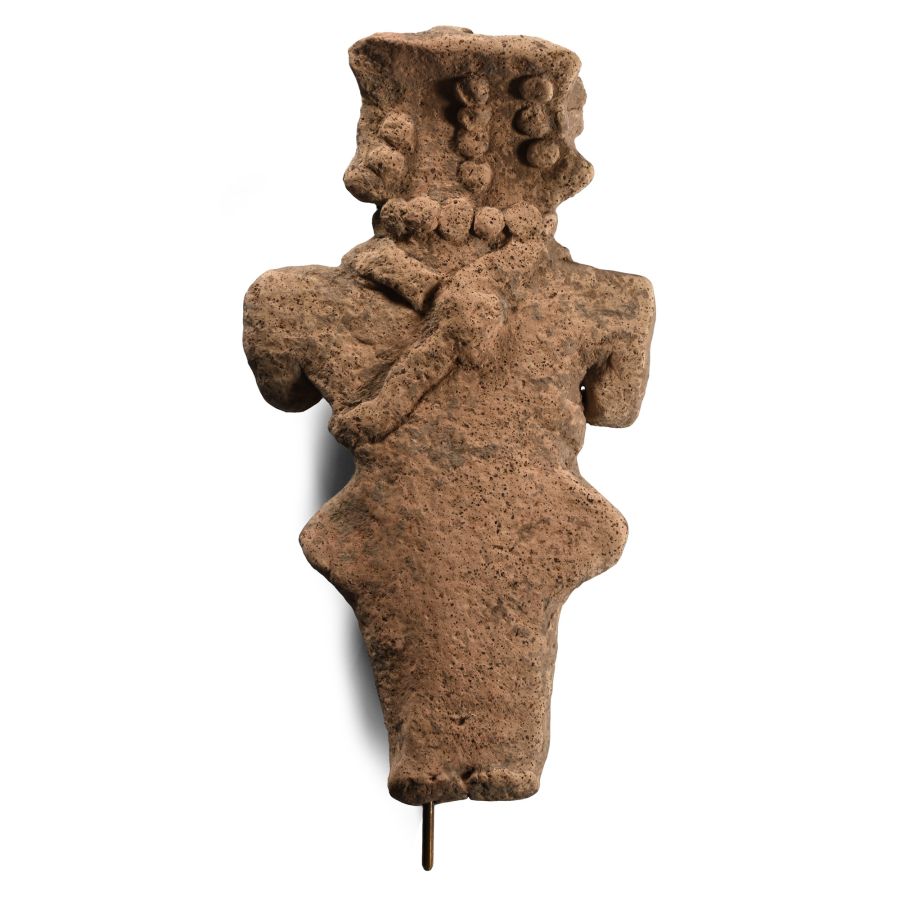
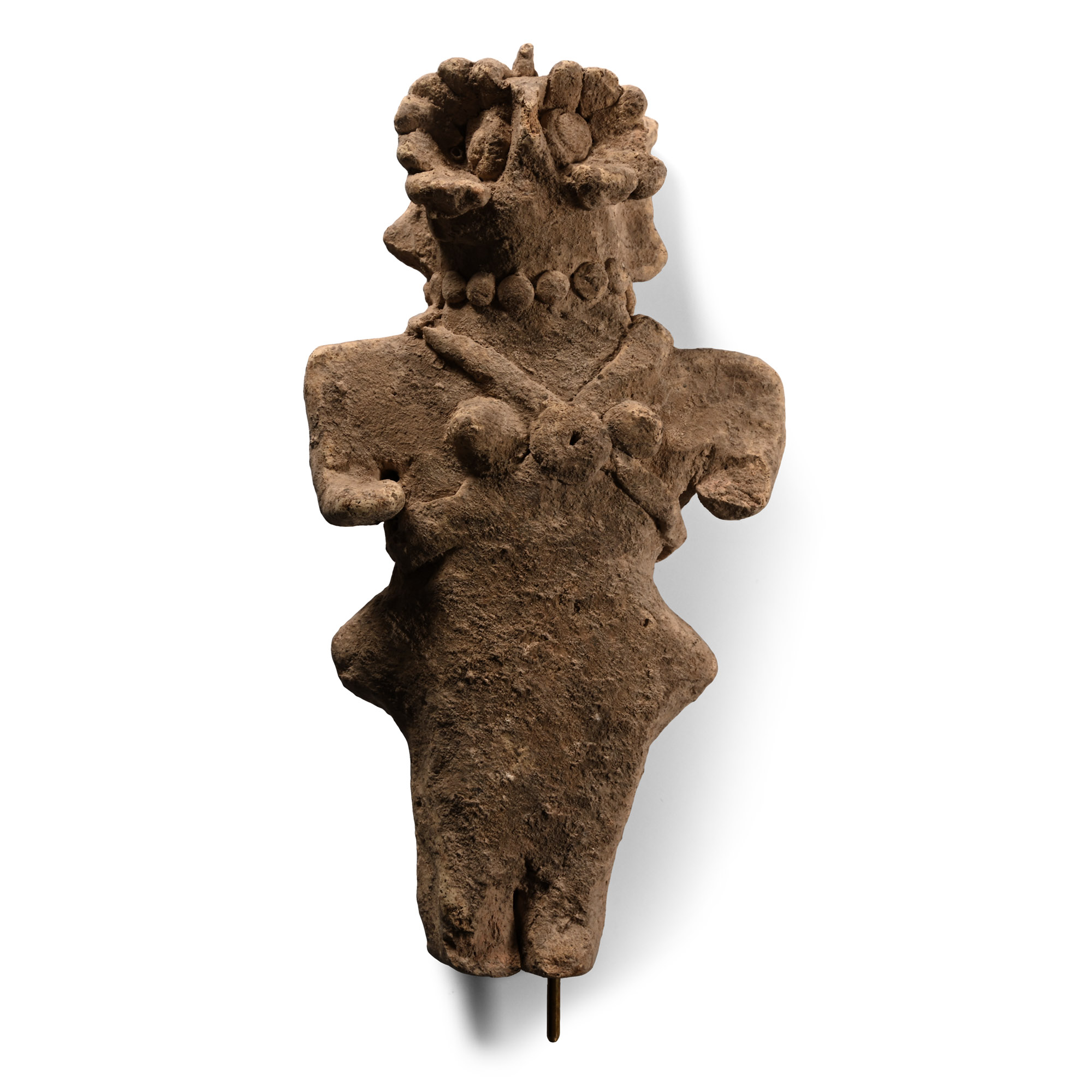
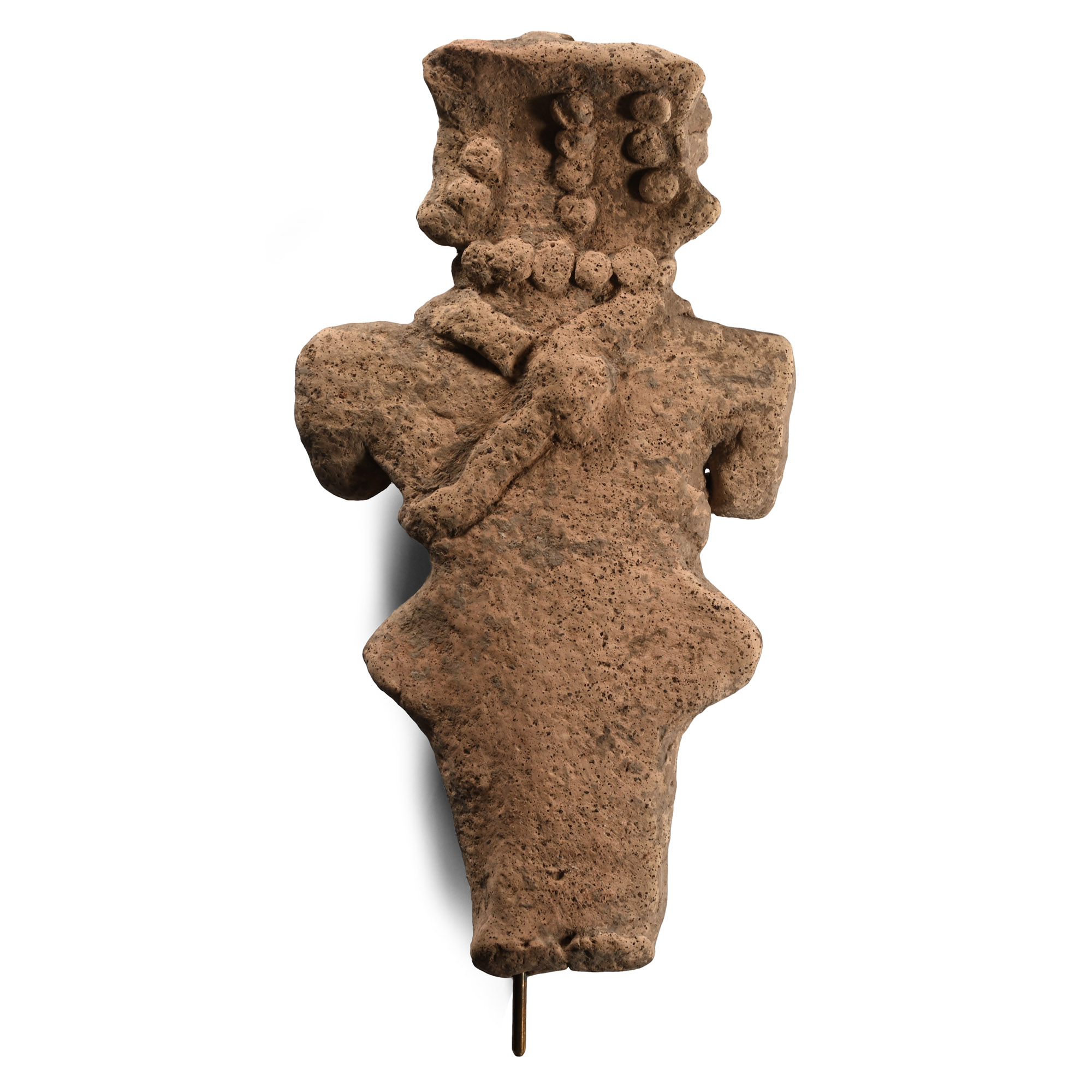
Amorite Terracotta Idol of a Standing Woman
3RD-2ND MILLENNIUM B.C.
5 3/8 in. (153 grams, 13.8 cm).
Modelled in the round female figure standing with stub arms, applied breasts and pectoral cross-straps with central disc; applied collar of discs and mask with segmented detailing to eyes and reverse; mounted on a custom-made stand.
ProvenanceAcquired in 1993.
Private collection, Switzerland, thence by descent.
Private collection, since the late 1990s.
Accompanied by a copy of an Art Loss register certificate, no.S00027857.
This lot has been cleared against the Art Loss Register database, and is accompanied by an illustrated lot declaration signed by the Head of the Antiquities Department, Dr Raffaele D'Amato.
TimeLine Auctions follows a vetting process to ensure the authenticity and legality of all items, reinforcing our commitment to integrity and responsible trading. Each antiquity, antique, and coin lot undergoes thorough examination by a vetting committee of at least ten external specialists, professional trade association members, scientists, and archaeologists: Our Vetting Process
AUCTIONS:
TimeLine is a leading auction house specialising in antiquities, ancient art, collectables, natural history, coins, medals, and books. Our auctions offer museums, collectors, historians, and enthusiasts the opportunity to acquire unique and historically significant pieces.
LOT 0260
Amorite Terracotta Idol of a Standing Woman
Estimate £600 - 800€700 - 930 (for guidance only)$810 - 1,080 (for guidance only)
-
Western Asiatic Calligraphic Footed Bowl
20th century A.D.Sold for (Inc. bp): £26
A squat bronze bowl in 12th-13th century style with three lion's paw feet, flared base and rolled rim; bands of guilloche ornament to the body with silver-inlaid calligraphic text. 580 grams, 17.3 cm diameter
Acquired in the early 1990s. Ex property of a London, UK, collector. This lot has been cleared against the Art Loss Register database, and is accompanied by an illustrated lot declaration signed by the Head of the Antiquities Department, Dr Raffaele D'Amato. -
Bactrian Chlorite Vessel with Lions
3rd millennium B.C.Sold for (Inc. bp): £1,820
With frieze of crouching lions in profile, each with sockets to the flanks to accept coloured inserts (absent); chipped rim repaired. 273 grams, 85 mm
with Surena Gallery, 1999. Private collection, Europe. Accompanied by a copy of an Art Loss Register certificate dated 20th April 2004. This lot has been checked against the Interpol Database of stolen works of art and is accompanied by a search certificate number no.12405-226712. This lot has been cleared against the Art Loss Register database, and is accompanied by an illustrated lot declaration signed by the Head of the Antiquities Department, Dr Raffaele D'Amato. -
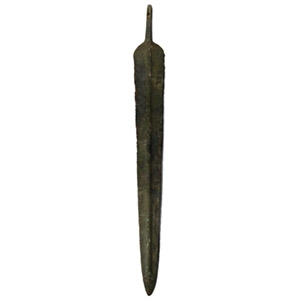
Very Large Luristan Bronze Sword
Early 1st millennium B.C.Sold for (Inc. bp): £157
Tapering leaf-shaped blade with a raised midrib developing to a short rectangular-section tang, pierced at the end. 482 grams, 49 cm
Ex London art market, 1980-1990s. This lot has been cleared against the Art Loss Register database, and is accompanied by an illustrated lot declaration signed by the Head of the Antiquities Department, Dr Raffaele D'Amato.
The Luri people produced a quantity of fine metalwork, which according to Dr. Khorasani, could be due to a settled period which arose as a result of the defeat of the Elamites by the Babylonians, leaving the Luristani people in relative peace for a period of time after 1200 BC. According to Khorasani 'A culture of innovation and experimentation flourished, and the repertoire of the Luristan smiths expanded in the period between 1150-1050 B.C.'
