
Loading, please wait...
LOT 0264
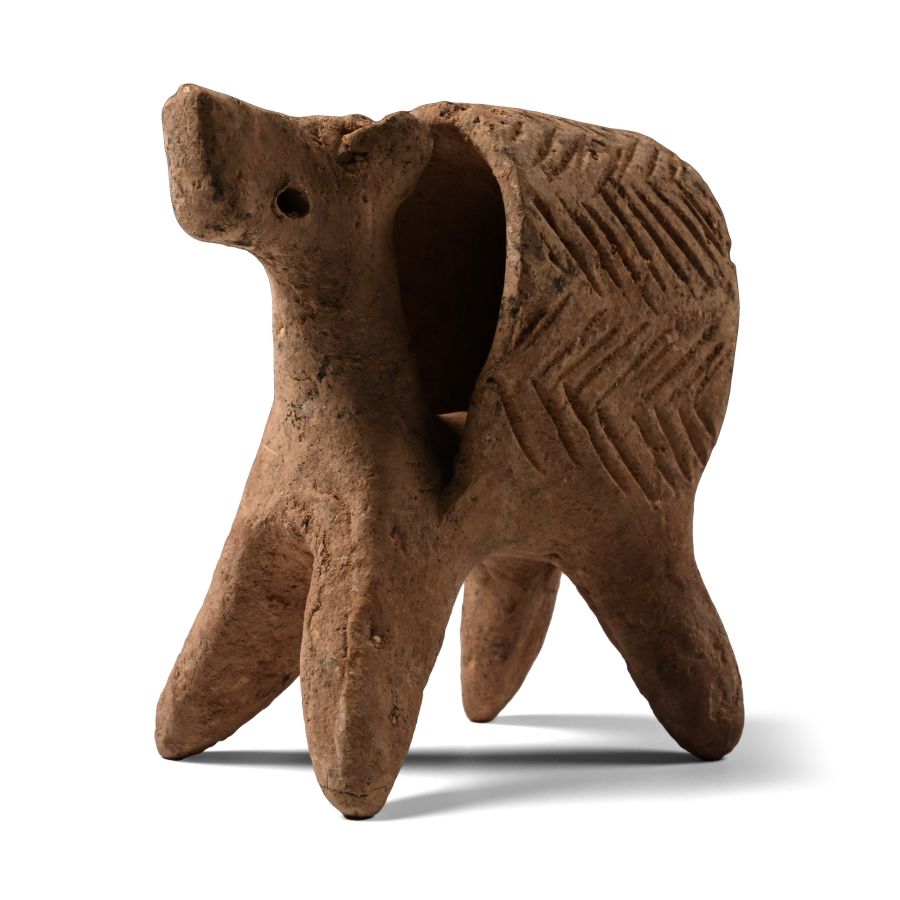
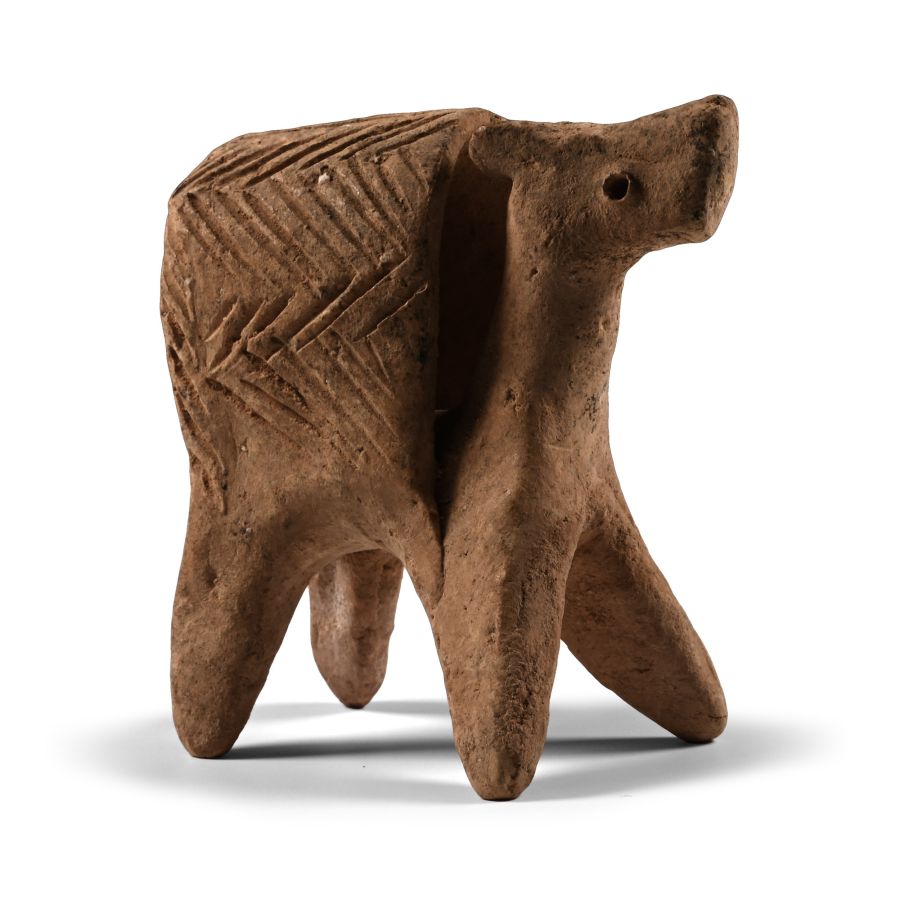
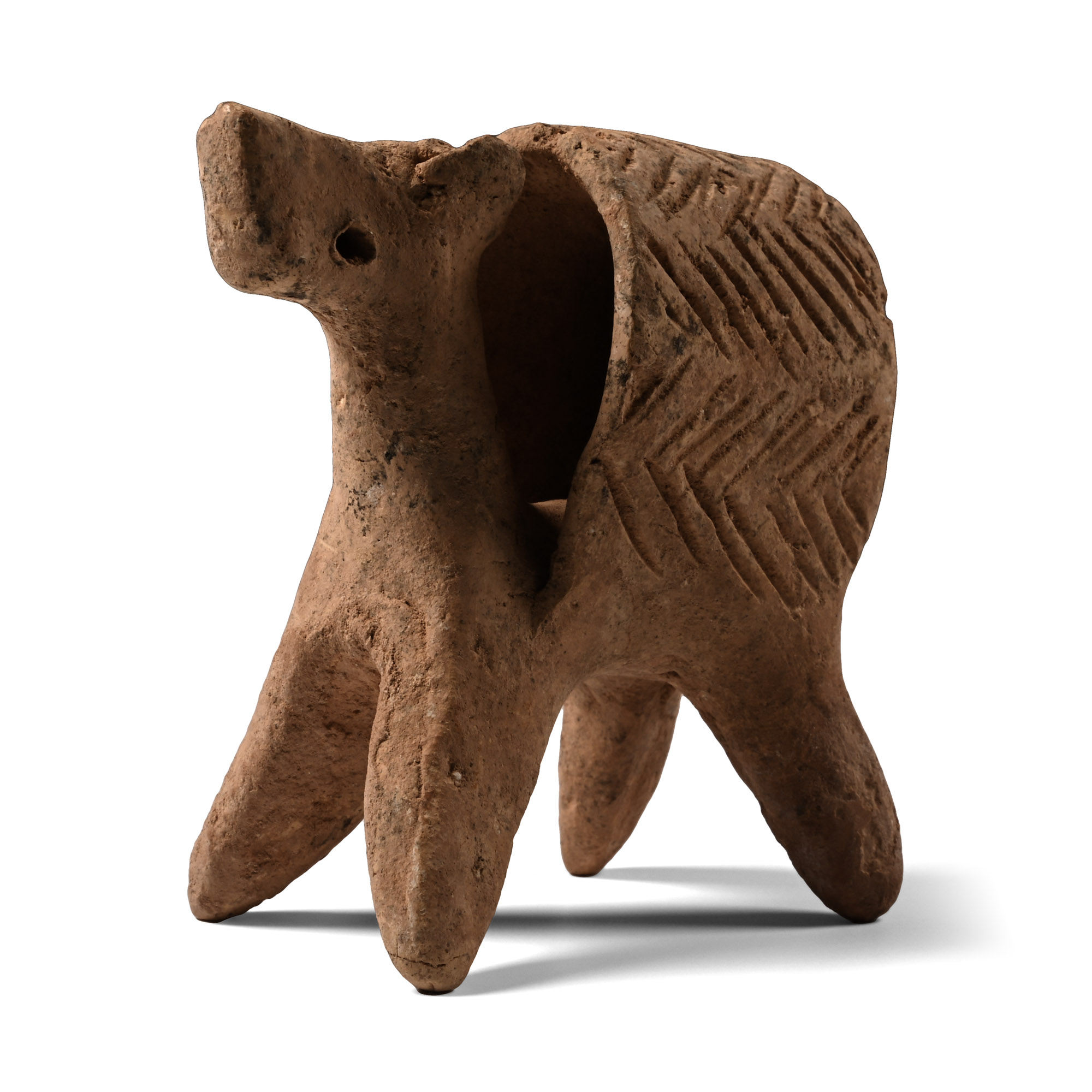
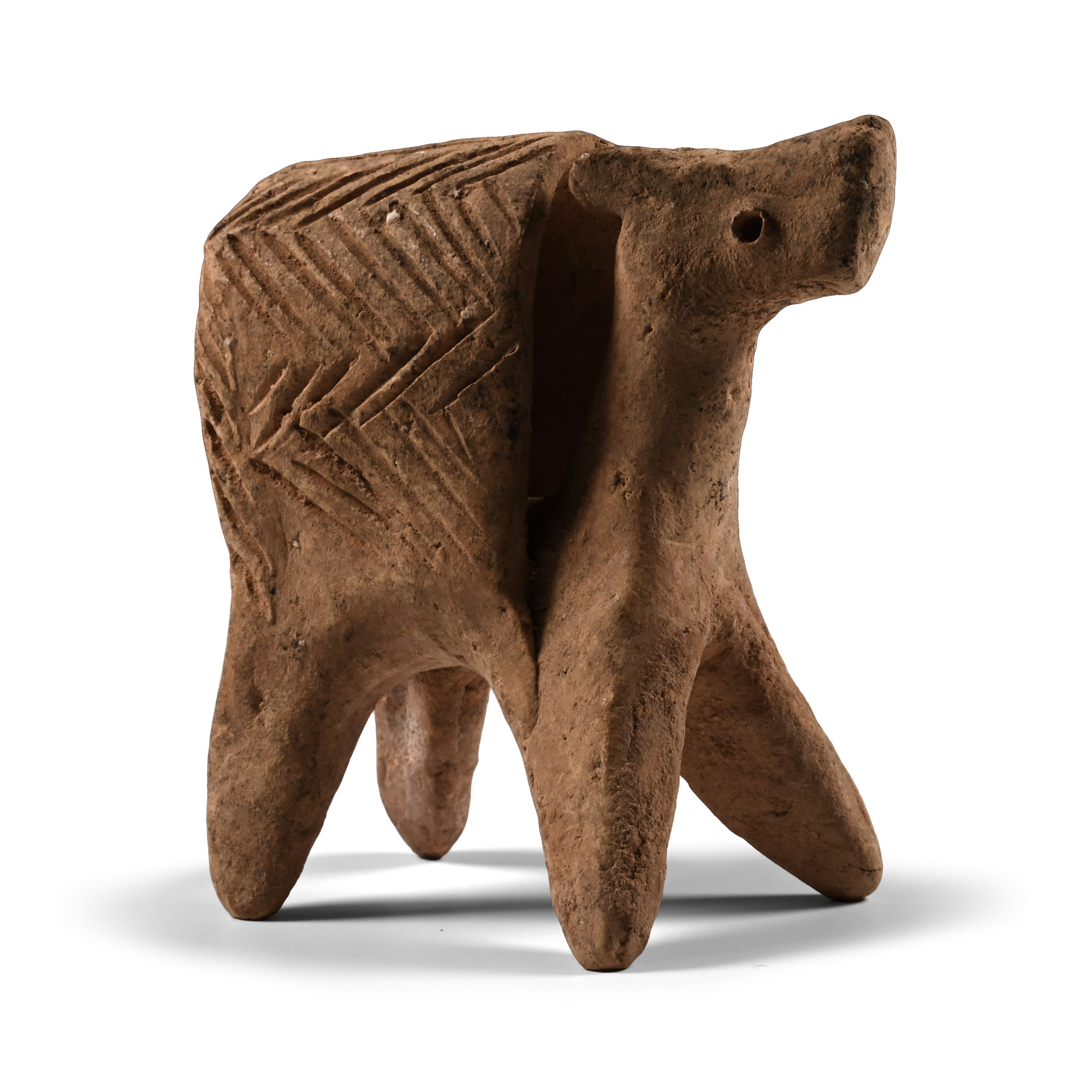
Amorite Terracotta Animal
2000-1700 B.C.
2 7/8 in. (93 grams, 72 mm).
Modelled in the round standing quadruped with pinched detailing, pierced at jaw to accept reins, hollow-formed canopy to the rear body.
ProvenanceEx E. Boustros collection, 1970s.
Private collection, Switzerland, thence by descent.
Private collection, since the late 1990s.
This lot has been cleared against the Art Loss Register database, and is accompanied by an illustrated lot declaration signed by the Head of the Antiquities Department, Dr Raffaele D'Amato.
TimeLine Auctions follows a vetting process to ensure the authenticity and legality of all items, reinforcing our commitment to integrity and responsible trading. Each antiquity, antique, and coin lot undergoes thorough examination by a vetting committee of at least ten external specialists, professional trade association members, scientists, and archaeologists: Our Vetting Process
AUCTIONS:
TimeLine is a leading auction house specialising in antiquities, ancient art, collectables, natural history, coins, medals, and books. Our auctions offer museums, collectors, historians, and enthusiasts the opportunity to acquire unique and historically significant pieces.
-
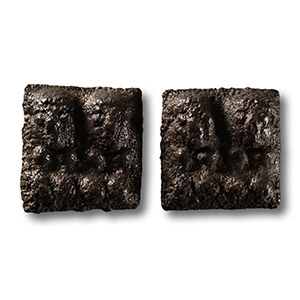
Western Asiatic Silver Inlay Pair with Human Heads and Animals
1st millennium B.C.Sold for (Inc. bp): £91
Comprising two matched inlays, each with a pair of facing heads, zoomorphic motifs below. 2.6 grams total, 16 mm each
Collected from 1970-1999. From the collection of the late Mr S.M., London, UK. This lot has been cleared against the Art Loss Register database, and is accompanied by an illustrated lot declaration signed by the Head of the Antiquities Department, Dr Raffaele D'Amato. -
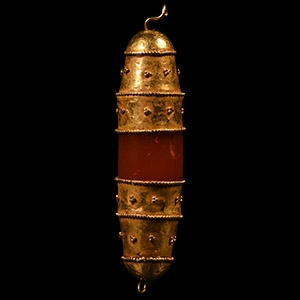
Early Parthian Carnelian Bead with Gold End Caps
1st century B.C.-1st century A.D.Estimate: £1,000 - 1,400 (‡+bp*)
Opening Bid: £450
Columnar bead with sheet-gold cap to each end, each with beaded circlets and applied granule clusters, domed end with loop; possibly assembled. 17.44 grams, 60 mm
Acquired in the mid 1980s-1990s. Private collection, Switzerland, thence by descent. Private collection, since the late 1990s. This lot has been cleared against the Art Loss Register database, and is accompanied by an illustrated lot declaration signed by the Head of the Antiquities Department, Dr Raffaele D'Amato. -
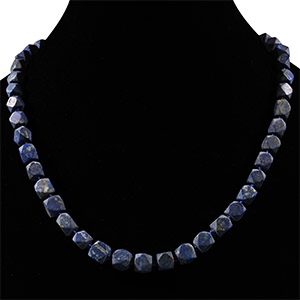
Bactrian Style Lapis Lazuli Bead Necklace String
20th century A.D.Sold for (Inc. bp): £7
Group of cornerless cube-shaped and other graduated beads. 60 grams total, 48 cm
Ex London, UK, collection, 1990s. This lot has been cleared against the Art Loss Register database, and is accompanied by an illustrated lot declaration signed by the Head of the Antiquities Department, Dr Raffaele D'Amato.
