
Loading, please wait...
LOT 0856
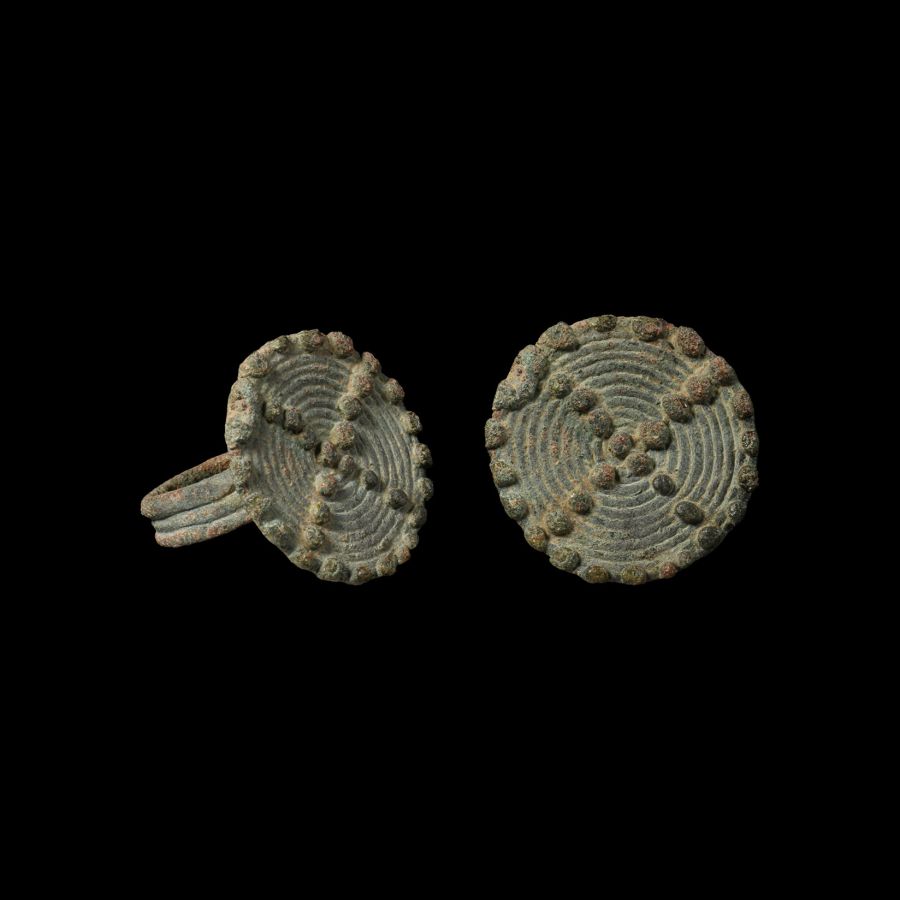
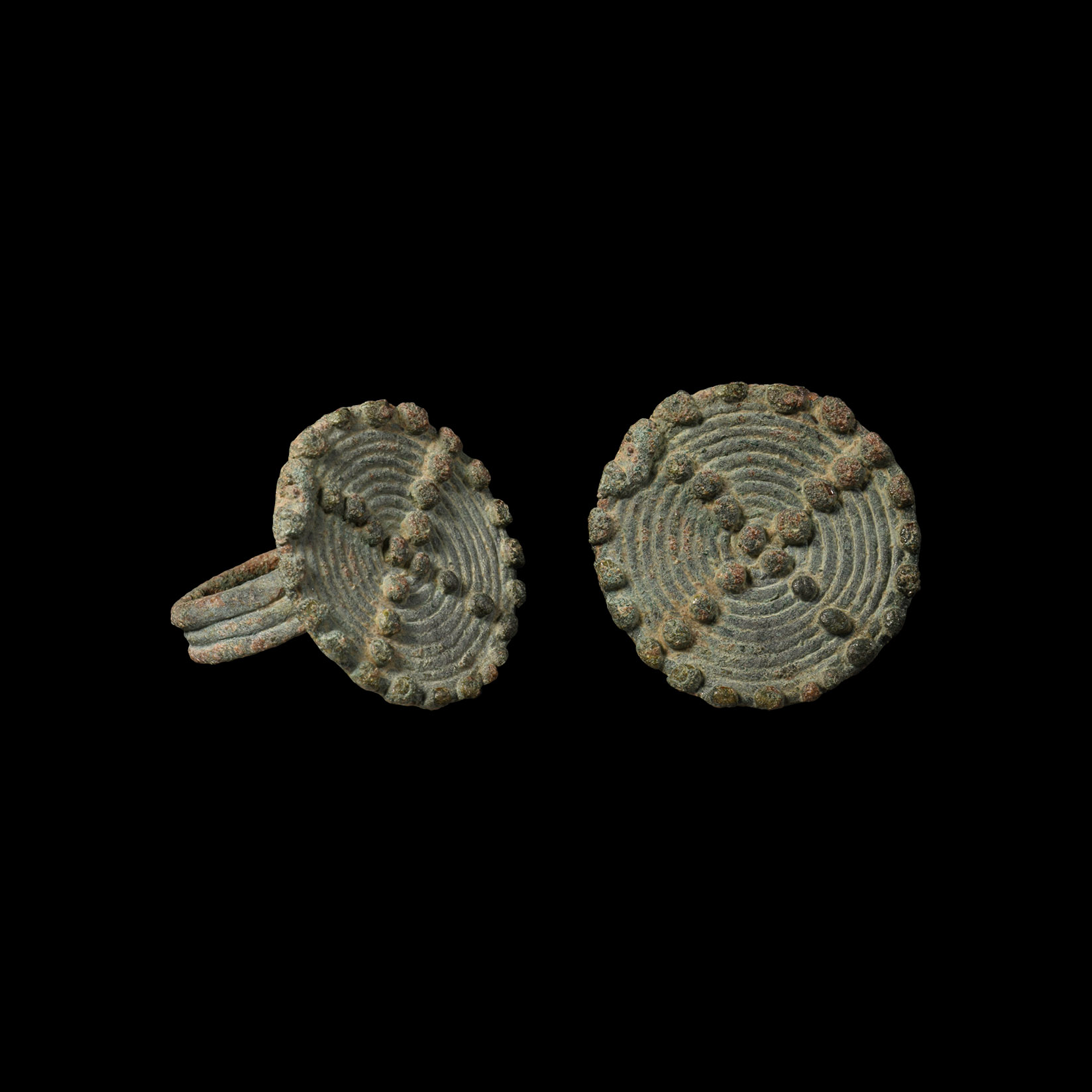
Amlash Decorated Bronze Ring
1ST MILLENNIUM B.C.
7/8 in. (7.98 grams, 22.63 mm overall, 16.94 mm internal diameter (approximate size British L, USA 5 3/4, Europe 11.24, Japan 10)).
The circular bezel formed from coiled wire and embellished with a central cross of pellets within a pellet border, supported by a tripartite hoop. [No Reserve]
ProvenanceEx private collection, 1980s.
Acquired on the UK art market in the 1990s.
TimeLine Auctions follows a vetting process to ensure the authenticity and legality of all items, reinforcing our commitment to integrity and responsible trading. Each antiquity, antique, and coin lot undergoes thorough examination by a vetting committee of at least ten external specialists, professional trade association members, scientists, and archaeologists: Our Vetting Process
AUCTIONS:
TimeLine is a leading auction house specialising in antiquities, ancient art, collectables, natural history, coins, medals, and books. Our auctions offer museums, collectors, historians, and enthusiasts the opportunity to acquire unique and historically significant pieces.
-
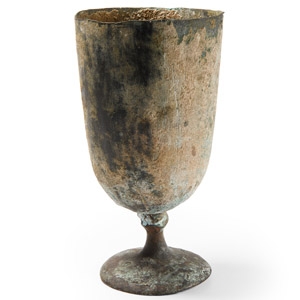
Western Asiatic Bronze Stemmed Goblet
1st millennium B.C.Sold for (Inc. bp): £169
Composed of a marriage of a conical bowl and foot with slender stem, decorative upper body and slightly domed everted foot. 188 grams, 13 cm high
Ex Mayfair gallery, 1980s. The Kusmirek Collection, UK. -
.jpg)
Western Asiatic Alabaster Bowl
1st millennium B.C.Sold for (Inc. bp): £117
Of carinated form with everted rim. 435 grams, 15 cm wide
Acquired 1960s-1990s. Late Alison Barker collection, a retired London barrister. -
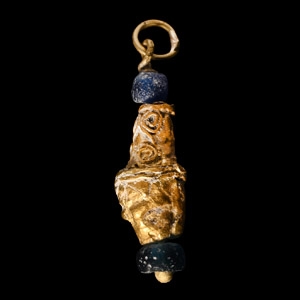
Western Asiatic Gold and Bead Pendant
1st millennium B.C.Sold for (Inc. bp): £169
Composed of a lions' head body adorned with filigree scrolls, blue glass beads above and below. 1.55 grams, 28 mm
Acquired 1970-2010. Collection of a late Japanese gentleman.
