
Loading, please wait...
LOT 1149
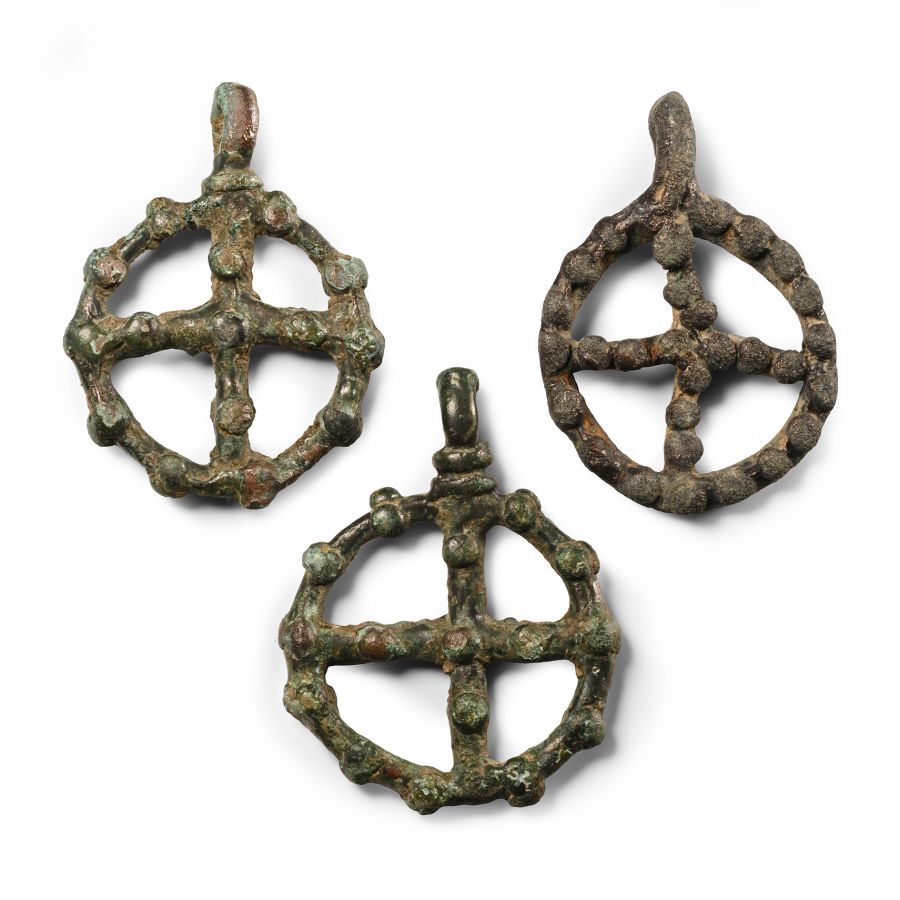
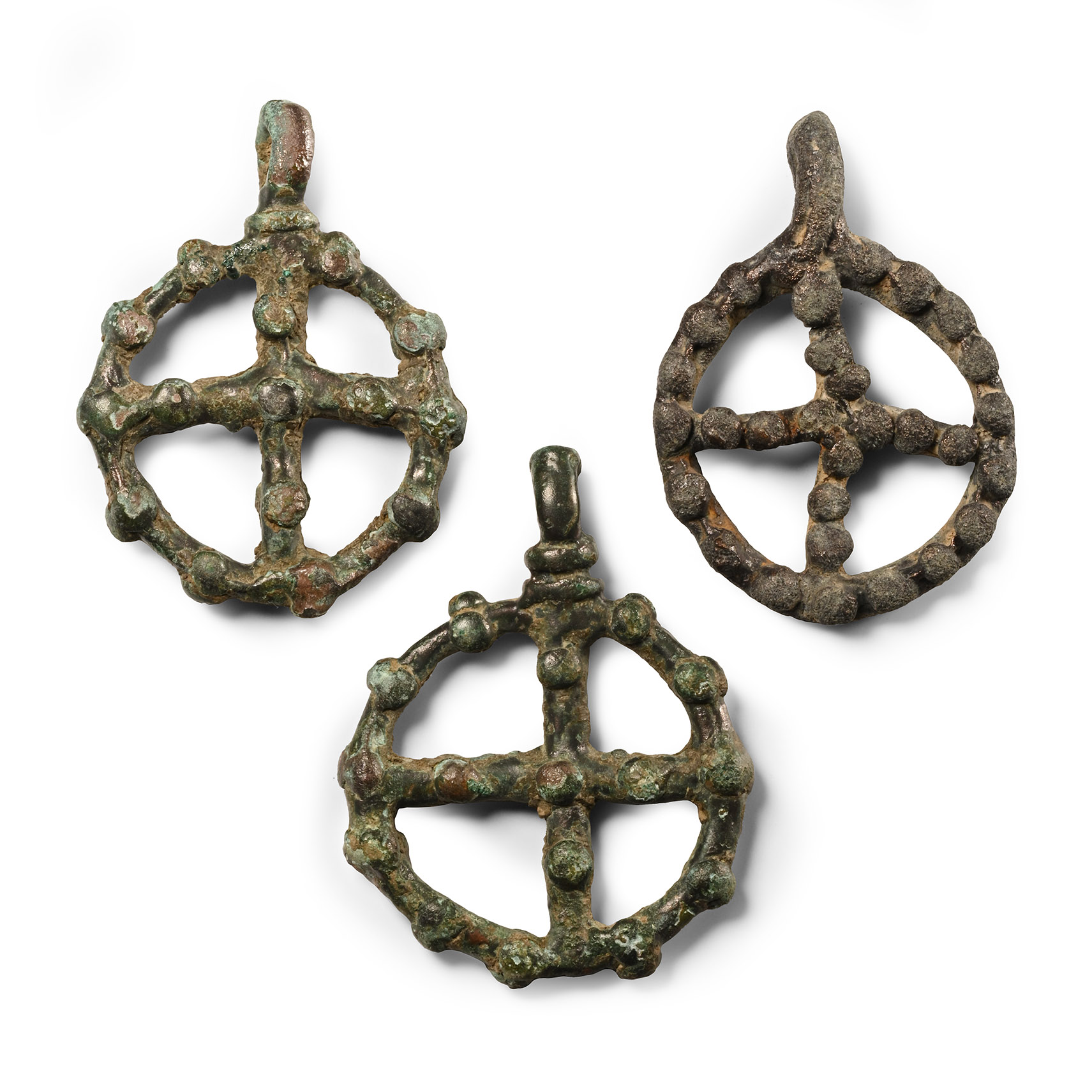
Amlash Bronze Openwork Pendant Group
1ST MILLENNIUM B.C.
1 7/8 - 2 in. (61.2 grams total, 48-51 mm).
Comprising three openwork pendants with central cross motifs, applied pellets throughout. [3, No Reserve]
ProvenanceUK private collection before 2000.
On the UK art market.
Property of a London gentleman.
TimeLine Auctions follows a vetting process to ensure the authenticity and legality of all items, reinforcing our commitment to integrity and responsible trading. Each antiquity, antique, and coin lot undergoes thorough examination by a vetting committee of at least ten external specialists, professional trade association members, scientists, and archaeologists: Our Vetting Process
AUCTIONS:
TimeLine is a leading auction house specialising in antiquities, ancient art, collectables, natural history, coins, medals, and books. Our auctions offer museums, collectors, historians, and enthusiasts the opportunity to acquire unique and historically significant pieces.
-
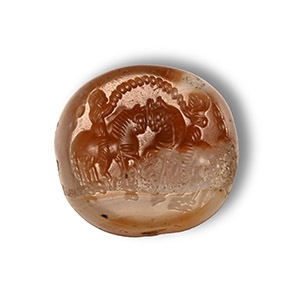
Sassanian Onyx Seal with Two Horses and Riders
4th-5th century A.D.Estimate: £2,000 - 3,000 (+bp*)
Opening Bid: £1,111
Plano-convex seal with intaglio image of two horsemen face-to-face with a segmented arch between them; probably the Sassanian equivalent of the Diskouroi; supplied with a museum-quality impression. 16.37 grams, 24 mm
Acquired between 1980-1983. From the 'Empire' collection, an important UK private collection of seals, no.10. Accompanied by a copy of an old typed cataloguing page signed by A D H Bivar. -
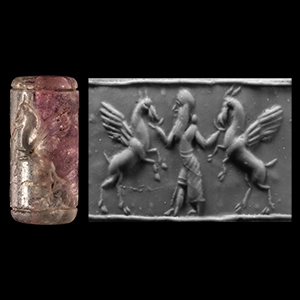
Mesopotamian Amethyst Cylinder Seal with Bearded God
Circa 900-600 B.C.Sold for (Inc. bp): £1,300
With bearded male between winged horses; accompanied by an old scholarly note, written and signed by W.G. Lambert, late Professor of Assyriology, University of Birmingham, 1970-1993, which states: 'Cylinder Seal of Amethist [sic] 24 x 11mm. Standing god between two winged horses. North Mesopotamia or West Iran. c.900-600 B.C. Condition good.' 6.57 grams, 23 mm
Ex Oasis Ancient Art, London, W1, before 1990. Academically researched and catalogued by the late Professor Lambert in the 1990s. From a collection acquired from various auction houses in the UK. From the estate of Mr R.W., a private Wiltshire, UK, collector; thence by descent. Accompanied by an original handwritten and signed scholarly note by the late W.G. Lambert, Professor of Assyriology at the University of Birmingham, 1970-1993. -
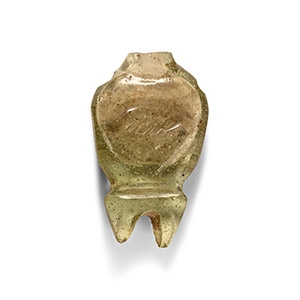
Western Asiatic Glass Balsamarium
Circa 12th-14th century A.D.Estimate: £300 - 400 (+bp*)
Opening Bid: £150
Teardrop-shaped glass vessel with low-relief eye motif to each face, low neck, 'molar' detailing to the base. 7.89 grams, 36 mm
Ex collection of the Chierroni family, Paris, France, formed between 1980-1990s. Property of a French collector.
