
Loading, please wait...
LOT 1252
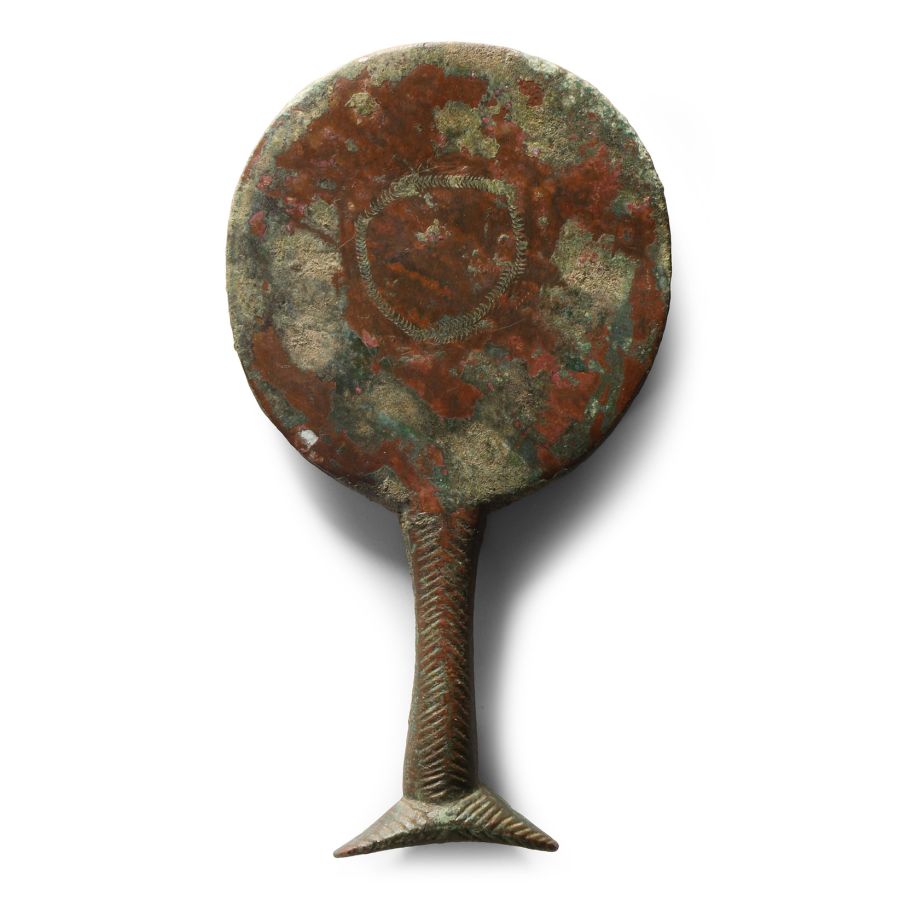
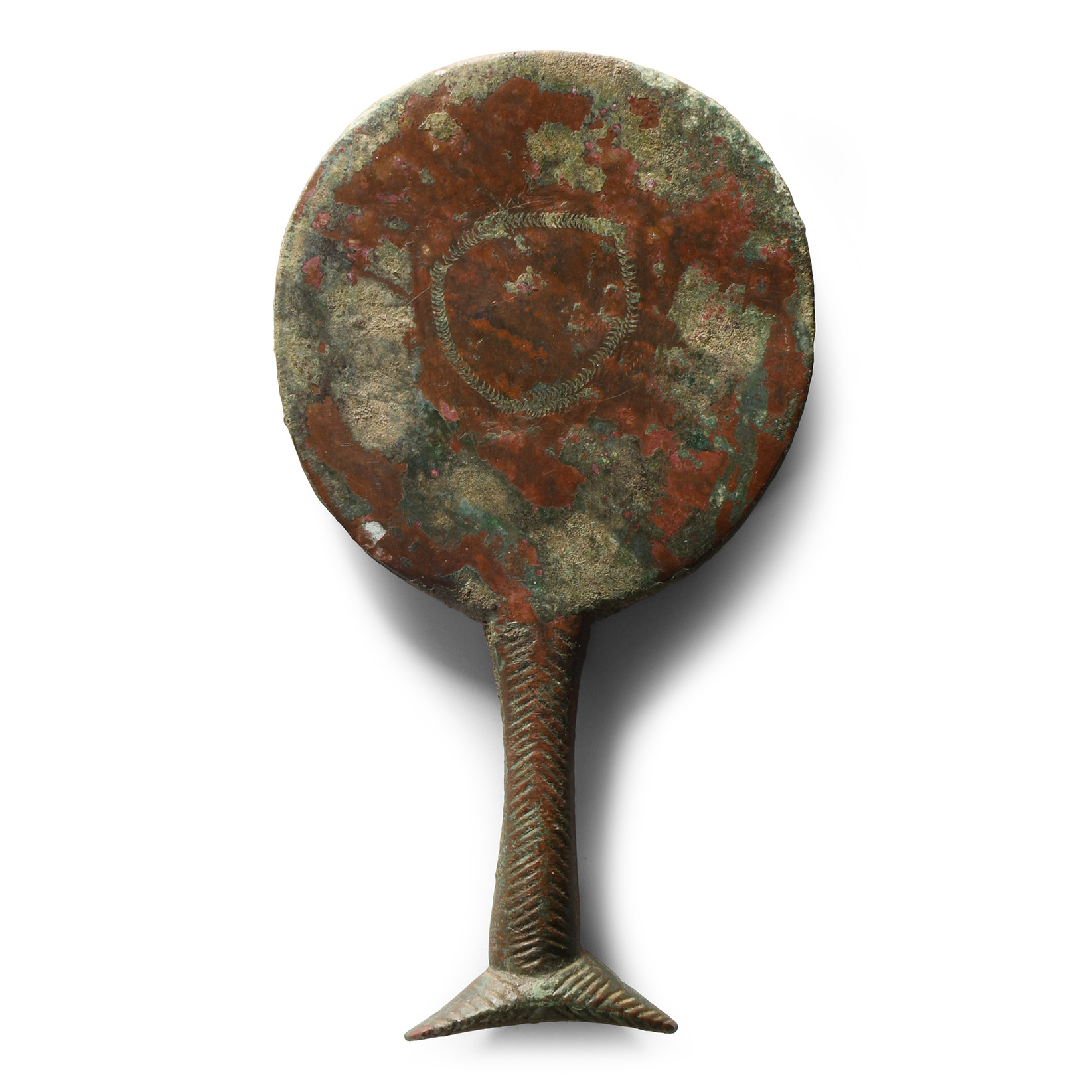
Amlash Bronze Mirror
1ST MILLENNIUM B.C.
4 1/2 in. (138 grams, 11.6 cm).
With discoid body, remains of tinning to the front face, the reverse with sub-circular wreath composed of curved zigzags, waisted stem incised with chevrons to both faces, domed base with hatched lines to upper face and base. [No Reserve]
ProvenanceUK private collection before 2000.
On the UK art market.
Property of a London gentleman.
TimeLine Auctions follows a vetting process to ensure the authenticity and legality of all items, reinforcing our commitment to integrity and responsible trading. Each antiquity, antique, and coin lot undergoes thorough examination by a vetting committee of at least ten external specialists, professional trade association members, scientists, and archaeologists: Our Vetting Process
AUCTIONS:
TimeLine is a leading auction house specialising in antiquities, ancient art, collectables, natural history, coins, medals, and books. Our auctions offer museums, collectors, historians, and enthusiasts the opportunity to acquire unique and historically significant pieces.
-

Rock Crystal Engraved Seal
19th-20th century A.D.Sold for (Inc. bp): £234
Hexagonal in section with pointed ends, one face ribbed with pierced lugs, one with scrolled tendrils, one with wing and rosettes, three with calligraphic text. 33 grams, 50 mm
Ex London, UK, gallery, 1971. -
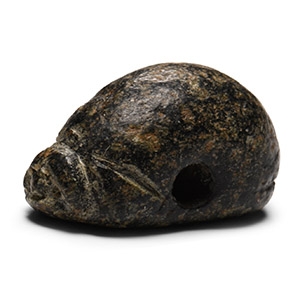
Western Asiatic Zoomorphic Stone Stamp Seal
3rd-2nd millennium B.C.Sold for (Inc. bp): £39
Plano-convex in profile, oval in plan with facial detailing to the knop finial, underside with incuse tree motifs. 3.81 grams, 21 mm
From a London, UK, collection formed in the late 1980s-early 1990s; collection number 2921. Academically researched and catalogued by the late Professor Lambert in the early 1990s (collection number on the packet in Professor Lambert's hand. -
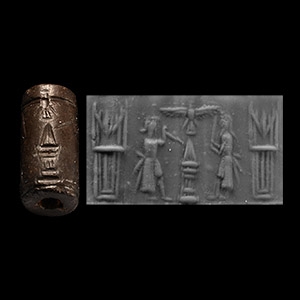
Mesopotamian Haematite Cylinder Seal with Altar
2nd-1st millennium B.C.Sold for (Inc. bp): £910
With intaglio frieze depicting two worshippers addressing an altar with faravahar above, heavy barred door to the side; supplied with a museum-quality impression. 2.83 grams, 17 mm
Ex S collection, London, UK, 1980-1990s.
