
Loading, please wait...
LOT 0405
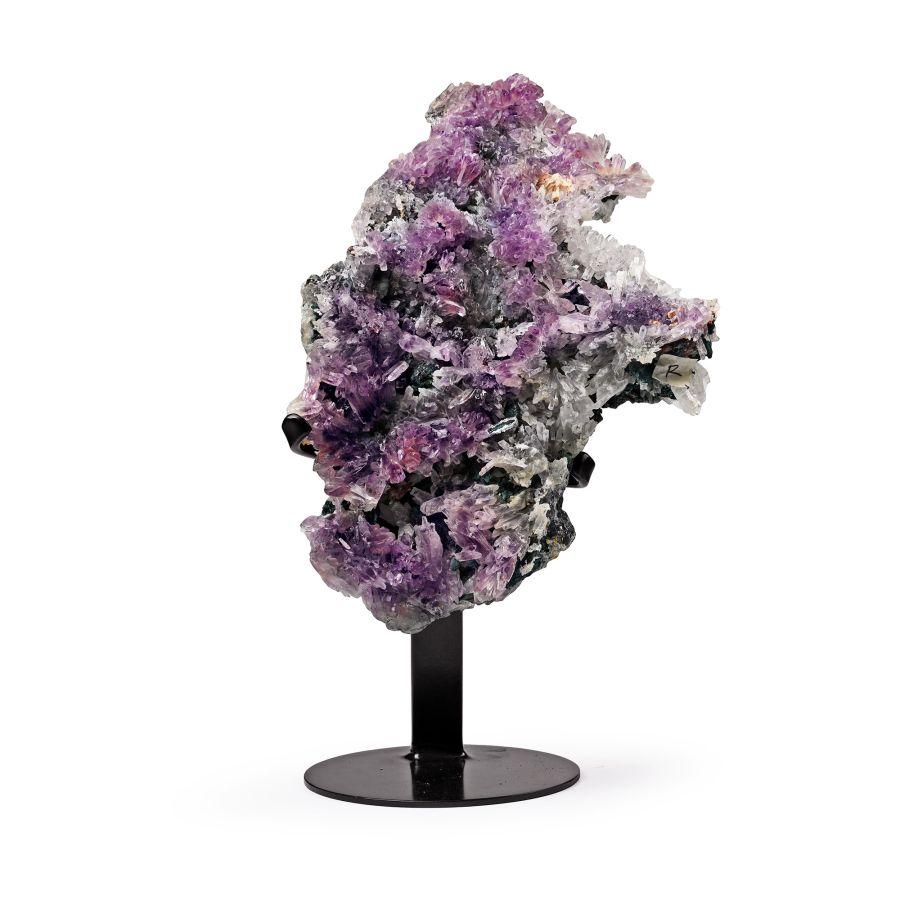
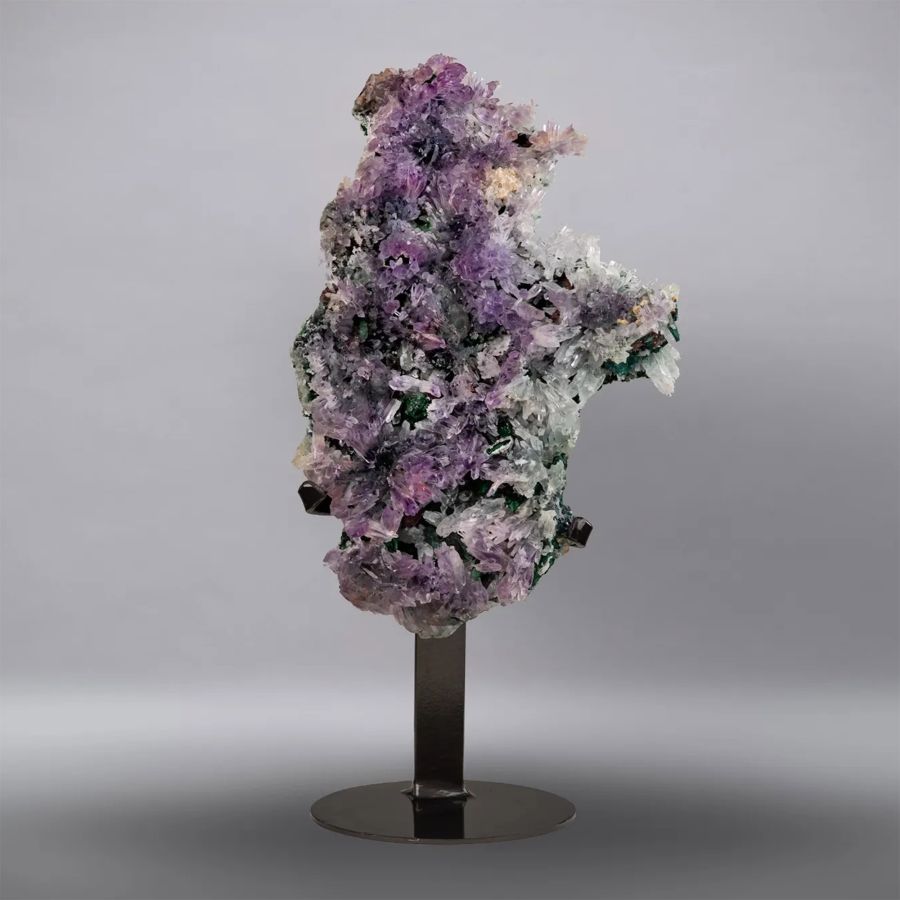
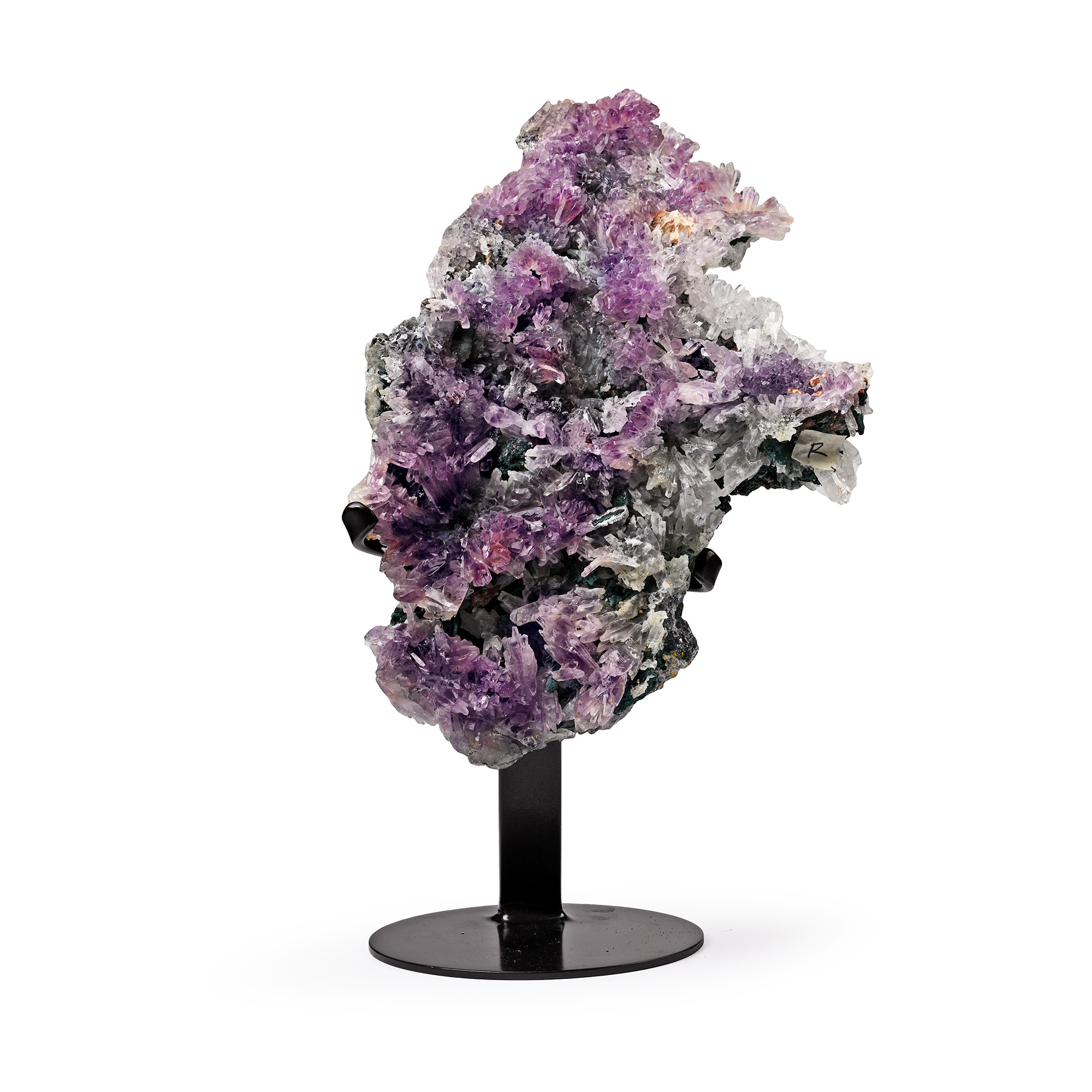
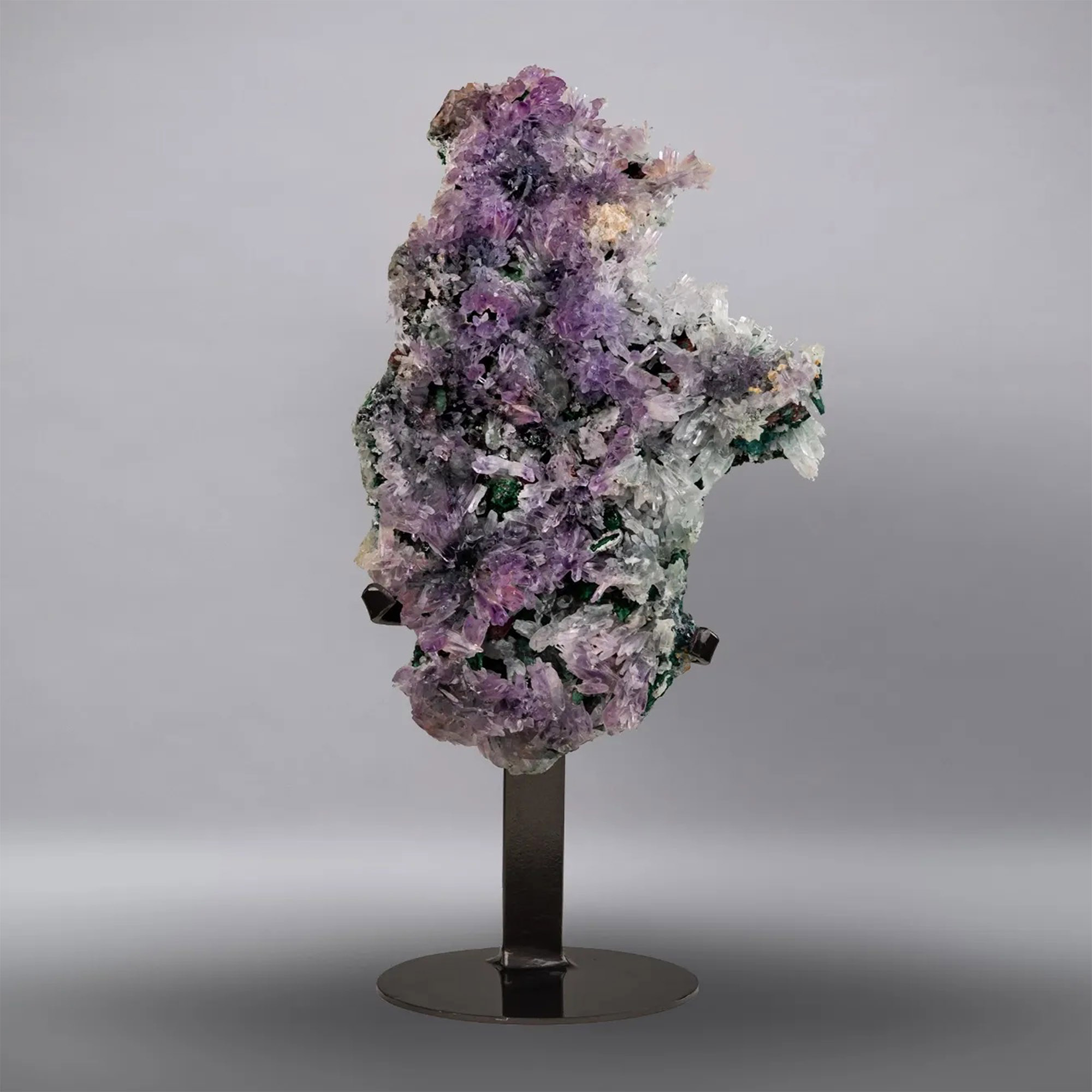
Amethyst and Quartz Crystal Geode Section
13 5/8 in. (2.4 kg total, 34.5 cm including stand).
A cut section of green celadonite geode with white quartz crystals to the outer wall, the internal wall lined with radiating clusters of prismatic amethyst and quartz crystals; accompanied by a custom-made display stand.
ProvenanceFrom Artigas, Uruguay.
Property of a London lady.
TimeLine Auctions follows a vetting process to ensure the authenticity and legality of all items, reinforcing our commitment to integrity and responsible trading. Each antiquity, antique, and coin lot undergoes thorough examination by a vetting committee of at least ten external specialists, professional trade association members, scientists, and archaeologists: Our Vetting Process
AUCTIONS:
TimeLine is a leading auction house specialising in antiquities, ancient art, collectables, natural history, coins, medals, and books. Our auctions offer museums, collectors, historians, and enthusiasts the opportunity to acquire unique and historically significant pieces.
-
![Cut and Polished Agate Crystal Geode Half Collection [10]](https://timelineauctions.com/upload/images/items/small/228225-s.jpg)
Cut and Polished Agate Crystal Geode Half Collection [10]
Sold for (Inc. bp): £26
Comprising ten cut geode halves with exposed internal cavities mainly lined with amethyst or chalcedony. 720 grams total, 44-62 mm
From Brazil. Ex Mineral Imports, London, UK. Gregory, Bottley & Lloyd (Gregory's), Harwich, UK. -
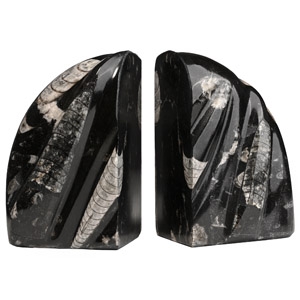
Polished Orthoceras Fossil Bookends
Devonian Period, circa 400 million years B.P.Sold for (Inc. bp): £390
Formed of fossiliferous stone with Orthoceras sp. specimens. 2.16 kg total, 12 cm each
From Morocco, North Africa. Ex Cambridgeshire, UK, collection. -
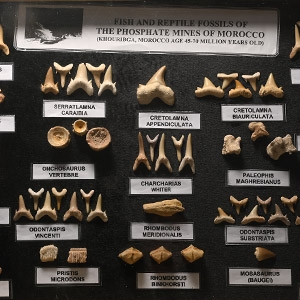
Fossil Shark Tooth Display Case
Cretaceous-Eocene Period, circa 70-45 million years B.P.Sold for (Inc. bp): £143
A glazed display case with mounted specimens of various teeth, vertebrae and ray palates, with identifying labels. 937 grams total, 34.5 x 24.5 cm
From a Cambridgeshire, UK, collection.
