
Loading, please wait...
LOT 1305
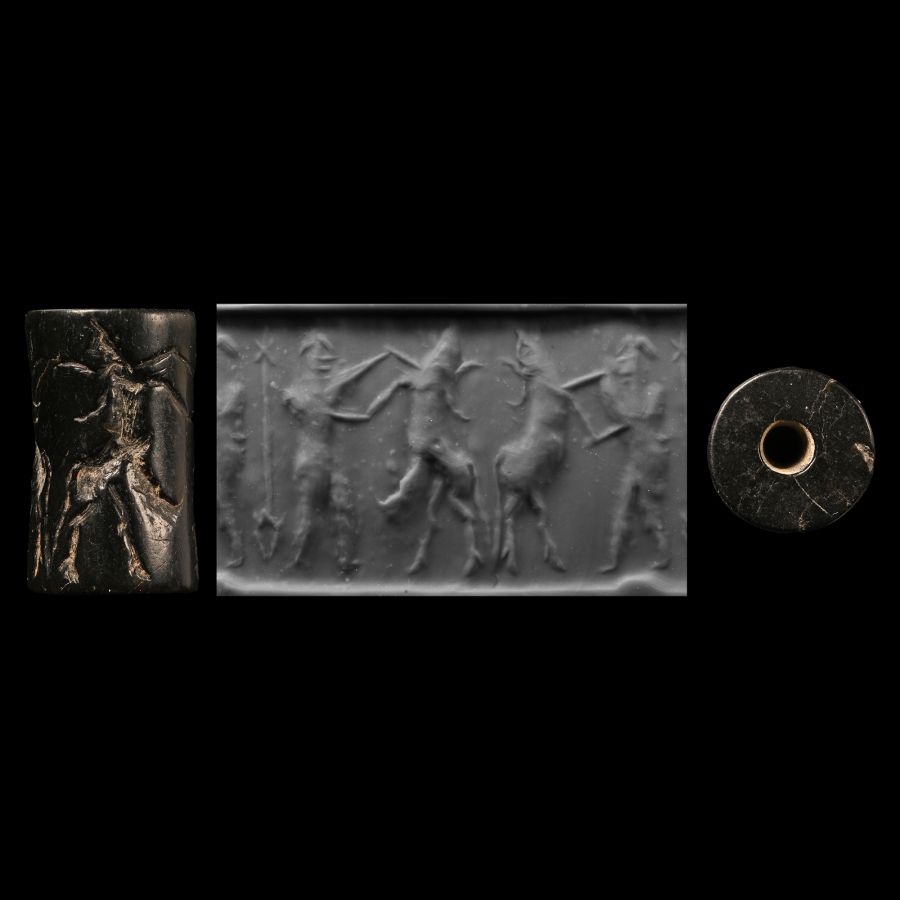
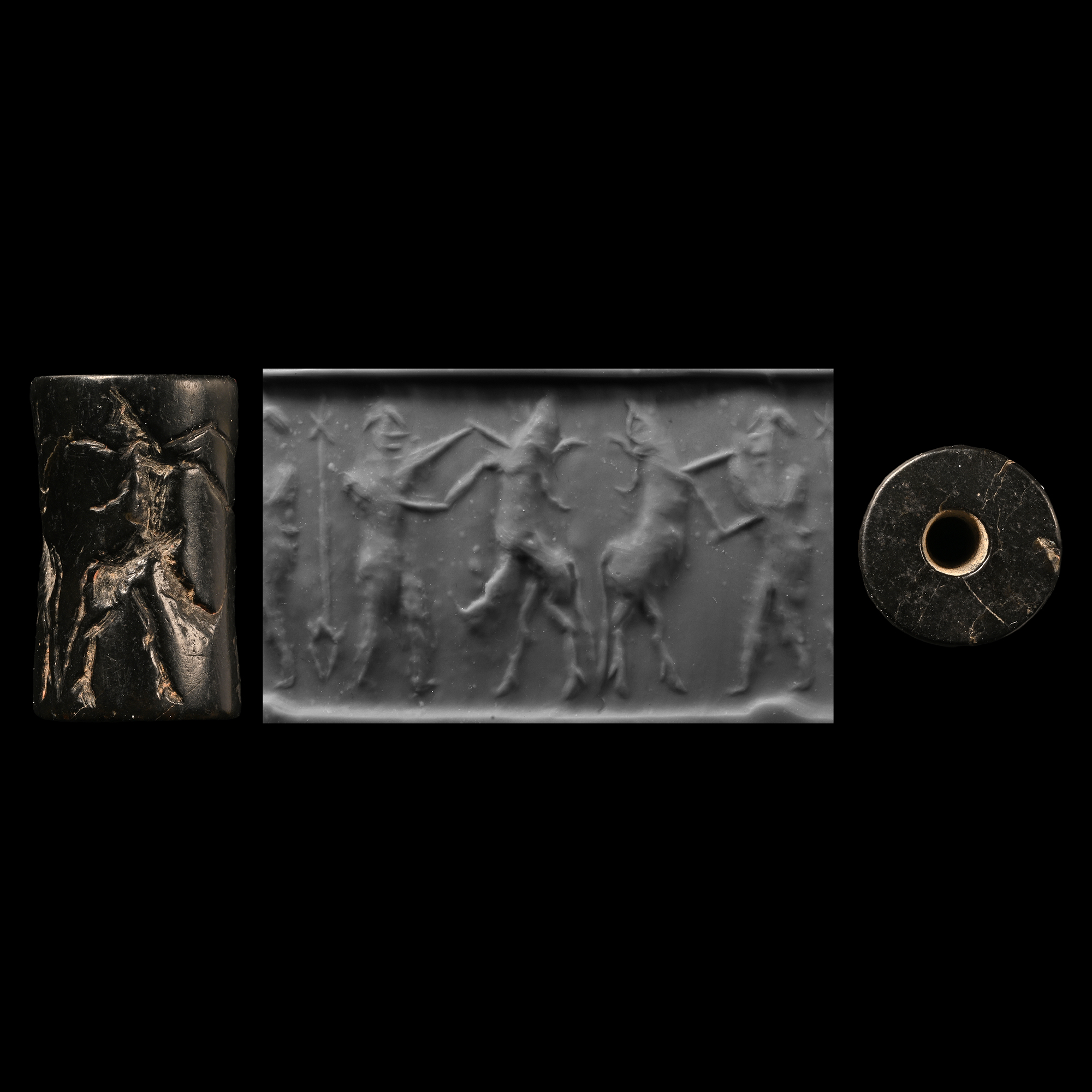
Akkadian Cylinder Seal with Combat Scene
CIRCA 2400-2200 B.C.
1 in. (12.5 grams, 26 mm).
Black stone with two standing figures each spearing antelope rampant standing on their on their hind legs. [No Reserve]
ProvenanceFrom a collection acquired from various auction houses in the UK.
From the estate of Mr R.W., a private Wiltshire, UK, collector; thence by descent.
TimeLine Auctions follows a vetting process to ensure the authenticity and legality of all items, reinforcing our commitment to integrity and responsible trading. Each antiquity, antique, and coin lot undergoes thorough examination by a vetting committee of at least ten external specialists, professional trade association members, scientists, and archaeologists: Our Vetting Process
AUCTIONS:
TimeLine is a leading auction house specialising in antiquities, ancient art, collectables, natural history, coins, medals, and books. Our auctions offer museums, collectors, historians, and enthusiasts the opportunity to acquire unique and historically significant pieces.
-

Western Asiatic Turquoise Ceramic Bead Necklace
Circa 1st millennium B.C.Estimate: £300 - 400 (+bp*)
Opening Bid: £150
Composed of spherical turquoise-coloured beads interspersed with yellow glass and faience beads; restrung on a metal wire. 62 grams, 49.5 cm
Ex French gallery, 1970-1990. Paris collection, France. -
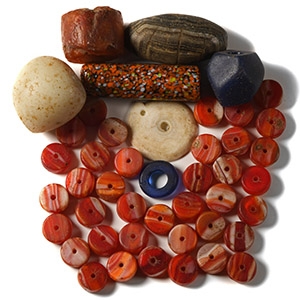
Mixed Glass and Stone Bead Group
20th century A.D. and earlierSold for (Inc. bp): £13
Including a tubular mosaic glass type, fusiform banded agate type, polyhedral lapis lazuli type, carnelian drum-shaped type and other beads. 99 grams total, 10-42 mm
From a collection acquired on the UK art market from various auction houses and collections mostly before 2000. From an important Cambridgeshire estate; thence by descent. -
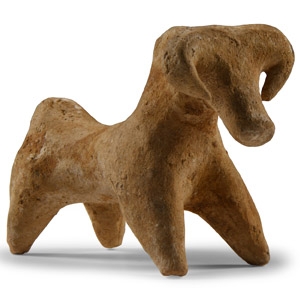
Amorite Terracotta Bull
Late 3rd-early 2nd millennium B.C.Sold for (Inc. bp): £338
Modelled in the round, with humped shoulder and downturned horns. 60 grams, 83 mm
Private collection Mr S.A., acquired in 1991. Thence by descent.
The figurine was modelled simplistically and only the presence of a hump and horns makes it possible to identify the animal as a zebu, which was common in the prehistoric Mesopotamian world. Similar figurines, which reproduced animals and humans, are typical of Amorite art, named after a group of semi-nomadic populations who lived in the north-western part of the Near East in the 3rd and 2nd millennium B.C. From the 20th century B.C., the incursions and armed pressure that the Amorites exerted on the kingdom of Ur overthrew the existing dynasties and created several kingdoms throughout Mesopotamia whose dynasties retained a strong attachment to their original culture.
