
Loading, please wait...
LOT 0194
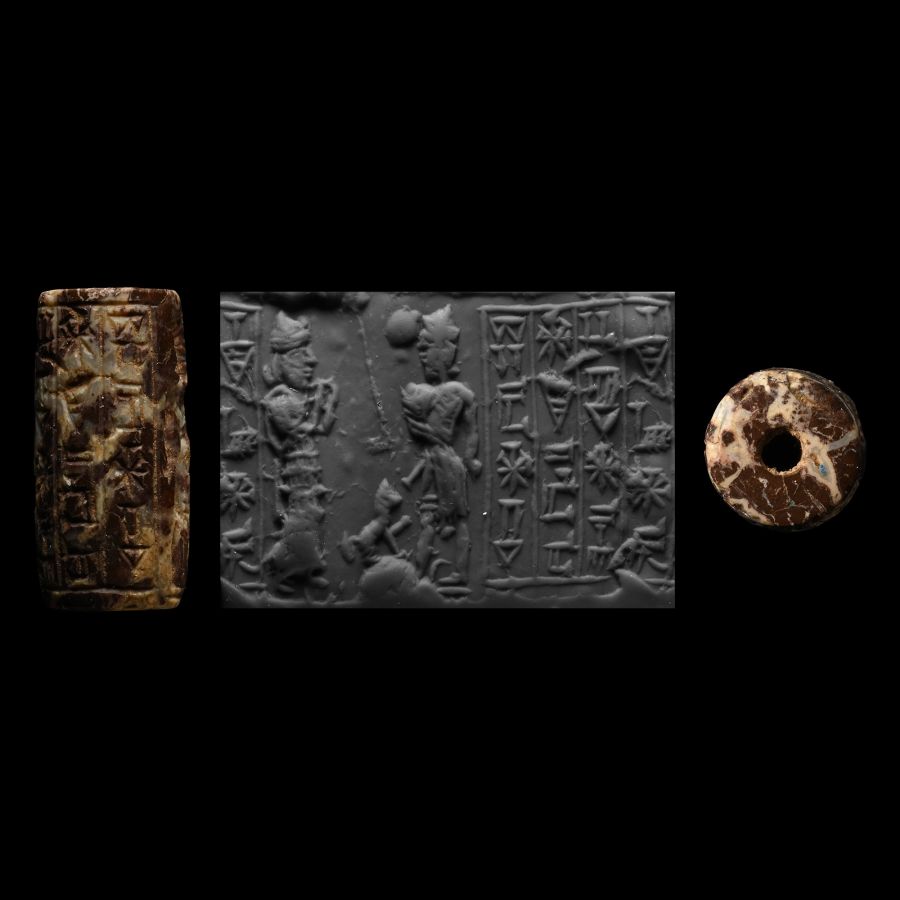
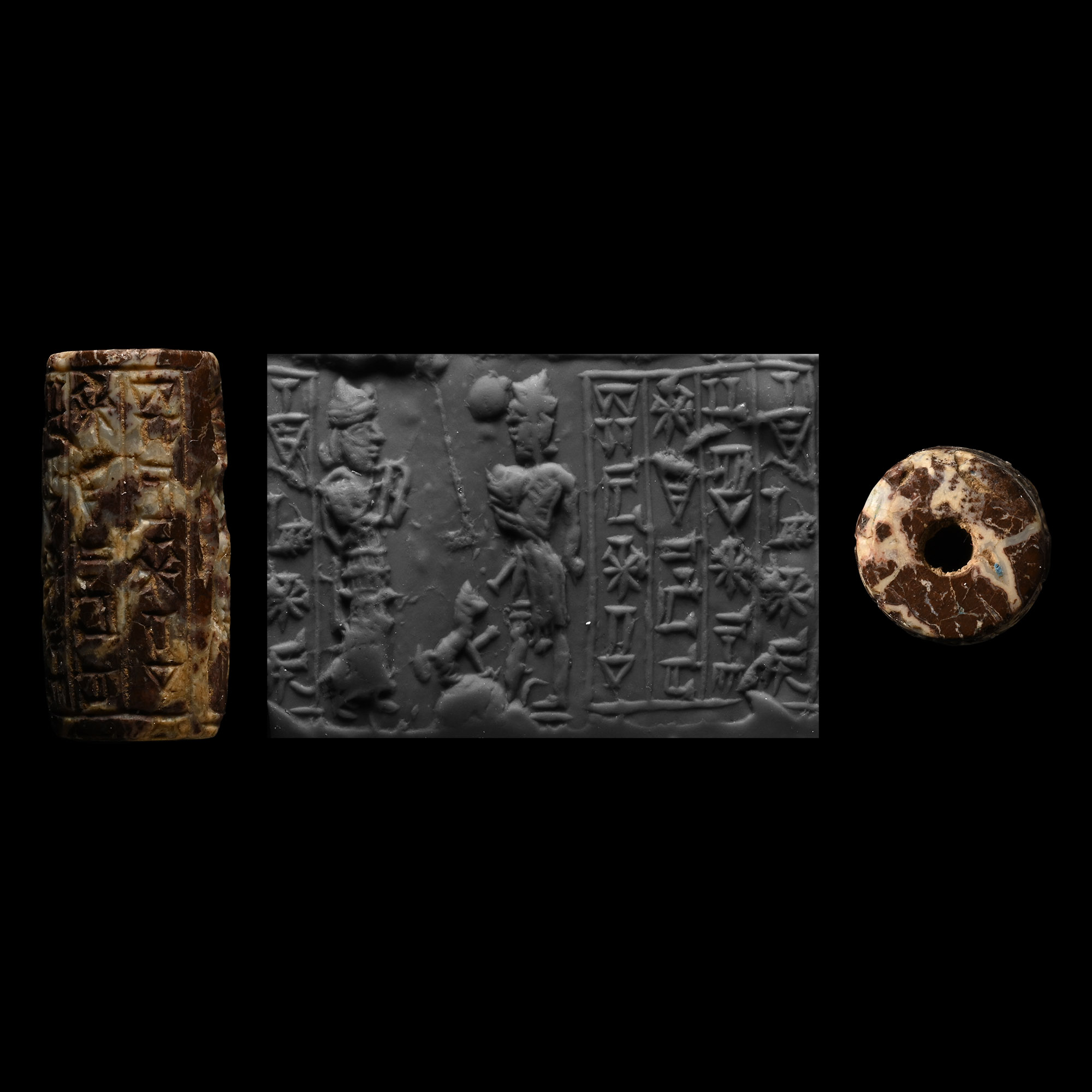
Akkadian Agate Cylinder Seal with Inscription
2ND MILLENNIUM B.C.
1 in. (7.29 grams, 26 mm).
Figural panel with a female in profile wearing tiered robe and with arms drawn up to the chest facing a male wearing a short jacket open at the hips; between them a dog with one foreleg raised; four columns of cuneiform text.
ProvenanceFrom the property of late Mr SM, London, UK, 1970-1990s, thence by descent.
Examined by Professor Wilfrid George Lambert FBA (1926-2011), historian, archaeologist, and specialist in Assyriology and Near Eastern archaeology, in the late 1980s and early 1990s.
TimeLine Auctions follows a vetting process to ensure the authenticity and legality of all items, reinforcing our commitment to integrity and responsible trading. Each antiquity, antique, and coin lot undergoes thorough examination by a vetting committee of at least ten external specialists, professional trade association members, scientists, and archaeologists: Our Vetting Process
AUCTIONS:
TimeLine is a leading auction house specialising in antiquities, ancient art, collectables, natural history, coins, medals, and books. Our auctions offer museums, collectors, historians, and enthusiasts the opportunity to acquire unique and historically significant pieces.
-
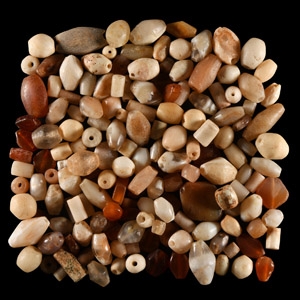
Western Asiatic Mixed Agate and Carnelian Bead Group
1st millennium B.C. and laterEstimate: £500 - 700 (+bp*)
Opening Bid: £250
Mainly bicones, oblates, rounded and barrel shapes. 272 grams total, 7-28 mm
Acquired 1980-2015. Ex Abelita family collection. -
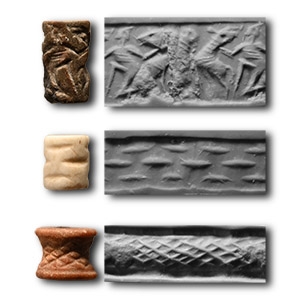
Jemdet Nasr Period Cylinder Seal Group
3100-2900 B.C.Sold for (Inc. bp): £286
Comprising two examples from the Jemdet Nasr Period, one white limestone with three rows fish; a second pink limestone with cross-banded hatching; accompanied by a third Early Dynastic example circa 2700-2500 B.C., in grey limestone with contest scene, with a male figure between two rampant antelope. 9.69 grams total, 12-19 mm
From a collection acquired from various auction houses in the UK. From the estate of Mr R.W., a private Wiltshire, UK, collector; thence by descent. -
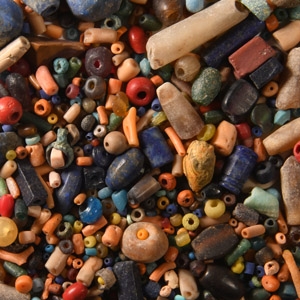
Western Asiatic and Other Bead Group
1st millennium B.C. and laterSold for (Inc. bp): £111
Comprising a large quantity of beads in various shapes and sizes in glass, stone, coral and lapis lazuli. 178 grams total, 2-34 mm
Ex property of a late Japanese collector, 1970-2000s.
