
LOT 3303
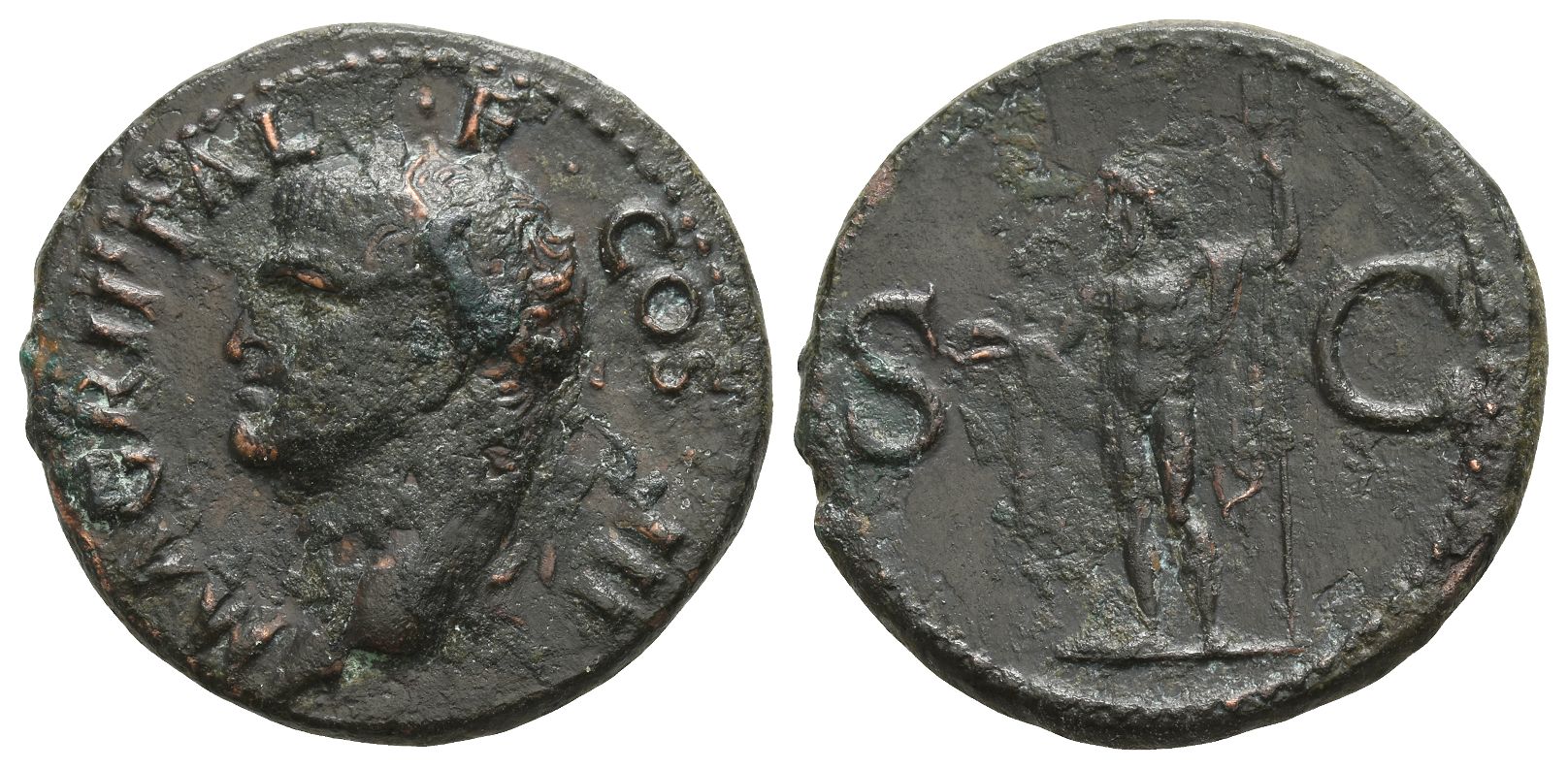
Agrippa AE As. AD 37-41. Rome mint.
M • AGRIPPA • L • F COS • III, head to left, wearing rostral crown / Neptune standing to left, holding small dolphin and trident; S C across fields. RIC I 58 (Gaius); Cohen 3; BMCRE 161 (Tiberius). Near Very Fine.(11.39gr, 28mm, 6h.).
ProvenanceAcquired 1970s-1996.
Property of a North American collector.
London collection, 2016.
TimeLine Auctions follows a vetting process to ensure the authenticity and legality of all items, reinforcing our commitment to integrity and responsible trading. Each antiquity, antique, and coin lot undergoes thorough examination by a vetting committee of at least ten external specialists, professional trade association members, scientists, and archaeologists: Our Vetting Process
AUCTIONS:
TimeLine is a leading auction house specialising in antiquities, ancient art, collectables, natural history, coins, medals, and books. Our auctions offer museums, collectors, historians, and enthusiasts the opportunity to acquire unique and historically significant pieces.
-
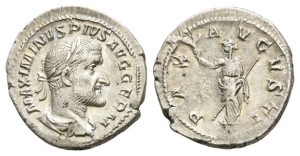
Maximinus I AR Denarius. AD 236-238. Rome mint.
Sold for (Inc. bp): £59
MAXIMINVS PIVS AVG GERM, laureate, draped and cuirassed bust to right / PAX AVGVSTI, Pax standing to left, holding branch and sceptre. RIC IV 19; BMCRE 144; RSC 37. 3.34gr, 20mm, 12h.
Good Very Fine.
From the private collection of a Canadian gentleman living in Essex, UK, formed since the 1920s-circa 1990. Property of an Essex lady until the the late 1990s; thence by descent. From the private collection of an Essex gentleman since the late 1990s. -
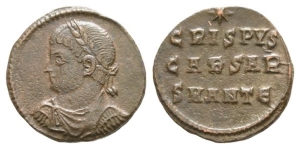
Crispus, as Caesar BI Nummus. AD 325. Antioch mint. 5th officina.
Sold for (Inc. bp): £46
Laureate, draped and cuirassed bust to left / CRISPVS CAESAR in two lines; star above, SMANTE below. RIC VII 58. 1.83gr, 17mm, 11h.
Very Fine.
Property of a Cambridgeshire, gentleman. -
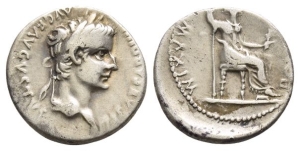
Tiberius AR Denarius. AD 36-37. Lugdunum mint. 'Tribute Penny' type.
Sold for (Inc. bp): £182
TI CAESAR DIVI AVG F AVGVSTVS, laureate head to right / PONTIF MAXIM, Livia, as Pax, seated to right on chair with ornamented legs, feet on footstool, holding sceptre and branch; on singular exergual line. RIC I 30; Lyon 152; RSC 16a. 3.63gr, 18mm, 10h.
Near Very Fine.
From the private collection of a Suffolk, UK, gentleman, early 2000s.
