
Loading, please wait...
LOT 1979
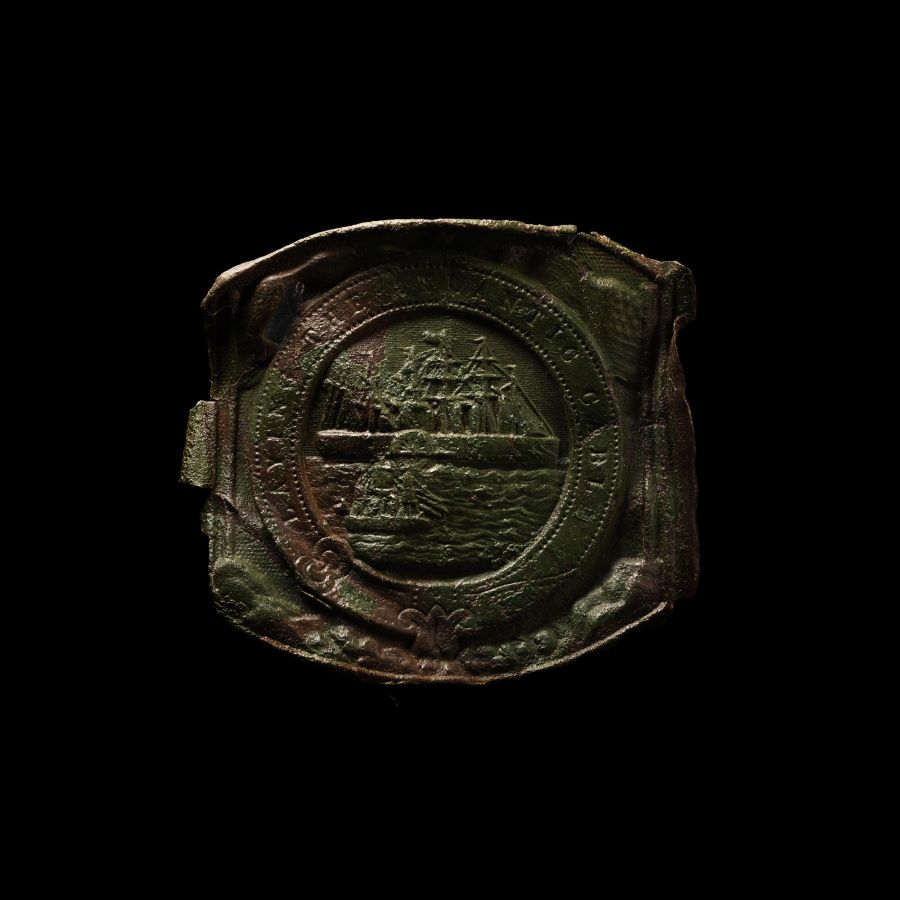
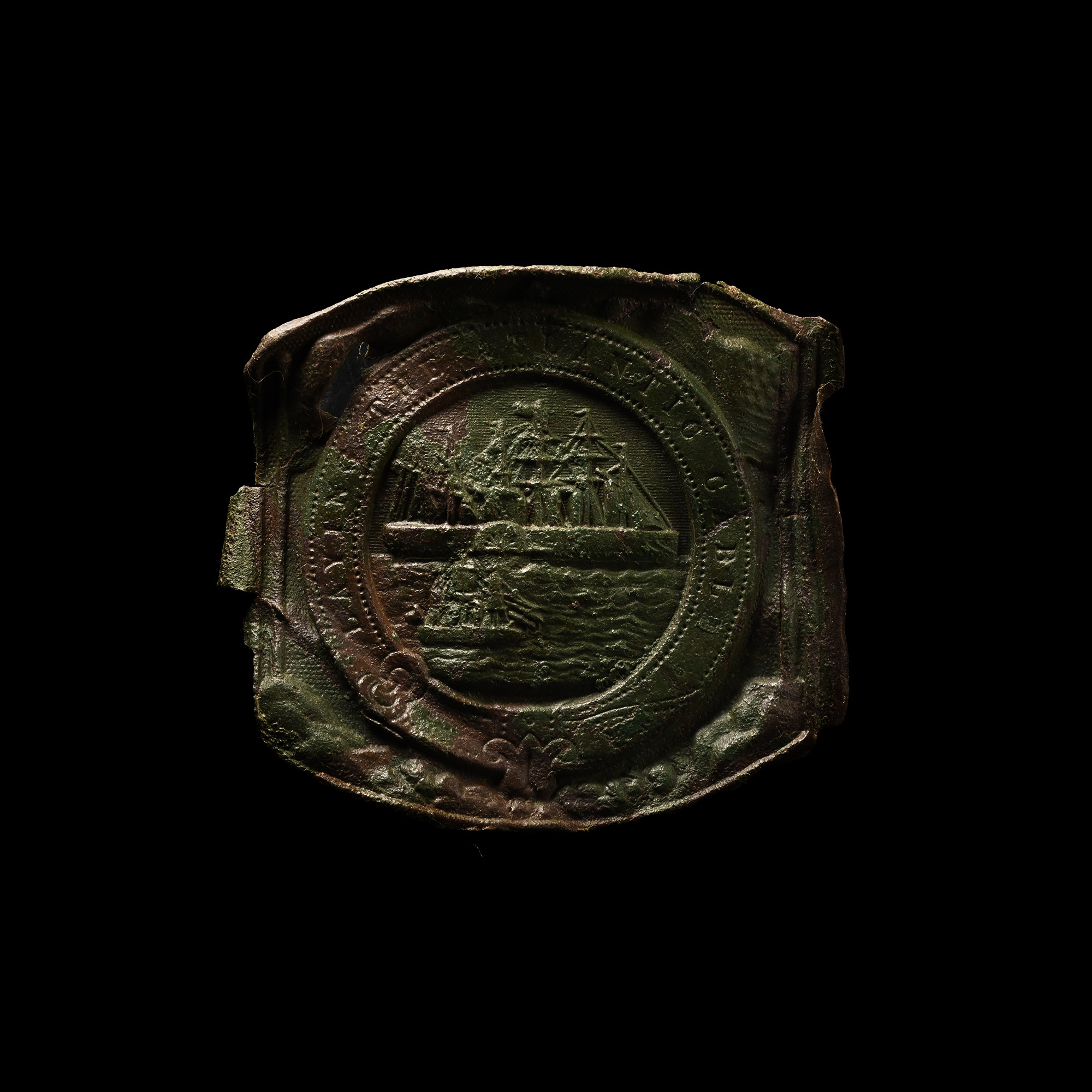
Agamemnon 'First Atlantic Cable' Commemorative Buckle
1858 A.D.
2 1/4 in. (7.15 grams, 56 mm).
Sheet bronze buckle plate with lateral integral hook; stamped design including a circular band enclosing a maritime scene with two sailing ships; band with legend 'Laying the Atlantic Cable'; collector's handwritten ticket. [No Reserve]
ProvenanceAcquired on the UK art market.
Property of a Berkshire, UK, gentleman collector.
This lot is accompanied by an illustrated lot declaration signed by the Head of the Antiquities Department, Dr Raffaele D'Amato.
Laying a telegraphic cable beneath the Atlantic Ocean was among the 19th century's most remarkable technological achievements since it allowed messages to pass between North America and Europe in a matter of minutes, rather than the two weeks by steamship. A first attempt in 1858 was unsuccessful but two working cables were finally laid in July and September 1866 by a team of engineers, technicians and sailors, with two groups of financial backers involved and relying on help from the British and United States navies. HMS Agamemnon was deployed on this mission alongside USS Niagara. The occasion caused a great stir at the time and was commemorated in numerous works of art.
CONDITIONTimeLine Auctions follows a vetting process to ensure the authenticity and legality of all items, reinforcing our commitment to integrity and responsible trading. Each antiquity, antique, and coin lot undergoes thorough examination by a vetting committee of at least ten external specialists, professional trade association members, scientists, and archaeologists: Our Vetting Process
AUCTIONS:
TimeLine is a leading auction house specialising in antiquities, ancient art, collectables, natural history, coins, medals, and books. Our auctions offer museums, collectors, historians, and enthusiasts the opportunity to acquire unique and historically significant pieces.
-
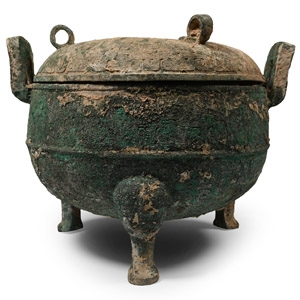
Chinese Archaic Style Bronze Vessel
20th century A.D.Estimate: £120 - 170 (+bp*)
Opening Bid: £60
Drum-shaped pan with ring to the equator and three curved legs, square loops to the rim, domed lid with three loops; dense low-relief cloud pattern. 2.66 kg, 25.5 cm wide
Ex West Country, UK, collection, 1990s, and Desmond Morris. This lot is accompanied by an illustrated lot declaration signed by the Head of the Antiquities Department, Dr Raffaele D'Amato. -
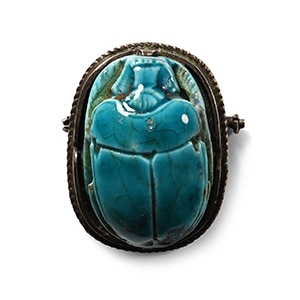
Egyptian Style Faience Scarab in Silver Brooch
19th century A.D.Sold for (Inc. bp): £39
Scarab modelled in the round with undercut lower body; silver frame with sliding catch, indistinct heater-shaped stamped maker's mark to outer face. 11.8 grams, 31 mm
From a private, UK, collection in the 1980s. Property of a London, UK, antiquarian. This lot is accompanied by an illustrated lot declaration signed by the Head of the Antiquities Department, Dr Raffaele D'Amato. -
.jpg)
Watercolour Painting, After Marc Chagall (1887-1985)
19th-20th century A.D.Sold for (Inc. bp): £312
With several figures surrounding a ram's head, signed to the lower right hand corner 'Marc Chagall'; set in a glazed frame. 1.18 kg total, 43.1 x 36.2 cm
Private collection of a London gentleman, acquired between 1965-2020. This lot is accompanied by an illustrated lot declaration signed by the Head of the Antiquities Department, Dr Raffaele D'Amato.
