
Loading, please wait...
LOT 2395
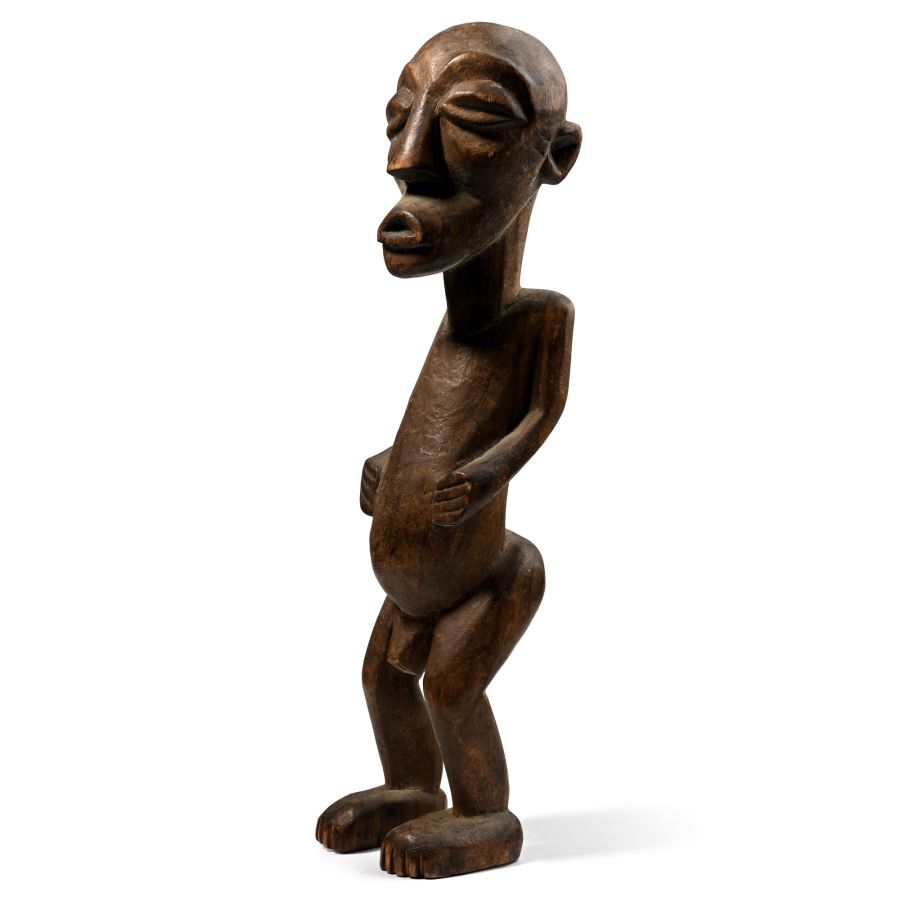
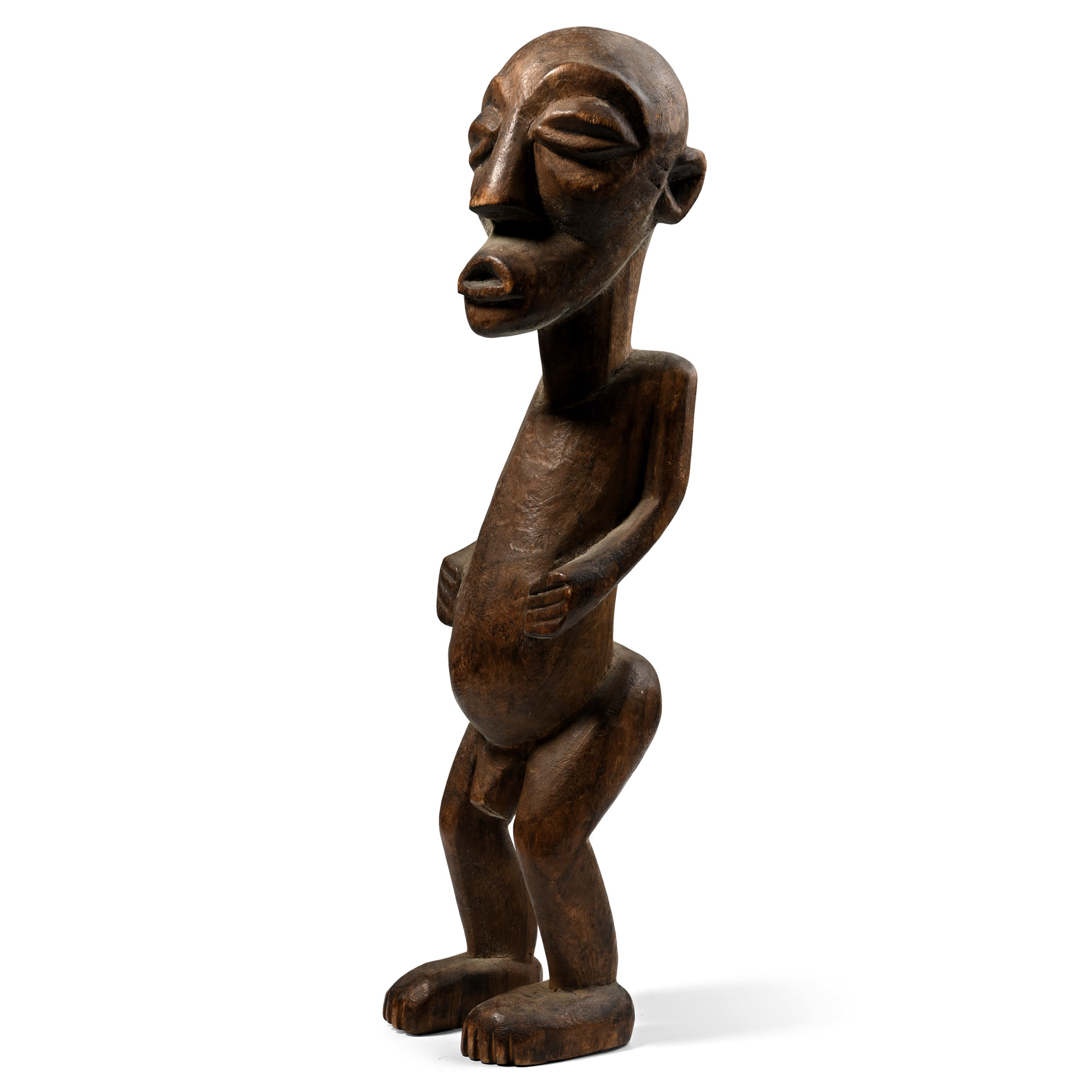
African Wooden Fertility Figure
LOBI TRIBE, 20TH CENTURY A.D.
14 1/8 in. (425 grams, 35.8 cm).
Carved in a standing pose with a bald head, legs slightly bent, hands resting on the abdomen and an elongated neck supporting a face with bulging eyes. [No Reserve]
ProvenanceFrom Burkina Faso, West Africa.
From a Glasgow ethnographical collection; formed 1940s-1950s.
From the property of a late Lincolnshire, UK, gentleman.
TimeLine Auctions follows a vetting process to ensure the authenticity and legality of all items, reinforcing our commitment to integrity and responsible trading. Each antiquity, antique, and coin lot undergoes thorough examination by a vetting committee of at least ten external specialists, professional trade association members, scientists, and archaeologists: Our Vetting Process
AUCTIONS:
TimeLine is a leading auction house specialising in antiquities, ancient art, collectables, natural history, coins, medals, and books. Our auctions offer museums, collectors, historians, and enthusiasts the opportunity to acquire unique and historically significant pieces.
-
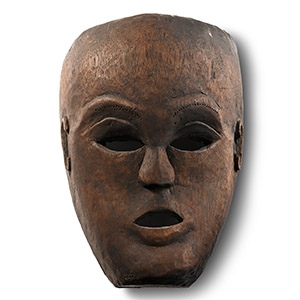
African Wooden Ceremonial Face Mask
Chokwe Tribe, late 20th century A.D.Sold for (Inc. bp): £46
A performance mask: a heavy carved wooden mask with natural features, ears to the sides and drilled holes to the eyebrows and chin. 1.32 kg, 26.2 cm
From Democratic Republic of the Congo, Central Africa. From the collection of the late Professor R M Hicks, OBE. From the property of a late Lincolnshire, UK, gentleman.
Itinerant actors wearing these masks travel from village to village, living on gifts received at performances. Most masks are carved of wood. The most popular and best-known entertainment masks are chihongo, spirit of wealth, and pwo, his consort. -
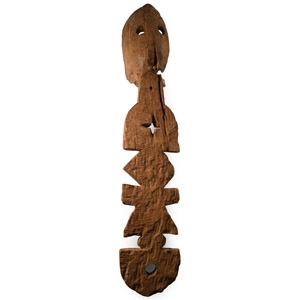
African Wooden Ceremonial Face Mask
Mossi Tribe, early-mid 20th century A.D.Sold for (Inc. bp): £33
Comprising an ellipsoid hollow face with parallel tusks; board of pierced geometric elements. 779 grams, 81 cm
From Burkina Faso, West Africa. Private Hampshire, UK, collection of tribal art; acquired in the 1960s. From the property of a late Lincolnshire, UK, gentleman.
Masks were regarded as the seat of the spirit, but they might also represent the totemic animal of the clan. -
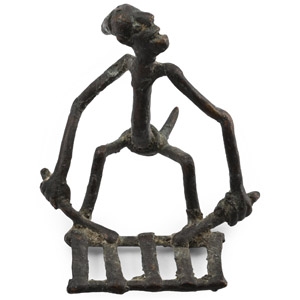
West African Bronze Figure of a Musician
19th-20th century A.D.Sold for (Inc. bp): £13
Figure of a musician playing a type of xylophone with a beater in each hand. 89 grams, 93 mm
From an old Oxford, UK, collection. From the property of a late Lincolnshire, UK, gentleman.
