
Loading, please wait...
LOT 2339
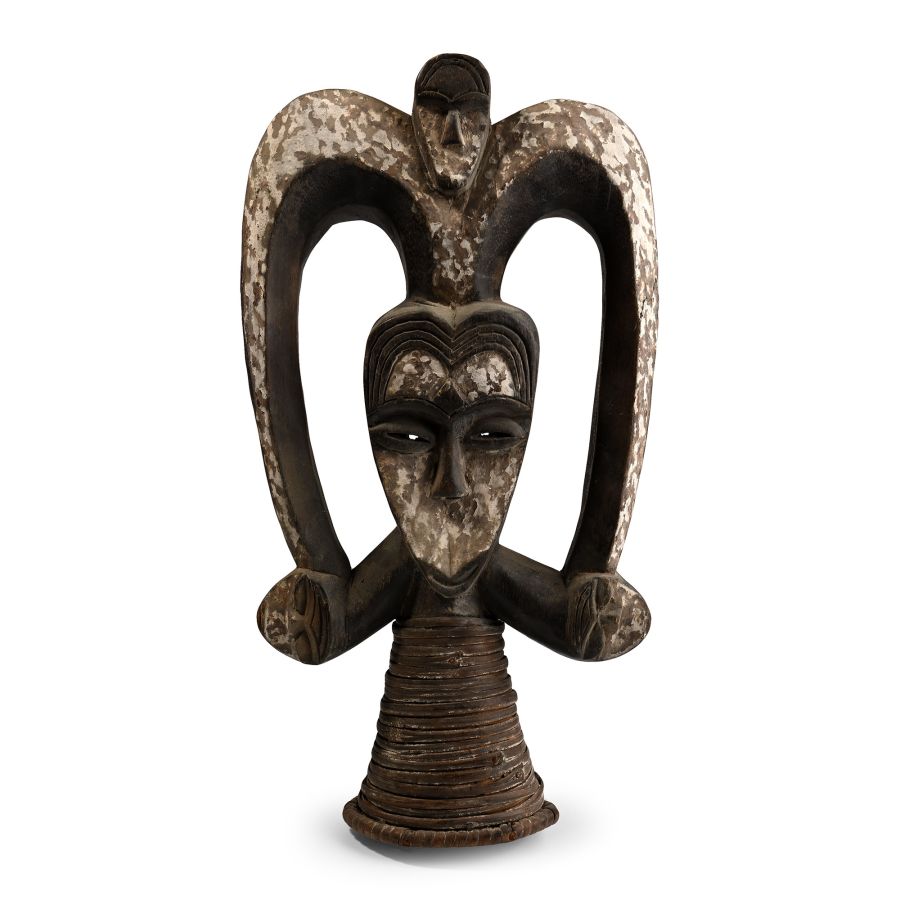
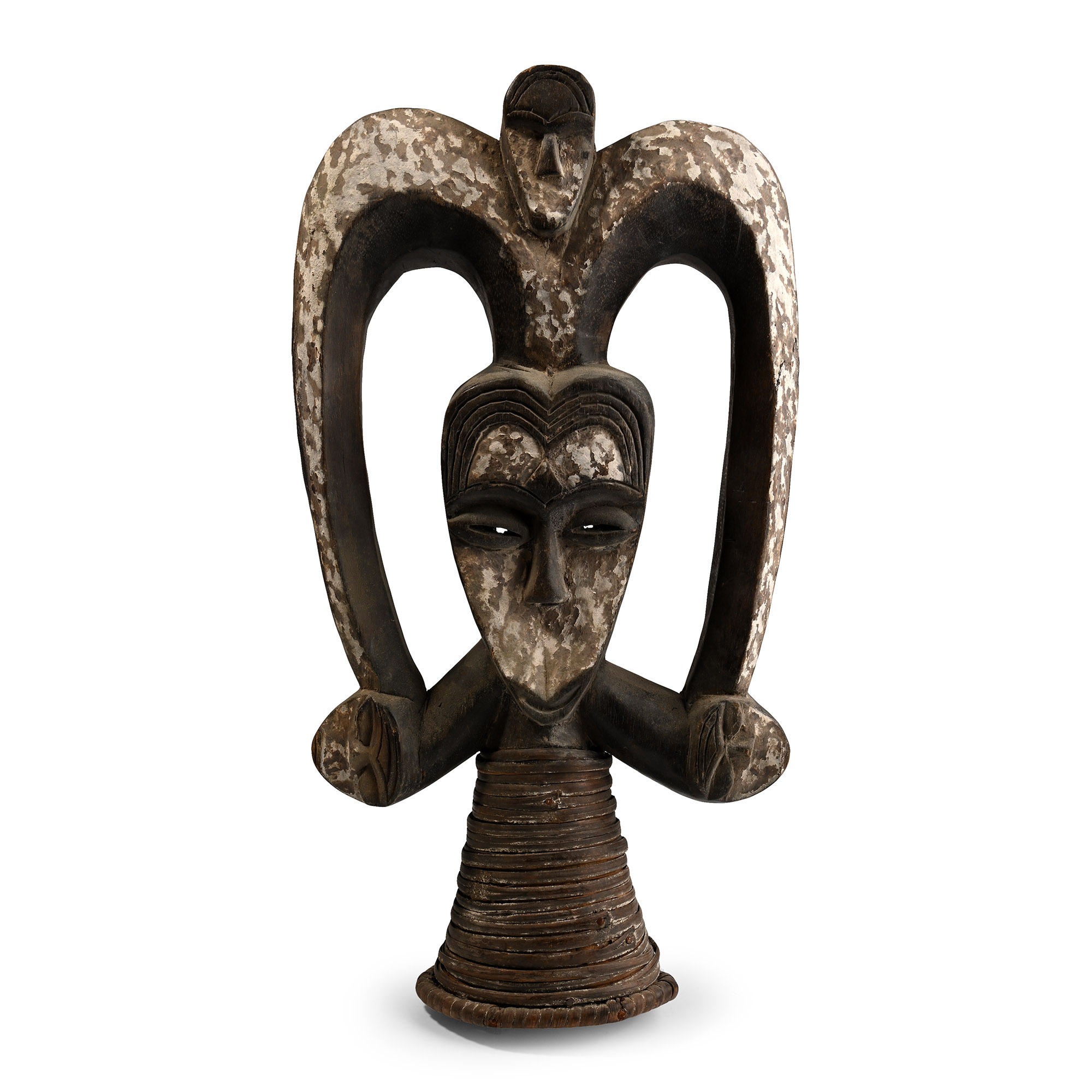
African Wooden Ceremonial 'Forest Spirit' Face Mask
KWELE TRIBE, EARLY-MID 20TH CENTURY A.D.
19 5/8 in. (1.2 kg, 50 cm).
Carved wooden 'Four Faces Forest Spirit Mask' from Gabon, displaying flat surfaces with whitened heart-shaped faces each with a triangular nose, coffee-bean eyes and small or non-existent mouth; the two large carved horns represent the antelope. [No Reserve]
ProvenanceFrom Gabon, West Africa.
From the property of a late Lincolnshire, UK, gentleman.
The faces are usually painted in white kaolin earth, a pigment associated by the Kwele with light and clarity, the two essential factors in the fight against evil. The Kwele occupy a great forest region on the borders of Gabon, Cameroon and the Republic of Congo.
CONDITIONTimeLine Auctions follows a vetting process to ensure the authenticity and legality of all items, reinforcing our commitment to integrity and responsible trading. Each antiquity, antique, and coin lot undergoes thorough examination by a vetting committee of at least ten external specialists, professional trade association members, scientists, and archaeologists: Our Vetting Process
AUCTIONS:
TimeLine is a leading auction house specialising in antiquities, ancient art, collectables, natural history, coins, medals, and books. Our auctions offer museums, collectors, historians, and enthusiasts the opportunity to acquire unique and historically significant pieces.
-
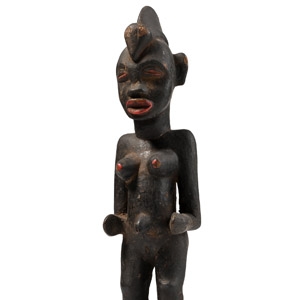
African Wooden Tugubele Figure
Senufo Tribe, 20th century A.D.Sold for (Inc. bp): £7
Carved in the round standing nude female on a socle base, with crested hairstyle and red painted detailing. 131 grams, 22.6 cm
From Côte d'Ivoire, West Africa. From an old Shrewsbury, UK, ethnographic collection. From the property of a late Lincolnshire, UK, gentleman.
Such relatively small figures are employed by the soothsayers of the Senufo people as ‘helpers’ during their oracles and prophecies. -
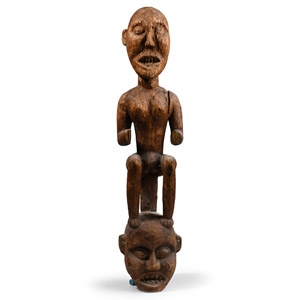
African Wooden Fertility Figure
Bamileke Tribe, early-mid 20th century A.D.Sold for (Inc. bp): £52
Carved in the round naked female with knees flexed standing on a grotesque male head. 1.43 kg, 65 cm
From Cameroon, Central Africa. From the estate of Dr J Bynon. From the property of a late Lincolnshire, UK, gentleman.
This is a carved wooden tribal figure, part of the door frame of the Chief's house, from the Bamileke tribe. A large number of prestigious items of paraphernalia were produced within the Grassland area, including large house-posts, door and window frames carved with human and animal figures, thrones, stools and tables decorated with small heads and figures, large bowls, carved horns for royal feasts, anthropomorphic terracotta and bronze pipes. -
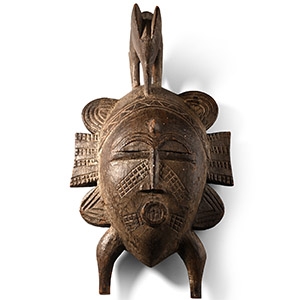
African Wooden Ceremonial Face Mask
Senufo Tribe, 20th century A.D.Sold for (Inc. bp): £59
Carved with an oval face, pointed chin, a flat nose, slit eyes, an open mouth; animal figure presented on top and some scarification. 715 grams, 36 cm
From Burkina Faso, West Africa. From the estate of a West Sussex, UK, collector. From the property of a late Lincolnshire, UK, gentleman.
Several types of masks are used depending upon the occasion. The Kpelie, a human face with projections all around, is said to remind initiates of human imperfection.
