
Loading, please wait...
LOT 2366
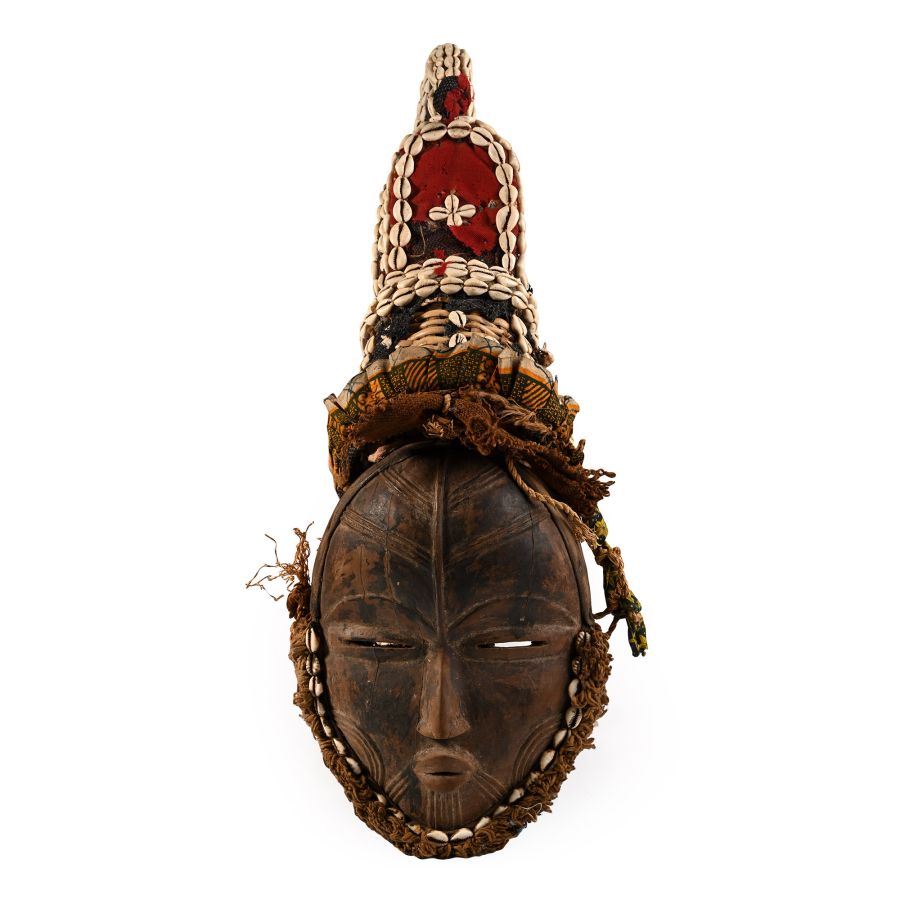
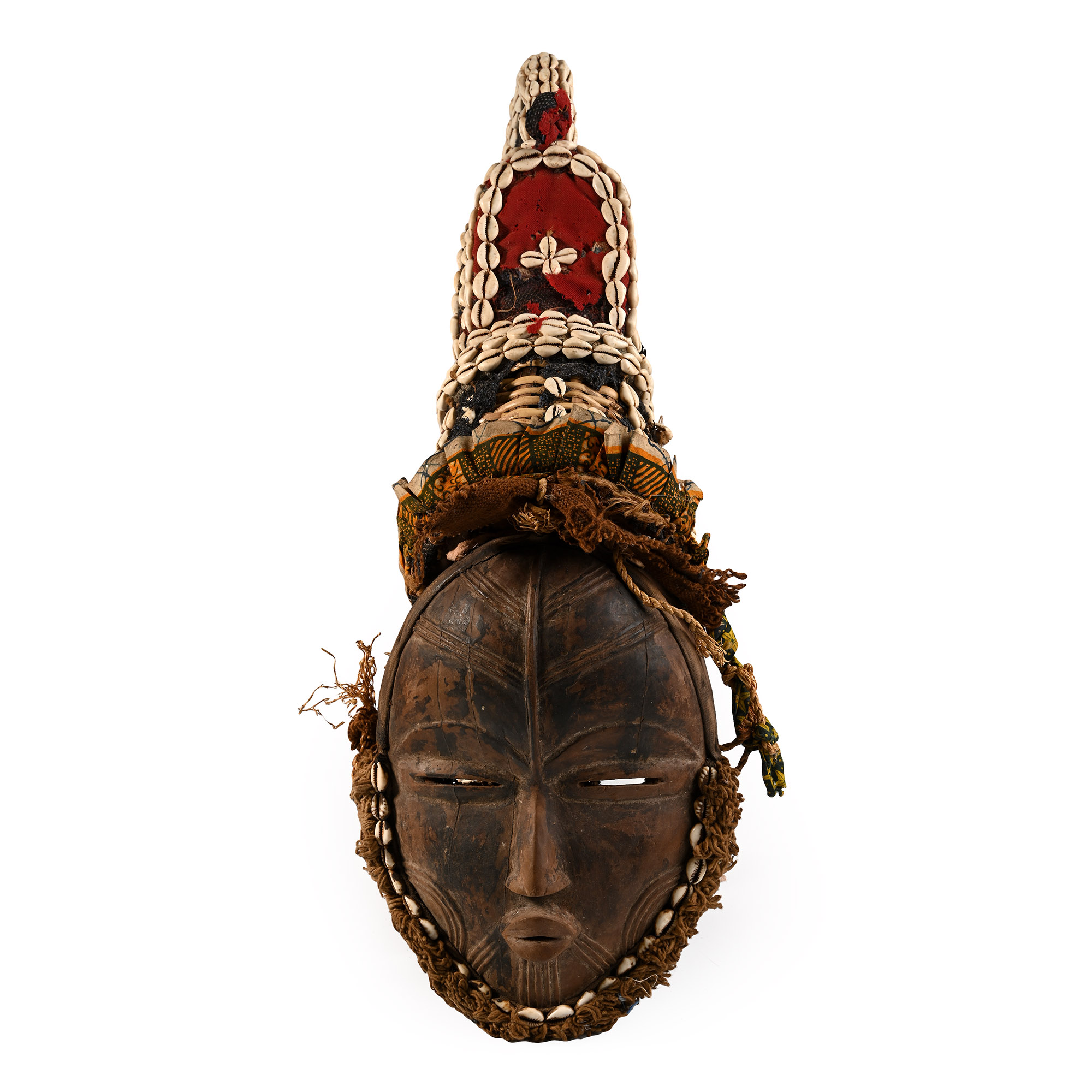
African Wooden Ceremonial Face Mask
DAN TRIBE, EARLY 20TH CENTURY A.D.
28 3/8 in. (2.1 kg, 72 cm long).
Carved wooden mask of oval profile with narrow slits for eyes, pursed lips, a ribbed forehead, bands of applied textile and cowrie shells; tall fabric-covered headdress with applied cowrie shells and other ornament. [No Reserve]
ProvenanceFrom Ivory Coast, West Africa.
Private Hampshire, UK, collection of tribal art; acquired in the 1960s.
From the property of a late Lincolnshire, UK, gentleman.
This is a Dan Dean Gle Mask. Its functions are to teach, entertain and nurture. One of the most spectacular dances of the Ivory Coast is the dance of the stilt walkers, it is a ritual dance that protects the village and is celebrated during ceremonies, such as weddings, funerals, initiations, and other special occasions.
CONDITIONTimeLine Auctions follows a vetting process to ensure the authenticity and legality of all items, reinforcing our commitment to integrity and responsible trading. Each antiquity, antique, and coin lot undergoes thorough examination by a vetting committee of at least ten external specialists, professional trade association members, scientists, and archaeologists: Our Vetting Process
AUCTIONS:
TimeLine is a leading auction house specialising in antiquities, ancient art, collectables, natural history, coins, medals, and books. Our auctions offer museums, collectors, historians, and enthusiasts the opportunity to acquire unique and historically significant pieces.
-
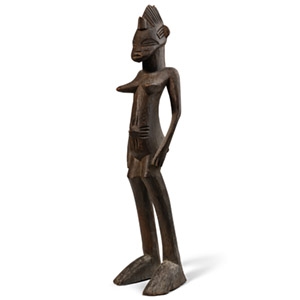
African Wooden Ancestor Figure
Yoruba Tribe, 20th century A.D.Sold for (Inc. bp): £20
A hand-carved standing female figure with hands placed by the side and scarification to the face, breasts and stomach. 600 grams, 44.5 cm
From Southwest Nigeria, West Africa. From an old Bristol, UK, ethnographical collection. From the property of a late Lincolnshire, UK, gentleman.
Human figures are represented in a fundamentally naturalistic way, except for bulging eyes; flat, protruding, and usually parallel lips; and stylised ears. Within the basic canon of Yoruba sculpture, many local styles can be distinguished, down to the hand of the individual artist. -
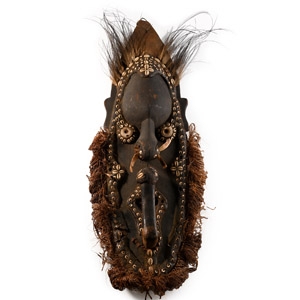
New Guinea Wooden House Mask
Papuan, early-mid 20th century A.D.Sold for (Inc. bp): £52
Carved as an elongated face with feather headdress, inlaid with cowrie shells and with hog tusks to the nose; grip handle in front of the mouth. 1.55 kg, 64 cm
Ex Bury St Edmunds, UK, ethnographical collection. From the property of a late Lincolnshire, UK, gentleman. -
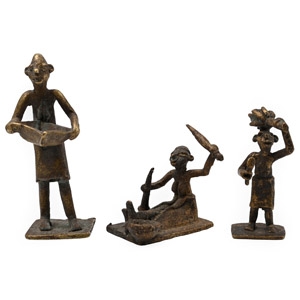
African Ashanti Bronze Figural Gold Weight Collection
Akan Tribe, 19th-20th century A.D.Sold for (Inc. bp): £59
Group of three workmen in active poses with handtools. 202 grams total, 51-84 mm
From an old Oxford, UK, collection. From the property of a late Lincolnshire, UK, gentleman.
