
Loading, please wait...
LOT 2343
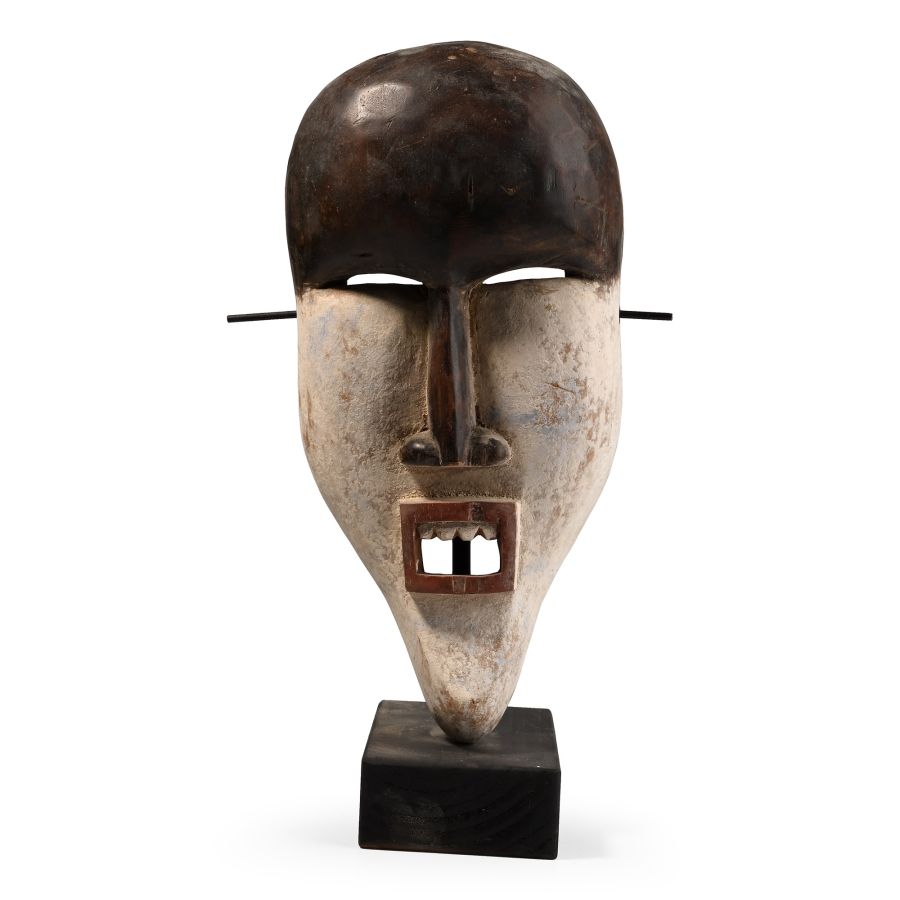
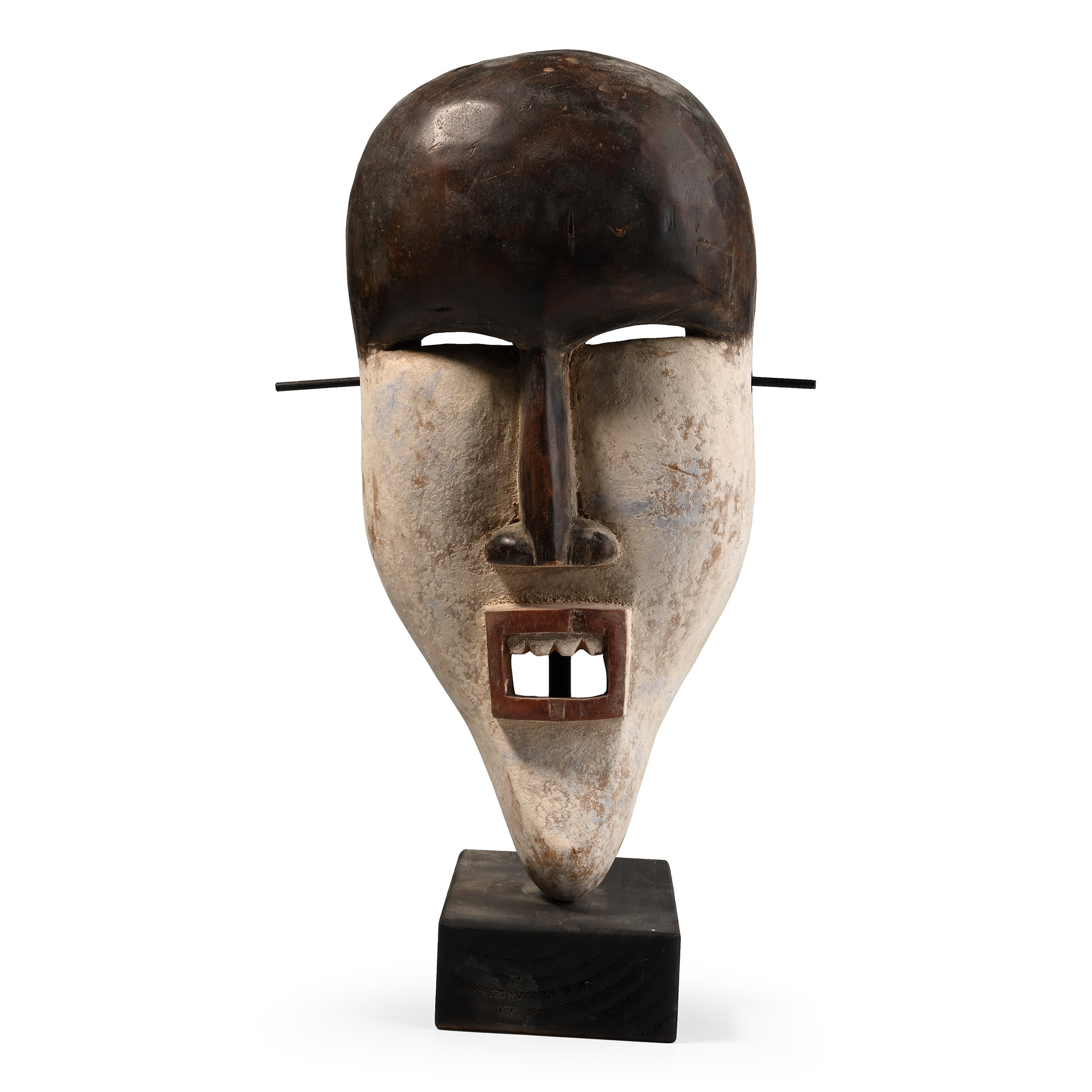
African Wooden Ceremonial Face Mask
SALAMPASU TRIBE, EARLY TO MID 20TH CENTURY A.D.
15 3/8 in. (855 grams total, 39 cm including stand).
Piriform and hollow to the reverse, with white-painted lower face, long nose, a square red-painted mouth with carved teeth; mounted on a custom-made stand. [No Reserve]
ProvenanceFrom the frontier between the Democratic Republic of the Congo and Angola, Central Africa.
From a private London, UK, ethnographic collection.
From the property of a late Lincolnshire, UK, gentleman.
Salampasu masks were integral part of the warriors’ society whose primary task was to protect this small enclave against invasions by outside kingdoms.
CONDITIONTimeLine Auctions follows a vetting process to ensure the authenticity and legality of all items, reinforcing our commitment to integrity and responsible trading. Each antiquity, antique, and coin lot undergoes thorough examination by a vetting committee of at least ten external specialists, professional trade association members, scientists, and archaeologists: Our Vetting Process
AUCTIONS:
TimeLine is a leading auction house specialising in antiquities, ancient art, collectables, natural history, coins, medals, and books. Our auctions offer museums, collectors, historians, and enthusiasts the opportunity to acquire unique and historically significant pieces.
-
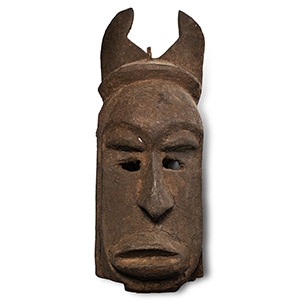
African Wooden Ceremonial Face Mask
Bambara Tribe, early-mid 20th century A.D.Sold for (Inc. bp): £20
Rectangular shaped mask with a wide mouth, a broad nose, wearing a helmet with two crescent-shaped horns and coated with possibly sacrificial material. 1.77 kg, 39 cm
From Mali, West Africa. From a Glasgow ethnographical collection; formed 1940s-1950s. From the property of a late Lincolnshire, UK, gentleman. -
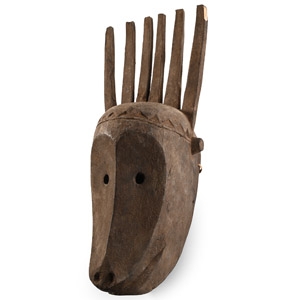
African Wooden Ceremonial Face Mask
Bambara tribe, early-mid 20th century A.D.Sold for (Inc. bp): £221
Carved wooden elongated mask representing an animal head with wide open snout, round ears, small round holes for the eyes and six horns above the brow. 1.47 kg, 49.5 cm
From Mali, West Africa. From a Glasgow ethnographical collection; formed 1940s-1950s. From the property of a late Lincolnshire, UK, gentleman.
The number of horns make reference to specific characteristics of males (three, six, or 9 horns) or females (four or eight horns) and the androgynous (two, five or seven), making this a male mask of six horns. -
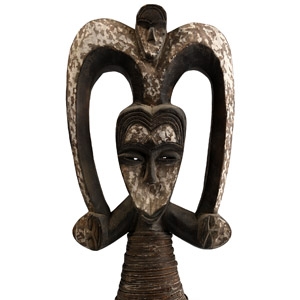
African Wooden Ceremonial 'Forest Spirit' Face Mask
Kwele Tribe, early-mid 20th century A.D.Sold for (Inc. bp): £78
Carved wooden 'Four Faces Forest Spirit Mask' from Gabon, displaying flat surfaces with whitened heart-shaped faces each with a triangular nose, coffee-bean eyes and small or non-existent mouth; the two large carved horns represent the antelope. 1.2 kg, 50 cm
From Gabon, West Africa. From the property of a late Lincolnshire, UK, gentleman.
The faces are usually painted in white kaolin earth, a pigment associated by the Kwele with light and clarity, the two essential factors in the fight against evil. The Kwele occupy a great forest region on the borders of Gabon, Cameroon and the Republic of Congo.
