
Loading, please wait...
LOT 2323
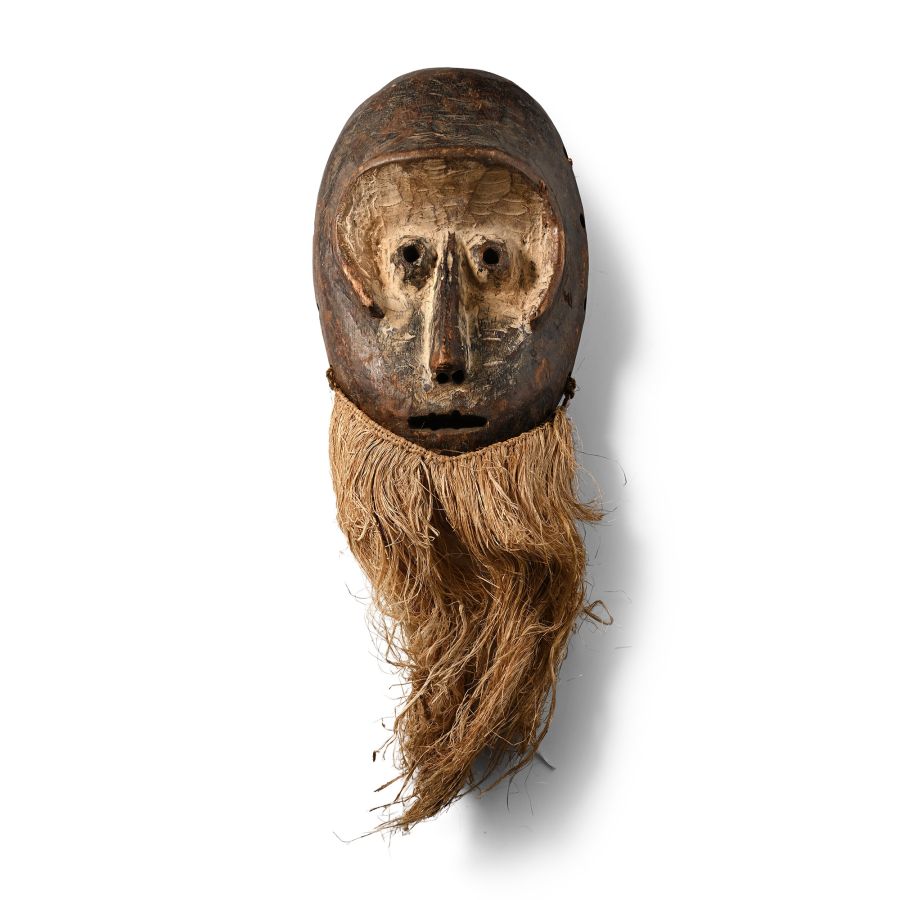
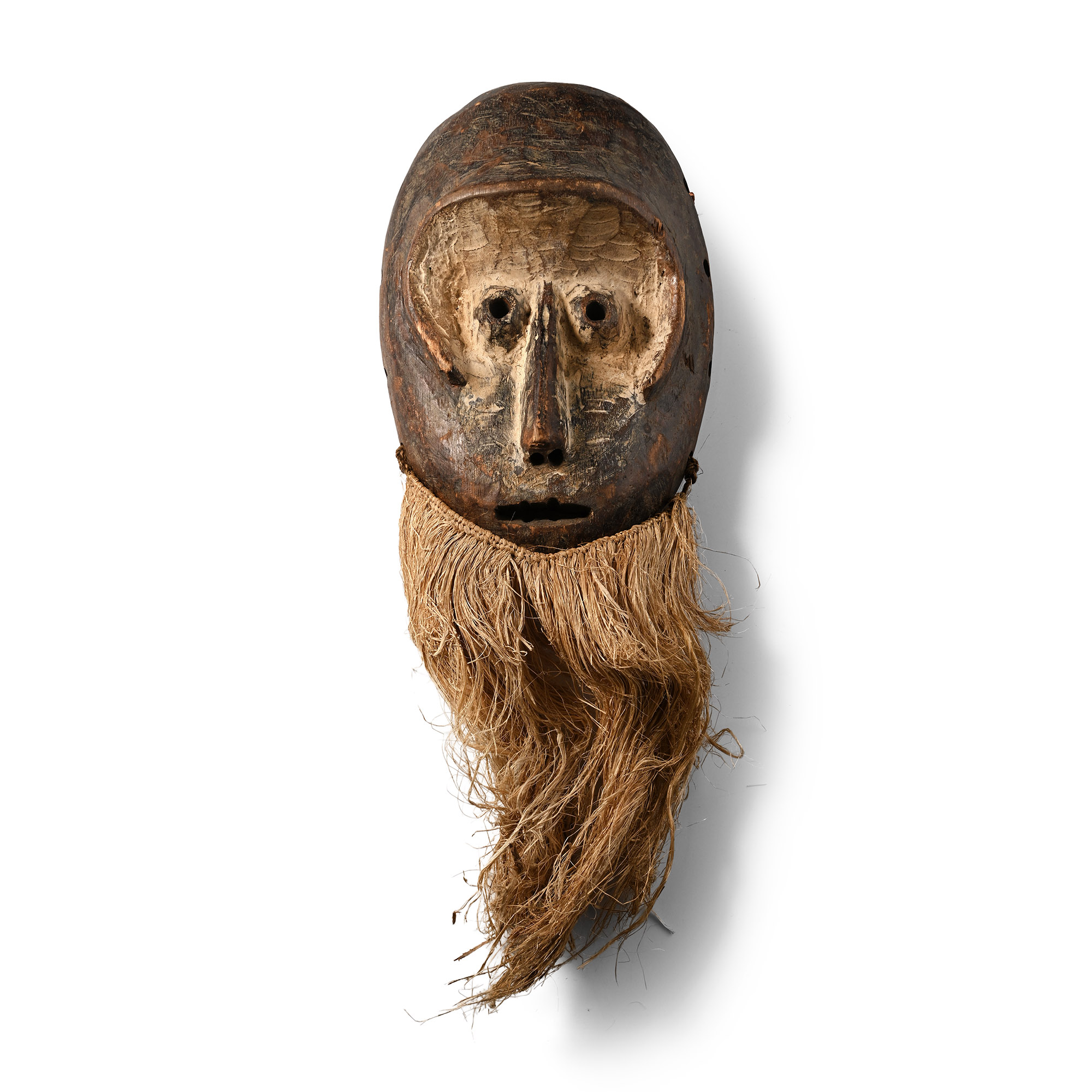
African Wooden Ceremonial Face Mask
LEGA WAREGA TRIBE, EARLY 20TH CENTURY A.D.
8 3/4 in. (181 grams, 22.1 cm).
Hollow to the rear with protruding bosses for the eyes, applied fabric to lower edge. [No Reserve]
ProvenanceFrom Democratic Republic of the Congo, Central Africa.
From the Estate of Dr J Bynon; acquired 30 July 1911.
From the property of a late Lincolnshire, UK, gentleman.
Most Lega masks are sculptures of a human face that are rarely worn over the face and never for purposes of true transformation. The Lega masks can be assigned different uses and meanings depending on the context of the performance. In Bwami ceremonies, masks are attached to different parts of the body, fixed to hat, piled in stacks, hung on fences, held in the hand, dragged on the ground, and occasionally worn on the forehead with the beard draping over the face of the wearer or arranged on a miniature palisade. Participants in most rites display their masks as a group in conjunction with particular dance movements and aphorisms, which vary depending on the context in which they are used. Lega masks differ from those used in many other African masquerades in that while women do not own them, both men and women handle and present them in very similar performances. Masks are among the initiation objects displayed on the grave before being passed to new owners. They are usually passed from an uncle to a nephew.
CONDITIONTimeLine Auctions follows a vetting process to ensure the authenticity and legality of all items, reinforcing our commitment to integrity and responsible trading. Each antiquity, antique, and coin lot undergoes thorough examination by a vetting committee of at least ten external specialists, professional trade association members, scientists, and archaeologists: Our Vetting Process
AUCTIONS:
TimeLine is a leading auction house specialising in antiquities, ancient art, collectables, natural history, coins, medals, and books. Our auctions offer museums, collectors, historians, and enthusiasts the opportunity to acquire unique and historically significant pieces.
-
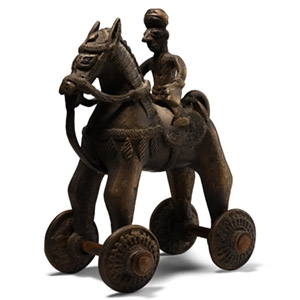
African Bronze Figure on Horseback
Edo Tribe, 20th century A.D.Sold for (Inc. bp): £46
Substantial bronze horse model with harness, bridle and saddle, a rider figure and four biconvex wheels. 2.33 kg, 18.4 cm high
From Benin. Ex Surrey, UK, ethnographical collection. From the property of a late Lincolnshire, UK, gentleman. -
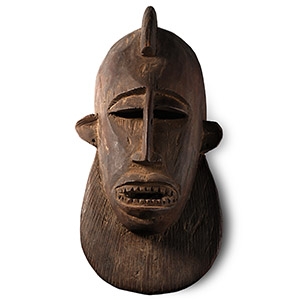
African Wooden Ceremonial Face Mask
Baule Tribe, early-mid 20th century A.D.Sold for (Inc. bp): £39
A wooden tribal oval mask with wide open mouth displaying teeth, a large narrow nose, hatched crest. 1.63 kg, 36 cm
From Côte d'Ivoire, West Africa. From a Glasgow ethnographical collection; formed 1940s-1950s. From the property of a late Lincolnshire, UK, gentleman. -
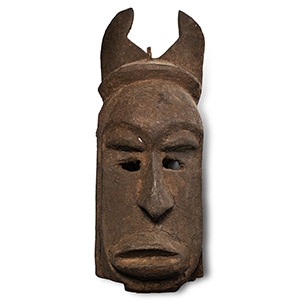
African Wooden Ceremonial Face Mask
Bambara Tribe, early-mid 20th century A.D.Sold for (Inc. bp): £20
Rectangular shaped mask with a wide mouth, a broad nose, wearing a helmet with two crescent-shaped horns and coated with possibly sacrificial material. 1.77 kg, 39 cm
From Mali, West Africa. From a Glasgow ethnographical collection; formed 1940s-1950s. From the property of a late Lincolnshire, UK, gentleman.
