
Loading, please wait...
LOT 2349
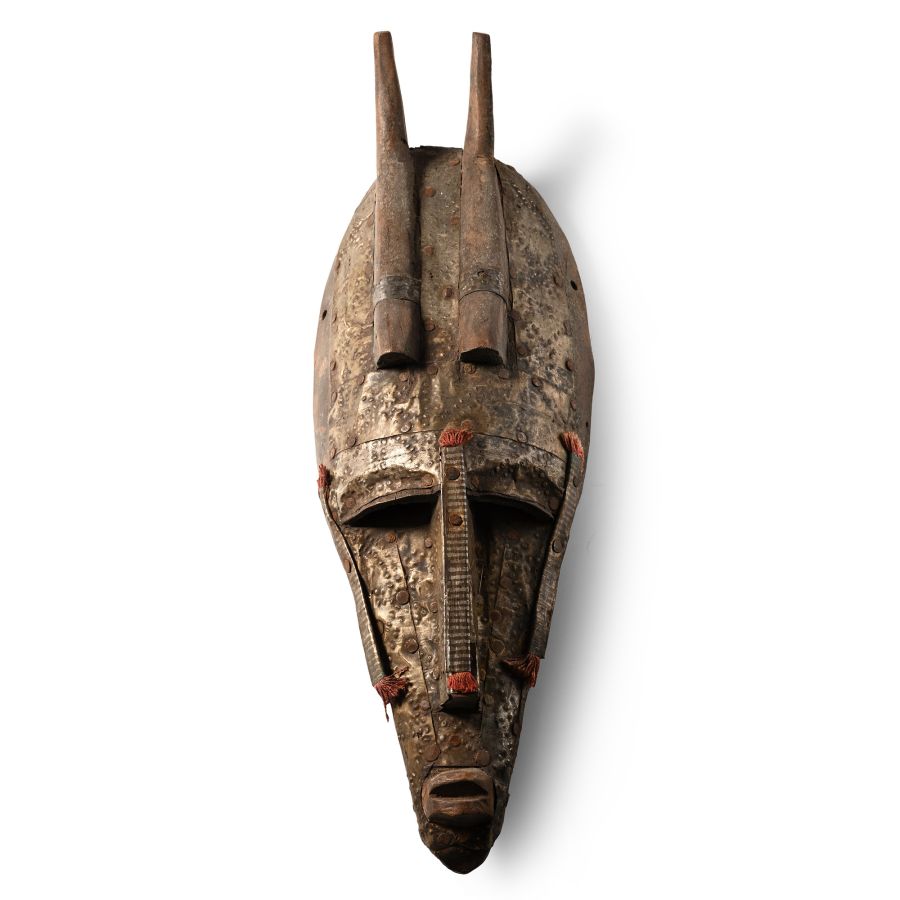
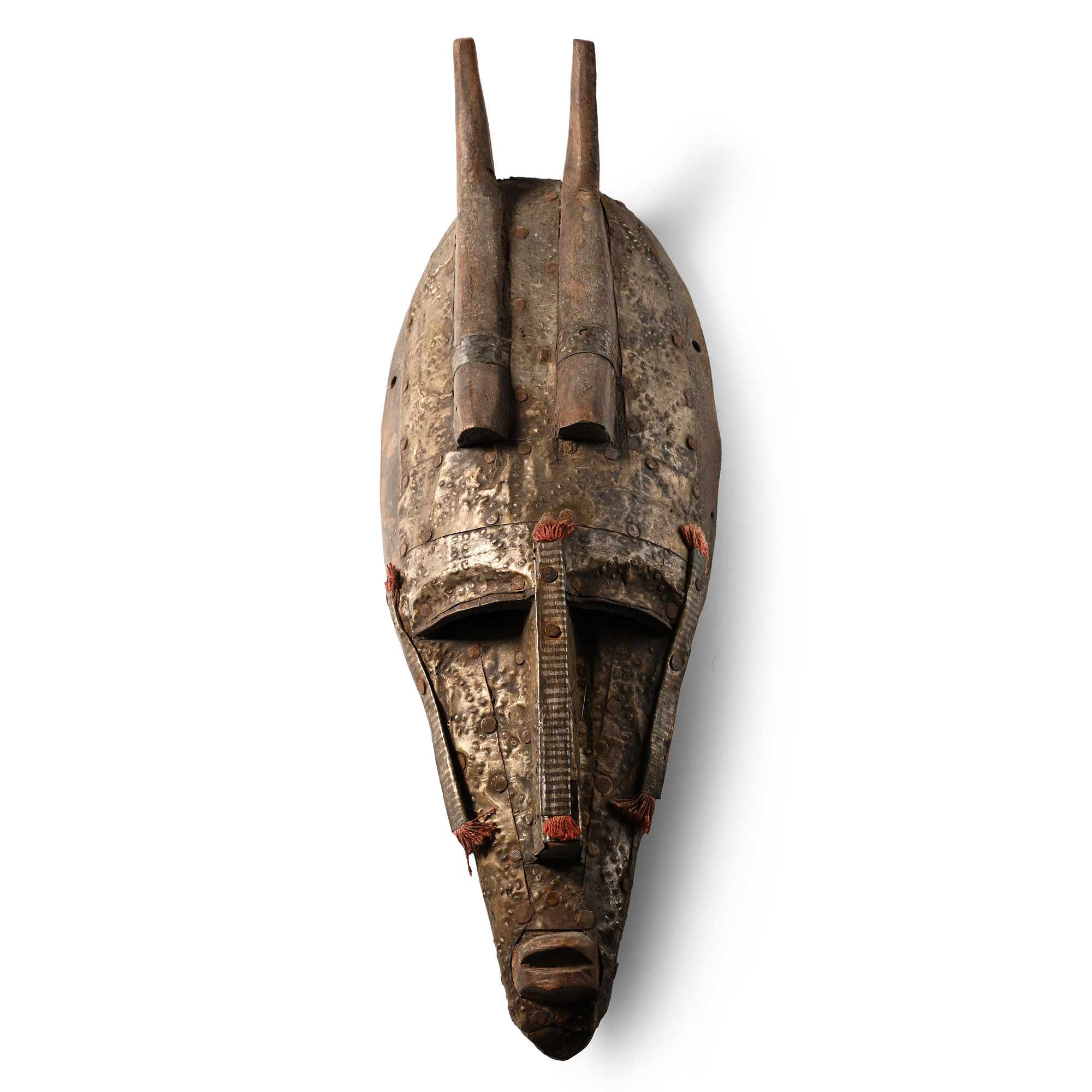
African Wooden Ceremonial Face Mask
BAMBARA TRIBE, 20TH CENTURY A.D.
11 3/4 in. (234 grams, 30 cm).
A small wooden carved mask with curved horns, decorated with thin metal sheets and fabric tufts. [No Reserve]
ProvenanceFrom Mali, West Africa.
From the collection of the late Professor R M Hicks, OBE.
From the property of a late Lincolnshire, UK, gentleman.
TimeLine Auctions follows a vetting process to ensure the authenticity and legality of all items, reinforcing our commitment to integrity and responsible trading. Each antiquity, antique, and coin lot undergoes thorough examination by a vetting committee of at least ten external specialists, professional trade association members, scientists, and archaeologists: Our Vetting Process
AUCTIONS:
TimeLine is a leading auction house specialising in antiquities, ancient art, collectables, natural history, coins, medals, and books. Our auctions offer museums, collectors, historians, and enthusiasts the opportunity to acquire unique and historically significant pieces.
-
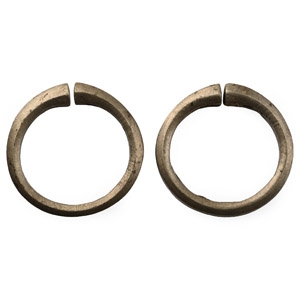
African Brass Kano Bracelet Pair
Okombo Tribe, late 19th-early 20th century A.D.Sold for (Inc. bp): £7
Penannular in form and faceted section, clubbed ends. 134 grams total, 62 mm wide
From Nigeria, West Africa. From an old Derby, UK, specialist collection. From the property of a late Lincolnshire, UK, gentleman. -
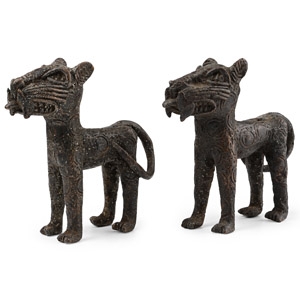
African Bronze Leopard Figure Pair
Edo Tribe, 20th century A.D.Sold for (Inc. bp): £46
Two lost wax bronze cast decorated standing leopards. 943 grams total, 13.4-13.5 cm wide
From Benin. From the late Brian Morley collection, 1950s. From the property of a late Lincolnshire, UK, gentleman.
The leopard is a motif that occurs throughout many of the Benin Bronzes as it is the animal who symbolises both the Oba (king) and justice. -
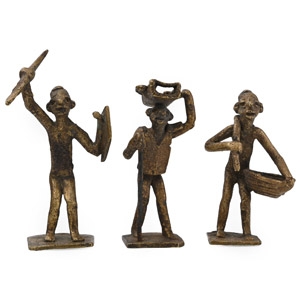
Ashanti Bronze Gold Figural Weight Collection
Akan Tribe, 19th-20th century A.D.Sold for (Inc. bp): £59
Comprising two figures carrying baskets and a warrior with spear and shield. 122 grams total, 60-77 mm
From an old Oxford, UK, collection. From the property of a late Lincolnshire, UK, gentleman.
