
Loading, please wait...
LOT 2351
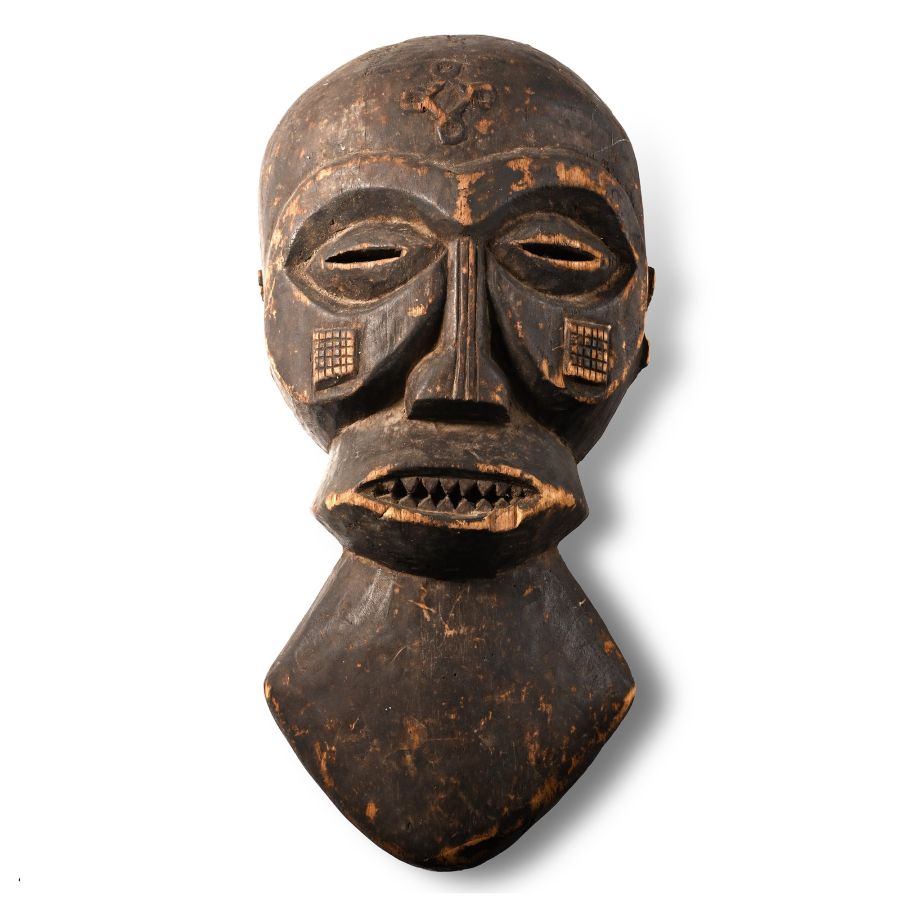
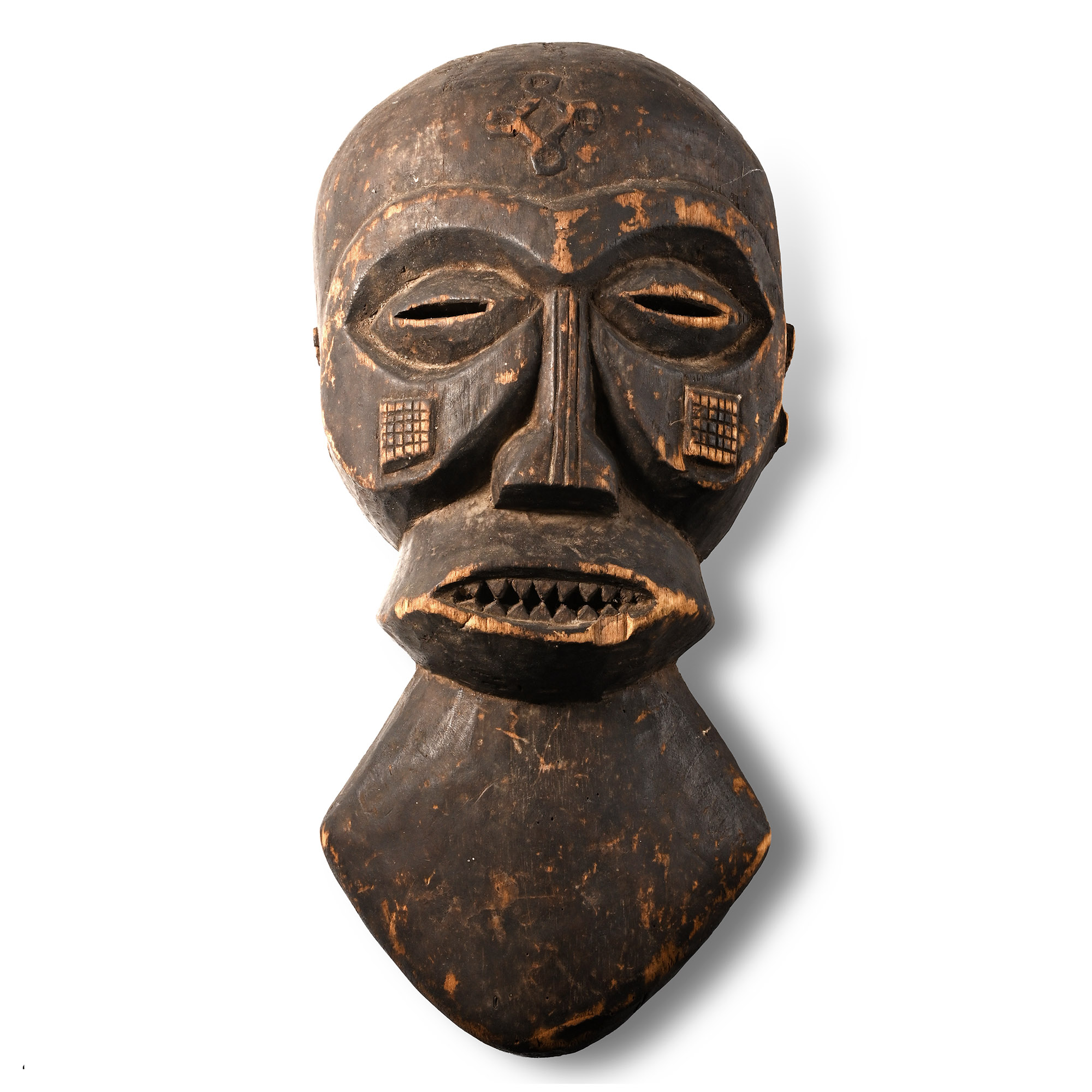
African Wooden Ceremonial Face Mask
PENDE TRIBE, EARLY-MID 20TH CENTURY A.D.
14 3/4 in. (560 grams, 37.5 cm).
Carved with scarification panels to the cheeks and forehead, protruding mouth with teeth, flat nose and a neck panel below the chin. [No Reserve]
ProvenanceFrom Democratic Republic of the Congo, Central Africa.
From the collection of the late Professor R M Hicks, OBE.
From the property of a late Lincolnshire, UK, gentleman.
Pende masks are among the most dramatic works of all African art. There are two styles: the western one of the Kwilu with its mbuya mask characterized by a somber, gloomy expression, and the Kasai style that is more geometric and colorful. The Kwilu Pende are especially well known for their masks that were originally used for circumcision ceremonies but later became accessories for a type of popular theater. The minganji, or masks of power, represent the ancestors; the mbuya, or village masks, represent human types, such as the chief, the diviner, the epileptic with a twisted mouth, the madman or man in a trance, the widow, the lover, or the executioner.
CONDITIONTimeLine Auctions follows a vetting process to ensure the authenticity and legality of all items, reinforcing our commitment to integrity and responsible trading. Each antiquity, antique, and coin lot undergoes thorough examination by a vetting committee of at least ten external specialists, professional trade association members, scientists, and archaeologists: Our Vetting Process
AUCTIONS:
TimeLine is a leading auction house specialising in antiquities, ancient art, collectables, natural history, coins, medals, and books. Our auctions offer museums, collectors, historians, and enthusiasts the opportunity to acquire unique and historically significant pieces.
-
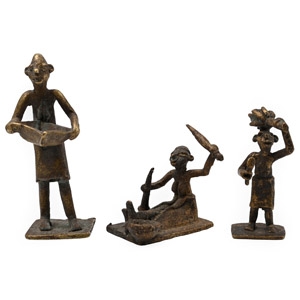
African Ashanti Bronze Figural Gold Weight Collection
Akan Tribe, 19th-20th century A.D.Sold for (Inc. bp): £59
Group of three workmen in active poses with handtools. 202 grams total, 51-84 mm
From an old Oxford, UK, collection. From the property of a late Lincolnshire, UK, gentleman. -
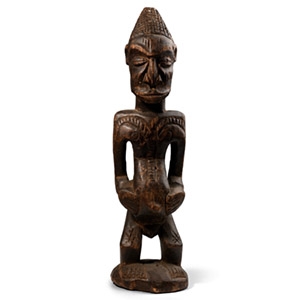
African Wooden Fertility Figure
Yoruba Tribe, mid 20th century A.D.Sold for (Inc. bp): £39
Carved in the round standing male figures with tall hatched headdress extending to the rear, hands placed either side of his distended abdomen, knees flexed, standing on a plano-convex base. 1.1 kg, 48.5 cm
From South West Nigeria, West Africa. From the property of a late Lincolnshire, UK, gentleman.
The Yoruba are the largest nation in Africa with an art-producing tradition. Their figures, more often of Shango (also spelled Sango and Sagoe), deity of thunder and lightning are carved from wood and kept in shrines. -
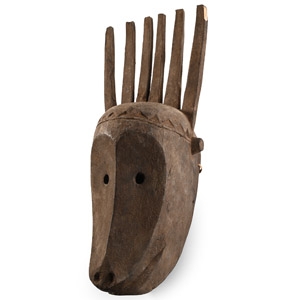
African Wooden Ceremonial Face Mask
Bambara tribe, early-mid 20th century A.D.Sold for (Inc. bp): £221
Carved wooden elongated mask representing an animal head with wide open snout, round ears, small round holes for the eyes and six horns above the brow. 1.47 kg, 49.5 cm
From Mali, West Africa. From a Glasgow ethnographical collection; formed 1940s-1950s. From the property of a late Lincolnshire, UK, gentleman.
The number of horns make reference to specific characteristics of males (three, six, or 9 horns) or females (four or eight horns) and the androgynous (two, five or seven), making this a male mask of six horns.
