
Loading, please wait...
LOT 2337
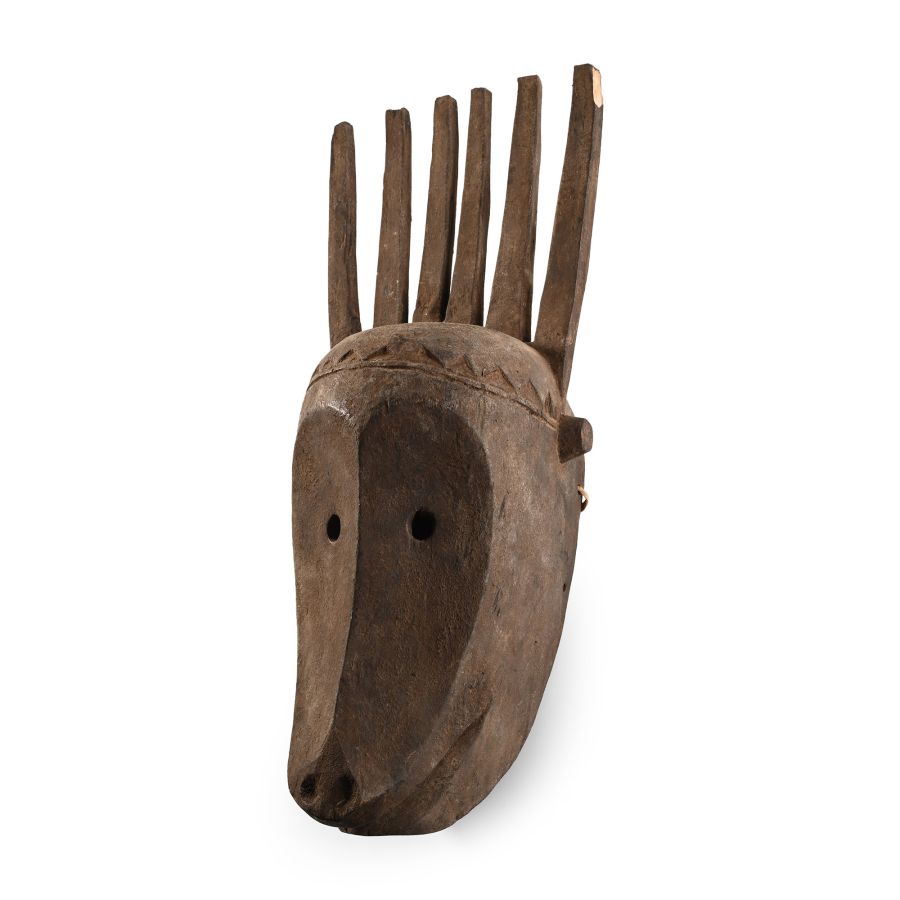
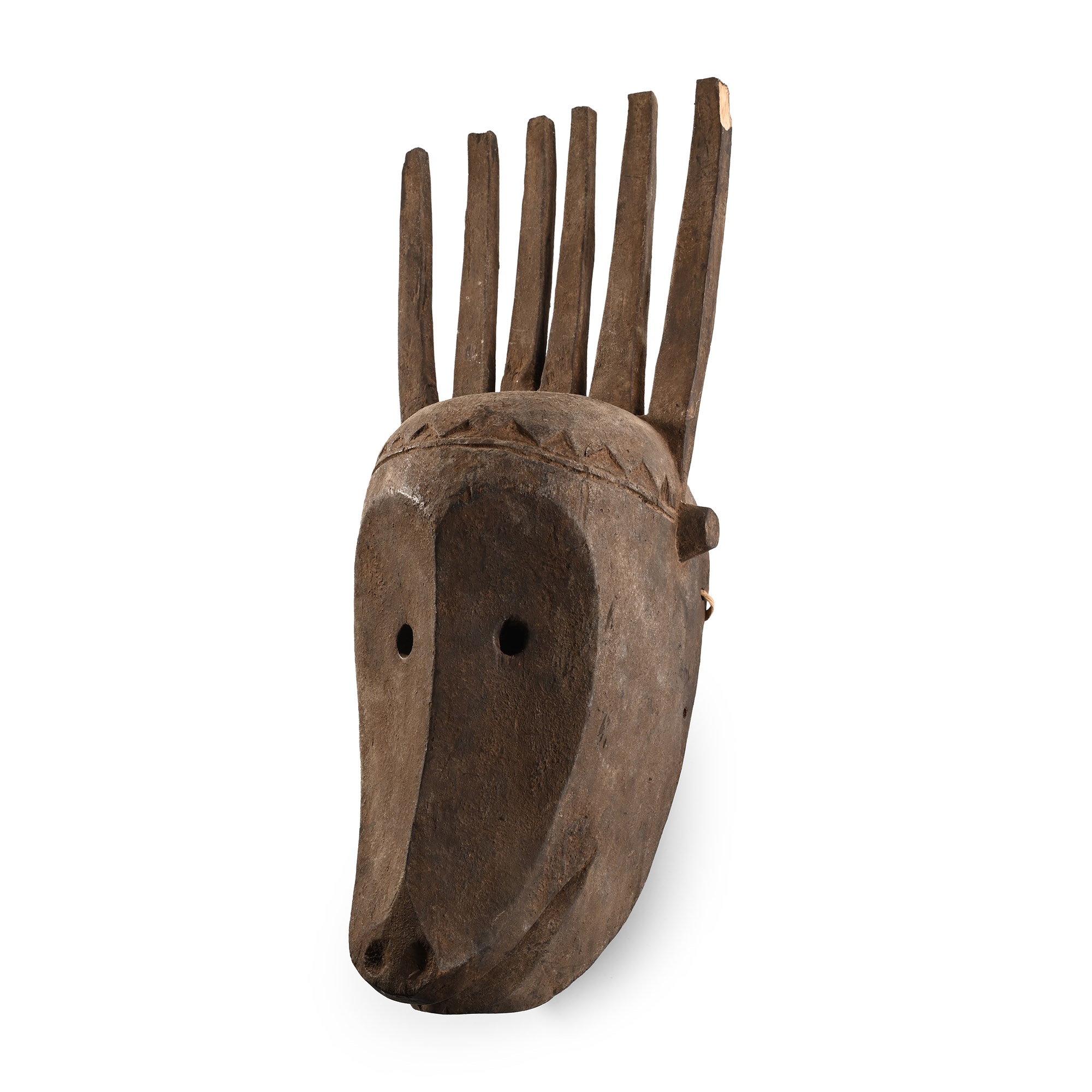
African Wooden Ceremonial Face Mask
BAMBARA TRIBE, EARLY-MID 20TH CENTURY A.D.
19 1/2 in. (1.47 kg, 49.5 cm).
Carved wooden elongated mask representing an animal head with wide open snout, round ears, small round holes for the eyes and six horns above the brow. [No Reserve]
ProvenanceFrom Mali, West Africa.
From a Glasgow ethnographical collection; formed 1940s-1950s.
From the property of a late Lincolnshire, UK, gentleman.
The number of horns make reference to specific characteristics of males (three, six, or 9 horns) or females (four or eight horns) and the androgynous (two, five or seven), making this a male mask of six horns.
CONDITIONTimeLine Auctions follows a vetting process to ensure the authenticity and legality of all items, reinforcing our commitment to integrity and responsible trading. Each antiquity, antique, and coin lot undergoes thorough examination by a vetting committee of at least ten external specialists, professional trade association members, scientists, and archaeologists: Our Vetting Process
AUCTIONS:
TimeLine is a leading auction house specialising in antiquities, ancient art, collectables, natural history, coins, medals, and books. Our auctions offer museums, collectors, historians, and enthusiasts the opportunity to acquire unique and historically significant pieces.
-
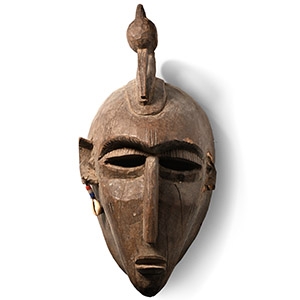
African Wooden Ceremonial Face Mask
Senufo Tribe, early-mid 20th century A.D.Sold for (Inc. bp): £20
Carved with a narrow face, narrow protruding sharp nose, slit eyes with some decoration, a closed mouth with protruding lips, bead and cowrie shell decoration to one ear and a bird's neck and head sculpture to the top of the mask. 1.12 kg, 36.5 cm
From Burkina Faso, West Africa. From a Glasgow ethnographical collection; formed 1940s-1950s. From the property of a late Lincolnshire, UK, gentleman. -
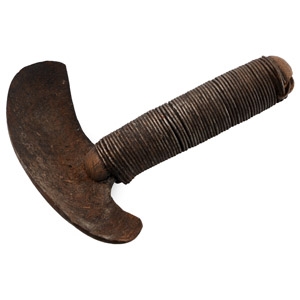
African Iron Zandle Spoon
Zande Tribe, late 19th-early 20th century A.D.Sold for (Inc. bp): £13
With elongated dished bowl fitted to a wooden handle bound with wire; belonging to the Zande. 185 grams, 12.5 cm
From Democratic Republic of the Congo, Central Africa. Ex property of a Canadian lady; acquired 1970s. From the property of a late Lincolnshire, UK, gentleman. -
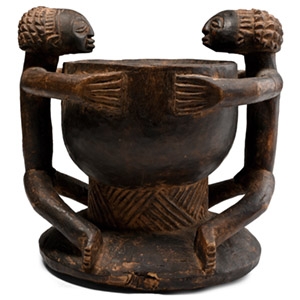
African Wooden Ritual Cup
Senufo Tribe, 20th century A.D.Sold for (Inc. bp): £72
Comprising a cotton-reel-shaped body with stylised figural handles carved in the round, one male and one female, each facing the other with chin resting on the rim of the cup, arms embracing the bowl, legs spread around the foot, frieze of interlocking combed triangles around the stem. 940 grams, 18.5 cm wide
From Democratic Republic of the Congo, Central Africa. Acquired Nairobi, Kenya, 1997. Property of a Manchester, UK, collector. From the property of a late Lincolnshire, UK, gentleman.
