
Loading, please wait...
LOT 2356
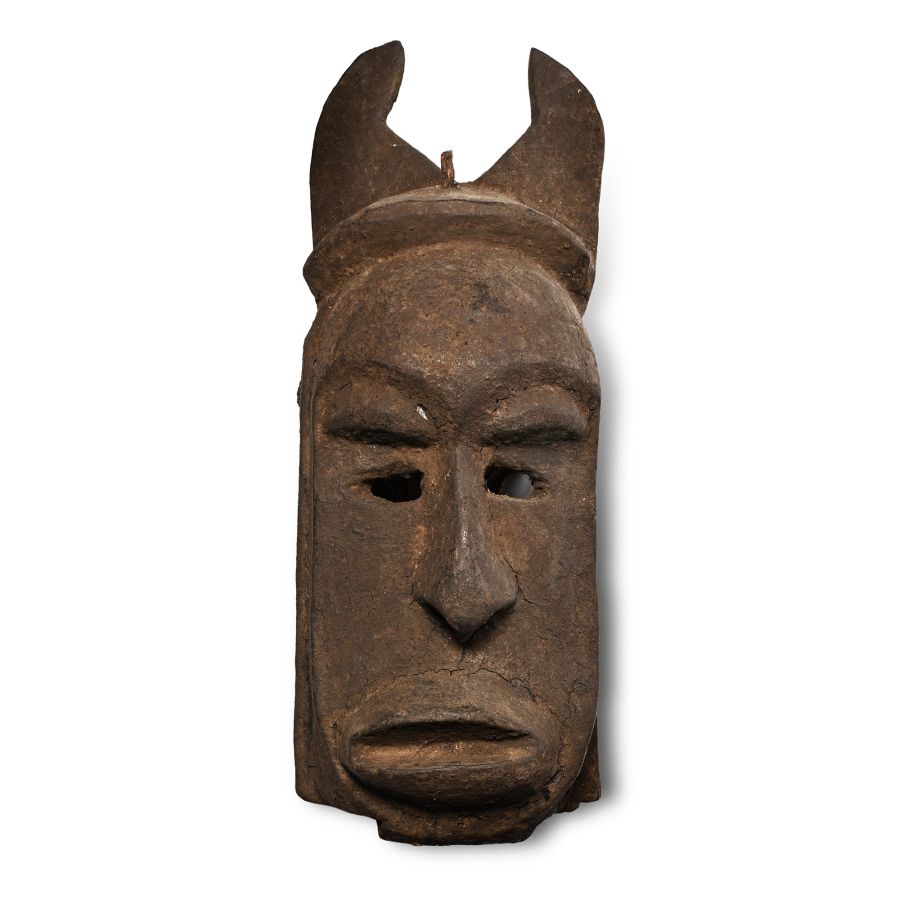
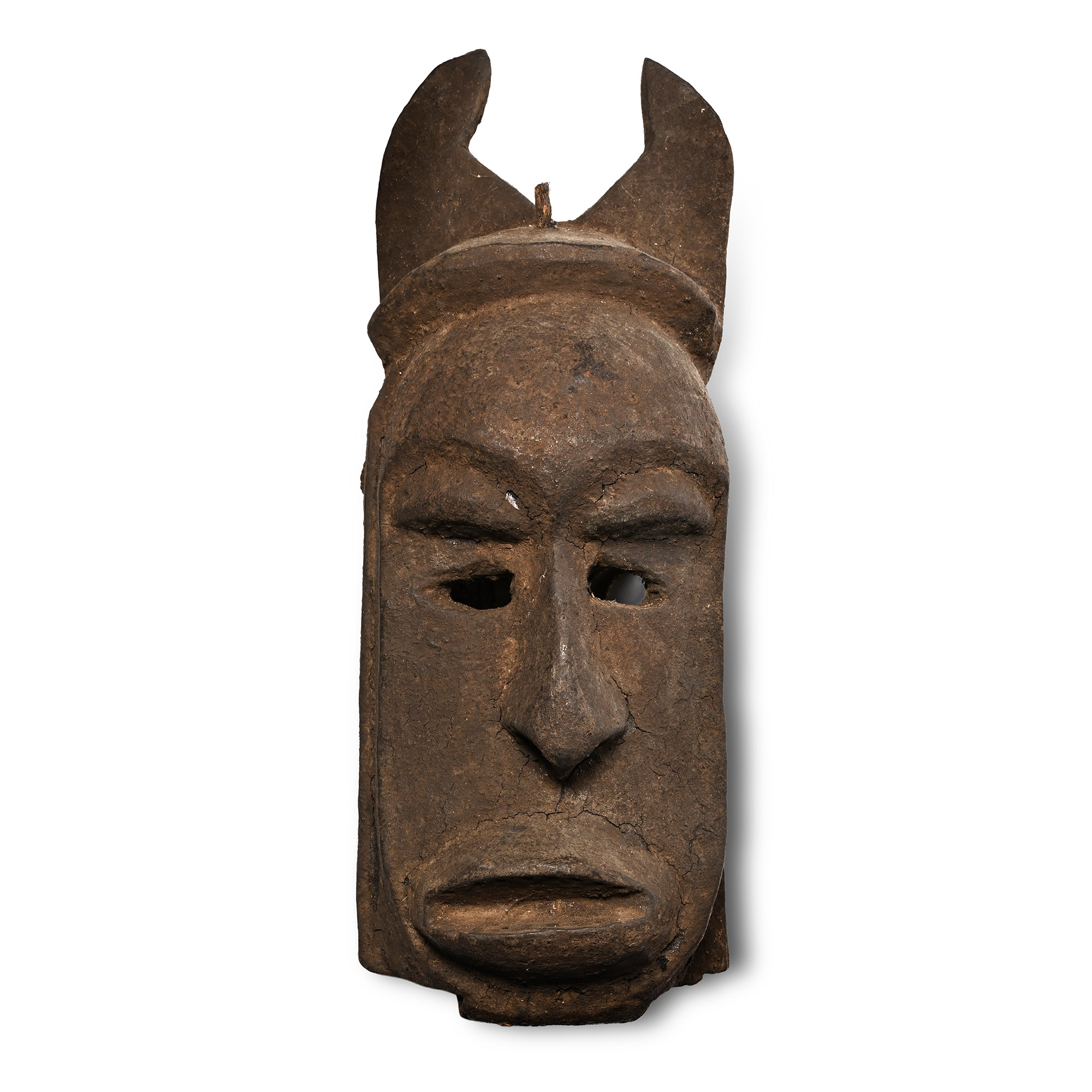
African Wooden Ceremonial Face Mask
BAMBARA TRIBE, EARLY-MID 20TH CENTURY A.D.
15 3/8 in. (1.77 kg, 39 cm).
Rectangular shaped mask with a wide mouth, a broad nose, wearing a helmet with two crescent-shaped horns and coated with possibly sacrificial material. [No Reserve]
ProvenanceFrom Mali, West Africa.
From a Glasgow ethnographical collection; formed 1940s-1950s.
From the property of a late Lincolnshire, UK, gentleman.
TimeLine Auctions follows a vetting process to ensure the authenticity and legality of all items, reinforcing our commitment to integrity and responsible trading. Each antiquity, antique, and coin lot undergoes thorough examination by a vetting committee of at least ten external specialists, professional trade association members, scientists, and archaeologists: Our Vetting Process
AUCTIONS:
TimeLine is a leading auction house specialising in antiquities, ancient art, collectables, natural history, coins, medals, and books. Our auctions offer museums, collectors, historians, and enthusiasts the opportunity to acquire unique and historically significant pieces.
-
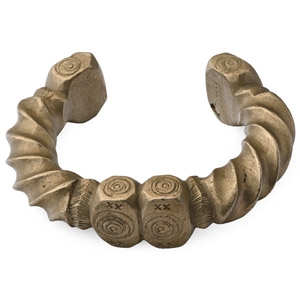
African Brass Manilla Slave Bracelet
Okombo Tribe, late 19th-early 20th century A.D.Sold for (Inc. bp): £52
Penannular in form, comprising rectangular polyhedral blocks with ring-and-dot ornament, spiral form to the arms. 244 grams, 87 mm
From Nigeria, West Africa. From an old Derby, UK, specialist collection. From the property of a late Lincolnshire, UK, gentleman.
Once a form of currency for West African peoples, manillas became one of the main currencies of choice during the slave trade to the Americas. Their usage during this time in history was of such prevalence that they were often referred to as “slave trade money.” Provenance: Private Derby Oriental Collection. The Manilla is in very good condition and measures 105mm wide and weighs about 250gms. Manillas are typically horseshoe-shaped with flared ends and often decorated with balls on each end. Africans from each region had names for each variety of manilla and were very particular about the types they would accept. They valued the Manillas by the sound they made when struck and used them as the dominant form of currency for many things including everyday market purchases, bride price and burials. The main purpose of the manilla – the trading and purchase of slaves- fostered a system where the incoming voyage of Europeans took manillas to West Africa to obtain slaves, who were then taken to the Americas. The price of a slave valued in manillas varied depending on the time, place and type being offered. -
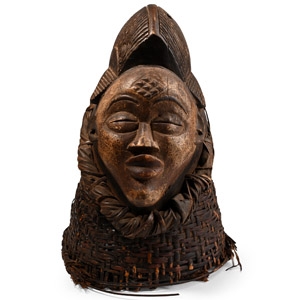
African Wooden Ceremonial 'Maiden Spirit' Mask
Punu Tribe, early-mid 20th century A.D.Sold for (Inc. bp): £39
A wooden mask with traces of white facial pigment and a raffia collar. 851 grams, 36.5 cm
From Gabon, West Africa. From an old Norwich, UK, collection. From the property of a late Lincolnshire, UK, gentleman.
Punu masks represent idealised female ancestors' faces. The white colour of the mask is genderless and a symbol for peace, deities, spirits of the dead, and the afterlife. It is the predominating colour in funeral celebrations and memorials. The masks were worn during funerals. They appeared also in the magical rites whose function was to unmask sorcerers. The masks have realistic, mostly white but sometimes black faces with protruding pursed lips, globular protruding eyes incised with a curve, high-domed foreheads, and characteristic rigid high coiffures reflecting the Punu women's hair styles. The masks often have an oriental expression, but no such influence has been established. Many Punu masks can be recognized by raised diamond-shape scarification marks on the foreheads and temples. -
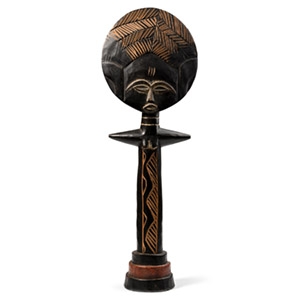
African Wooden 'Akuaba Doll' Fertility Figure
Ashanti Tribe, late 20th century A.D.Sold for (Inc. bp): £46
Carved from light-coloured, lightweight wood in traditional form and dyed black; large, round head, with striated hairstyle to the centre, large eyes and three short lines representing the typical tribal scarification marks on the forehead; tapering body and stub arms, tiered base. 532 grams, 46.5 cm
From Ghana, West Africa. From the private collection of Mr N.J., Leicester, UK; acquired circa 2010. From the property of a late Lincolnshire, UK, gentleman.
Among the Ashanti people in Ghana, women hoping for offspring carry these ‘Akuaba dolls’ in their clothes. Traditionally, these ‘Akuaba’ have a large, round, flat head that is reminiscent of its origin as a representation of the moon goddess, which is associated with fertility. Once the ‘Akuaba’ figure has fulfilled its purpose, the mother of the desired child places it on her domestic altar, where it is worshipped in a shrine, or she passes it on to the next generation.
