
Loading, please wait...
LOT 2378
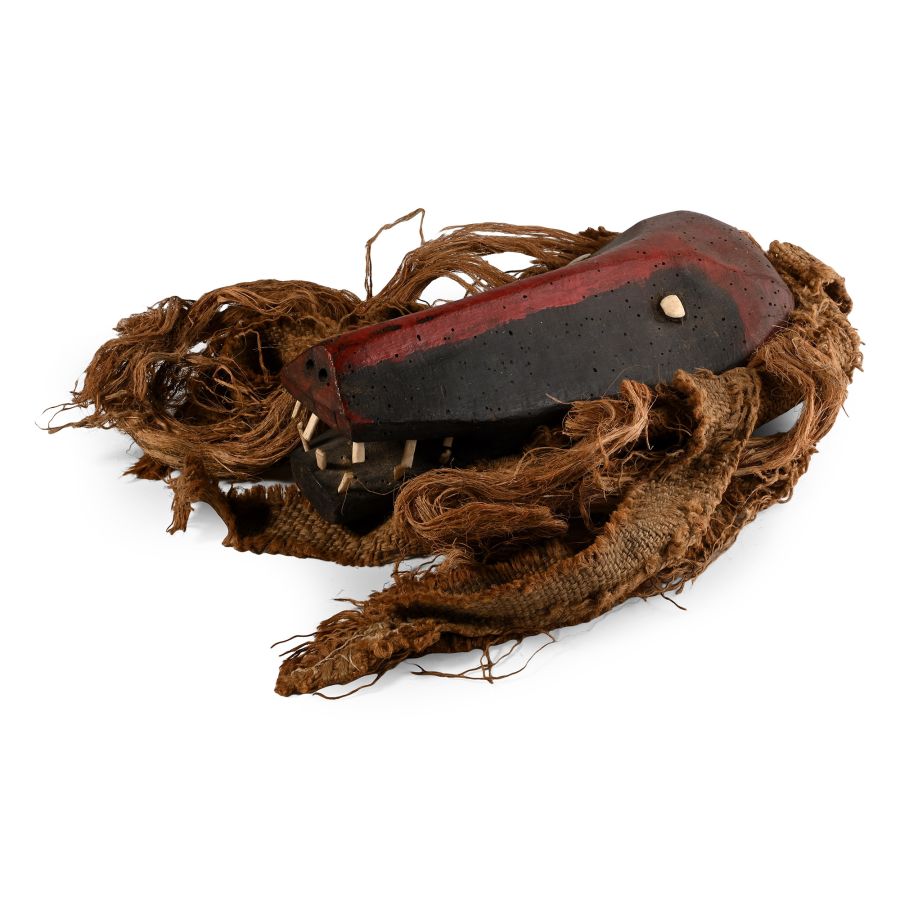
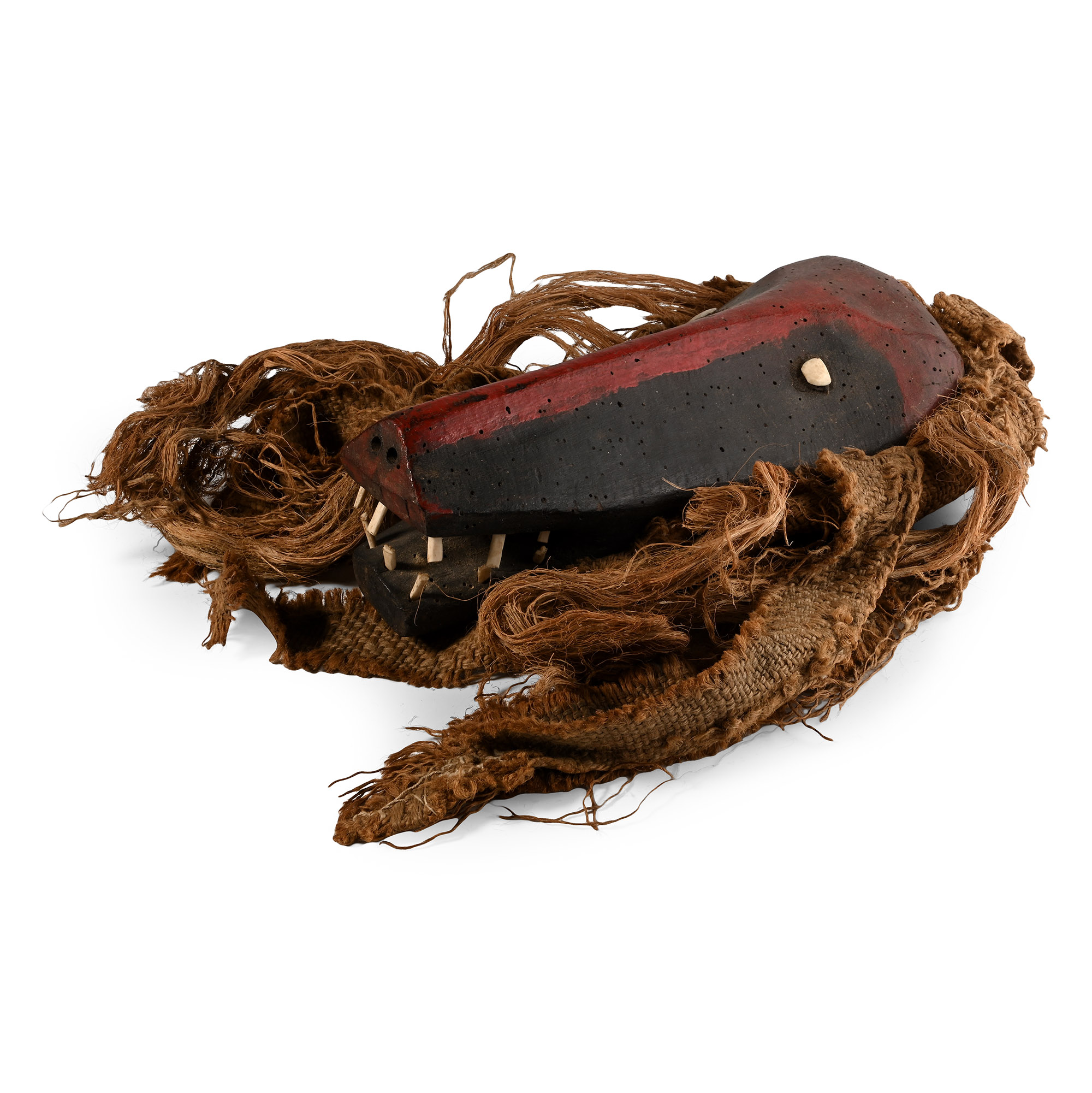
African Wooden Ceremonial Crocodile Face Mask
BOBO TRIBE, MID-LATE 20TH CENTURY A.D.
13 in. (870 grams, face long: 33 cm).
A simplified crocodile head, painted red and black, rough shaped eyes and pegged teeth. [No Reserve]
ProvenanceFrom Mali, West Africa.
From the estate of a West Sussex, UK, collector.
From the property of a late Lincolnshire, UK, gentleman.
The masks symbolize animals or spirits and are worn during ceremonies associated with new crops, initiations and funerals. Ones with an interior cavity too small for a human head are carried on the top corner of a rectangular, tent like costume.
CONDITIONTimeLine Auctions follows a vetting process to ensure the authenticity and legality of all items, reinforcing our commitment to integrity and responsible trading. Each antiquity, antique, and coin lot undergoes thorough examination by a vetting committee of at least ten external specialists, professional trade association members, scientists, and archaeologists: Our Vetting Process
AUCTIONS:
TimeLine is a leading auction house specialising in antiquities, ancient art, collectables, natural history, coins, medals, and books. Our auctions offer museums, collectors, historians, and enthusiasts the opportunity to acquire unique and historically significant pieces.
-
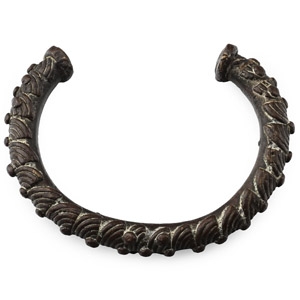
African Decorated Brass Cuff Bracelet
Benin, late 19th century A.D.Sold for (Inc. bp): £26
A highly patterned round bronze body with plain disc shaped ends, radiating studs to the outer edge. 59 grams, 74 mm
From Benin, West Africa. Ex Surrey, UK, ethnographical collection. From the property of a late Lincolnshire, UK, gentleman. -
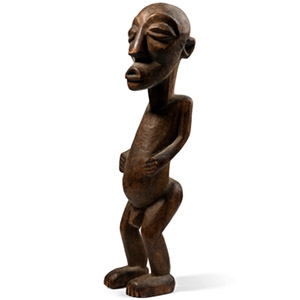
African Wooden Fertility Figure
Lobi Tribe, 20th century A.D.Sold for (Inc. bp): £20
Carved in a standing pose with a bald head, legs slightly bent, hands resting on the abdomen and an elongated neck supporting a face with bulging eyes. 425 grams, 35.8 cm
From Burkina Faso, West Africa. From a Glasgow ethnographical collection; formed 1940s-1950s. From the property of a late Lincolnshire, UK, gentleman. -
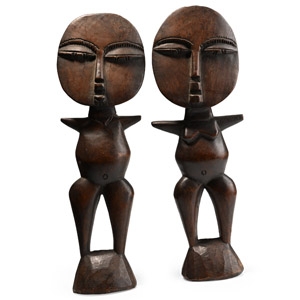
African Wooden 'Akuaba Doll' Wedding Fertility Figure Pair
Ashanti Tribe, early-mid 20th century A.D.Sold for (Inc. bp): £26
Each with exaggerated discoid head, squat body with stub arms, standing on a conical base. 985 grams total, 36-36.5 cm
From Ghana, West Africa. Ex private Cheshire, UK, collection. From the property of a late Lincolnshire, UK, gentleman.
Among the Ashanti people in Ghana, women hoping for offspring carry these ‘Akuaba dolls’ in their clothes. Traditionally, these ‘Akuaba’ have a large, round, flat head that is reminiscent of its origin as a representation of the moon goddess, which is associated with fertility. Once the ‘Akuaba’ figure has fulfilled its purpose, the mother of the desired child places it on her domestic altar, where it is worshipped in a shrine, or she passes it on to the next generation.
