
Loading, please wait...
LOT 2402
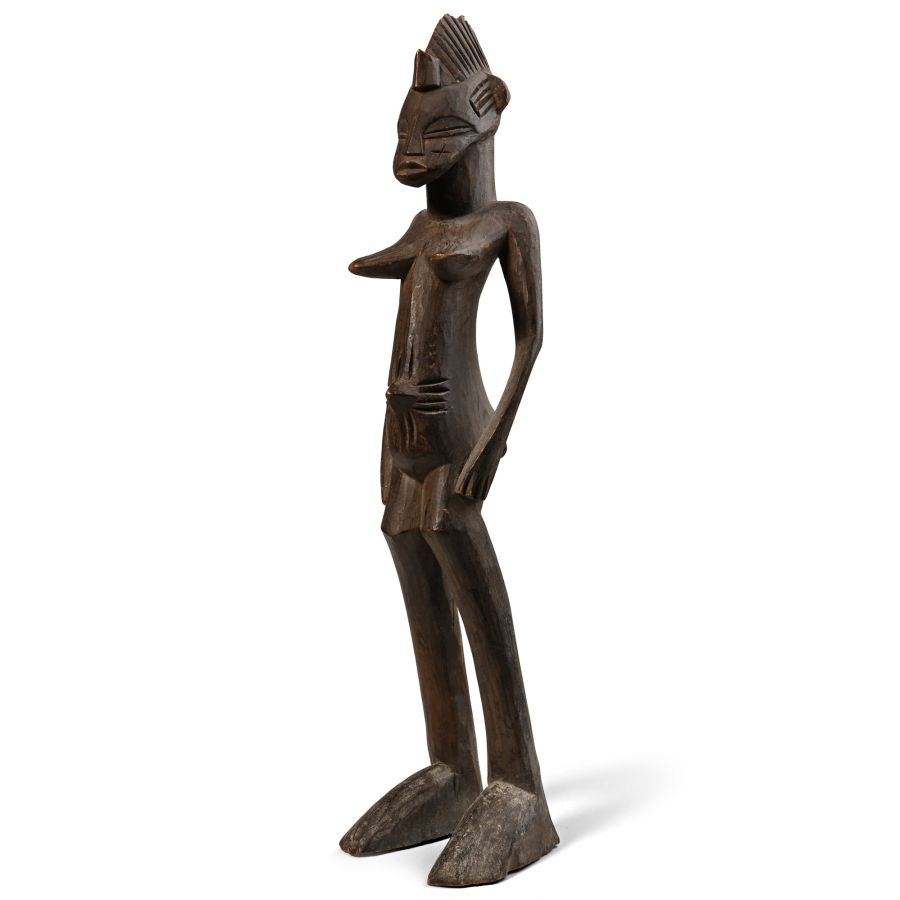
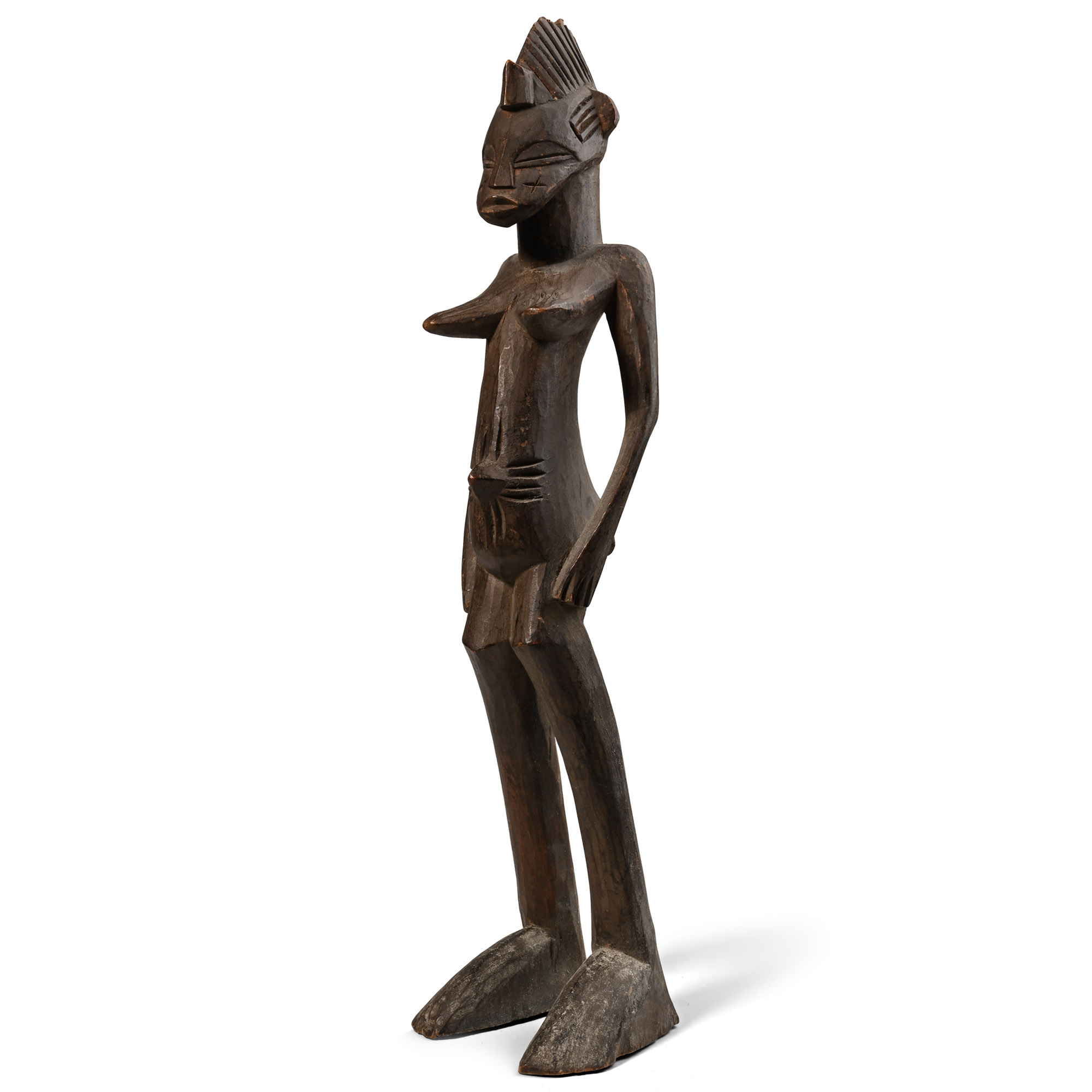
African Wooden Ancestor Figure
YORUBA TRIBE, 20TH CENTURY A.D.
17 1/2 in. (600 grams, 44.5 cm).
A hand-carved standing female figure with hands placed by the side and scarification to the face, breasts and stomach. [No Reserve]
ProvenanceFrom Southwest Nigeria, West Africa.
From an old Bristol, UK, ethnographical collection.
From the property of a late Lincolnshire, UK, gentleman.
Human figures are represented in a fundamentally naturalistic way, except for bulging eyes; flat, protruding, and usually parallel lips; and stylised ears. Within the basic canon of Yoruba sculpture, many local styles can be distinguished, down to the hand of the individual artist.
CONDITIONTimeLine Auctions follows a vetting process to ensure the authenticity and legality of all items, reinforcing our commitment to integrity and responsible trading. Each antiquity, antique, and coin lot undergoes thorough examination by a vetting committee of at least ten external specialists, professional trade association members, scientists, and archaeologists: Our Vetting Process
AUCTIONS:
TimeLine is a leading auction house specialising in antiquities, ancient art, collectables, natural history, coins, medals, and books. Our auctions offer museums, collectors, historians, and enthusiasts the opportunity to acquire unique and historically significant pieces.
-
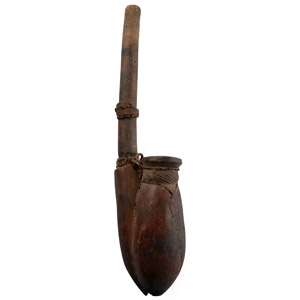
Central African Clay Smoking Pipe
Tikar Tribe, late 19th-early 20th century A.D.Sold for (Inc. bp): £7
With decoration to the top of the bowl and an embedded wooden stem with leather binding, secured by twine; repair to the stem. 152 grams, 23.6 cm
From Cameroon, Central Africa. From an old Dorset, UK, specialist collection. From the property of a late Lincolnshire, UK, gentleman.
From the Cameroon -
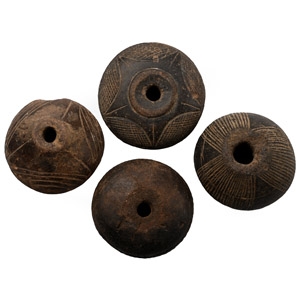
African Decorated Clay Spindle Whorl Collection
Mali, circa 10th century A.D.Sold for (Inc. bp): £27
Each discoid in plan and lentoid in section with central perforation and incised geometric ornament. 320 grams total, 50-54 mm
Ex private Oxford ethnographical collection. From the property of a late Lincolnshire, UK, gentleman. -
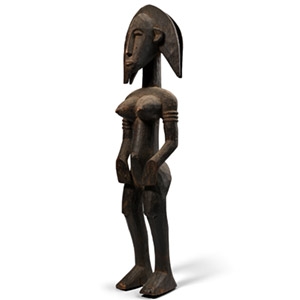
African Wooden Ancestor Figure
Fang Tribe, 20th century A.D.Sold for (Inc. bp): £39
A hand-carved standing female figure with hands placed in front of the figure and wearing arm rings. 930 grams, 48 cm
From Equatorial Guinea, West Coast of Central Africa. From an old Bristol, UK, ethnographical collection. From the property of a late Lincolnshire, UK, gentleman.
The people that are called “Fang” in the geographic or ethnographic literature number 800,000 and constitute a vast mosaic of village communities, established in a large zone of Atlantic equatorial Africa comprising Cameroon, continental Equatorial Guinea and nearly the whole north of Gabon, on the right bank of the Ogowe River. The Fang practice a cult devoted to ancestor lineages, the bieri, whose aim is to both protect themselves from the deceased and to recruit their aid in matters of daily life. Bieri are reliquary figures placed by the Fang upon their bark boxes to personify the tribal soul, containing the skulls and skeletons of prominent deceased persons. The bieri also served for therapeutic rituals and, above all, for initiations of young males during the great so festival. The rites included consumption of a plant with stimulant properties, which induced a trance lasting for several hours, and the “resuscitation of the ancestors,” in which figures detached from the reliquaries were moved somewhat playfully from behind a raffia screen as puppets.
