
Loading, please wait...
LOT 2392
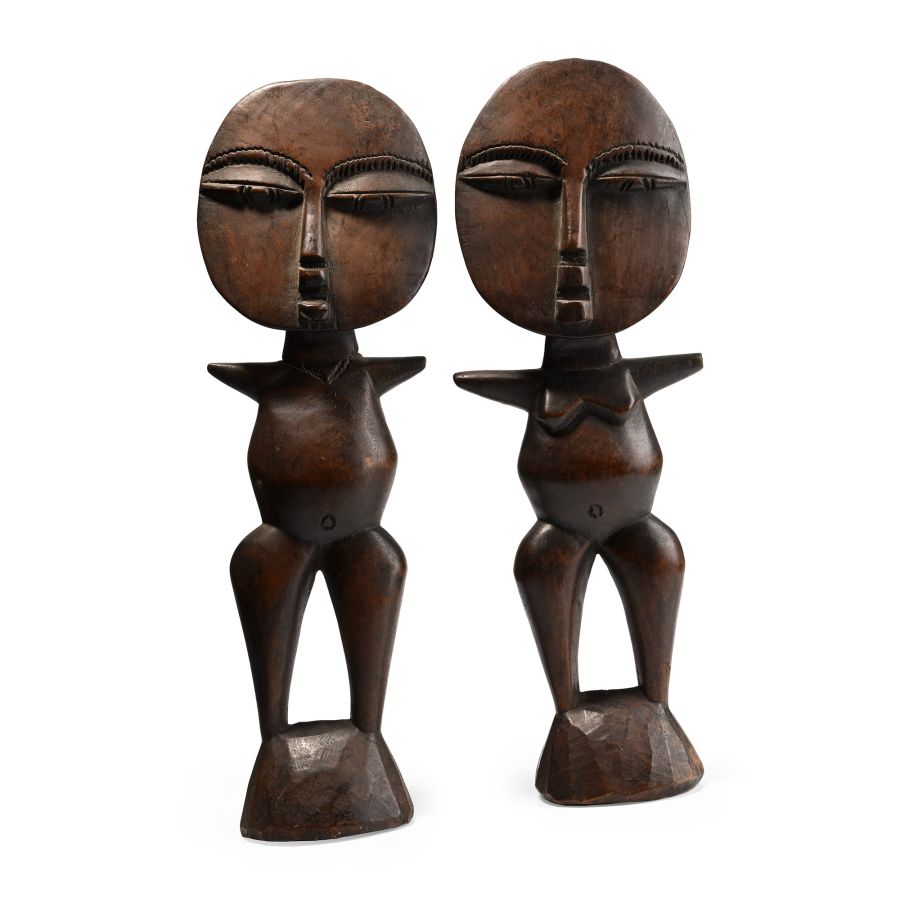
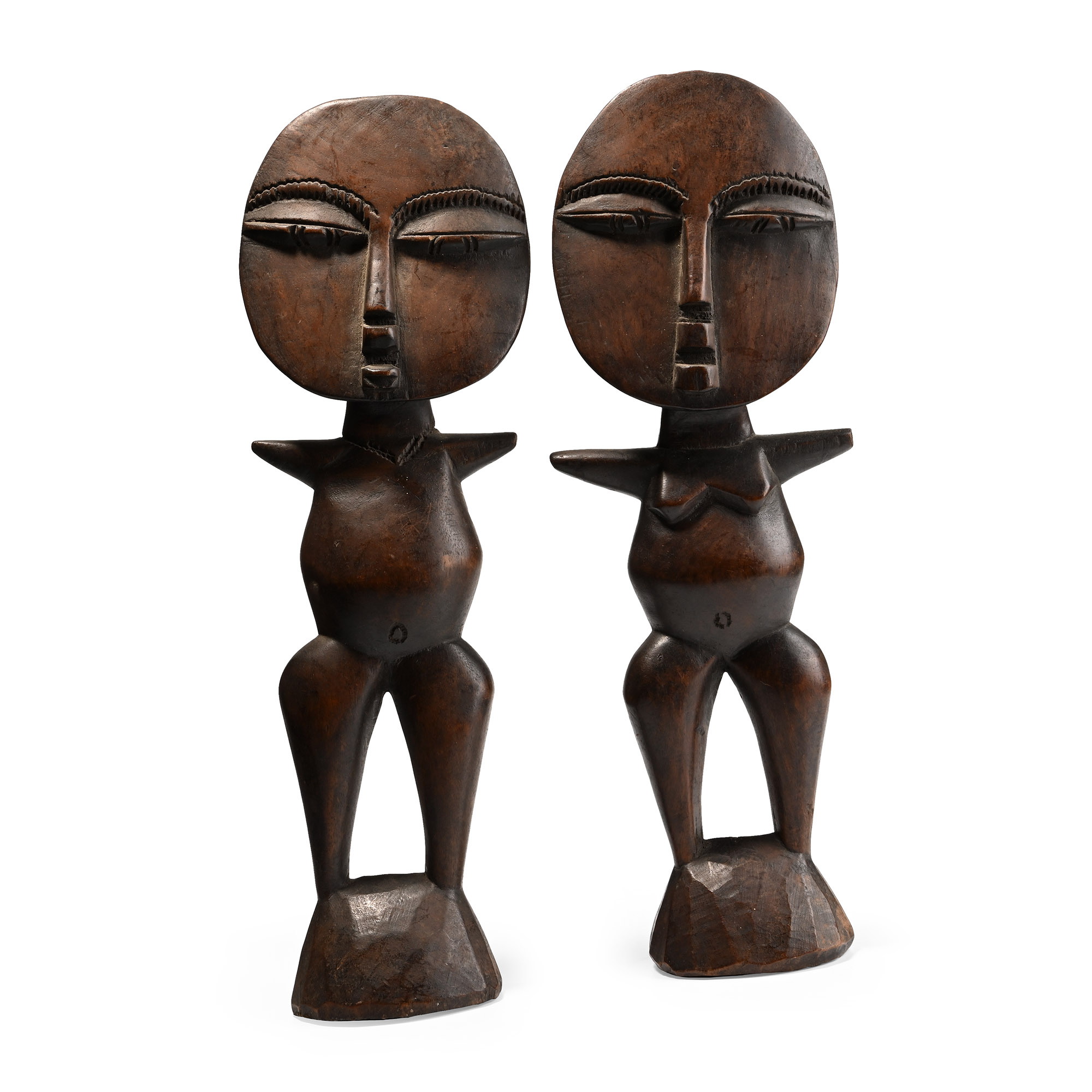
African Wooden 'Akuaba Doll' Wedding Fertility Figure Pair
ASHANTI TRIBE, EARLY-MID 20TH CENTURY A.D.
14 1/8 - 14 3/8 in. (985 grams total, 36-36.5 cm).
Each with exaggerated discoid head, squat body with stub arms, standing on a conical base. [2, No Reserve]
ProvenanceFrom Ghana, West Africa.
Ex private Cheshire, UK, collection.
From the property of a late Lincolnshire, UK, gentleman.
Among the Ashanti people in Ghana, women hoping for offspring carry these ‘Akuaba dolls’ in their clothes. Traditionally, these ‘Akuaba’ have a large, round, flat head that is reminiscent of its origin as a representation of the moon goddess, which is associated with fertility. Once the ‘Akuaba’ figure has fulfilled its purpose, the mother of the desired child places it on her domestic altar, where it is worshipped in a shrine, or she passes it on to the next generation.
CONDITIONTimeLine Auctions follows a vetting process to ensure the authenticity and legality of all items, reinforcing our commitment to integrity and responsible trading. Each antiquity, antique, and coin lot undergoes thorough examination by a vetting committee of at least ten external specialists, professional trade association members, scientists, and archaeologists: Our Vetting Process
AUCTIONS:
TimeLine is a leading auction house specialising in antiquities, ancient art, collectables, natural history, coins, medals, and books. Our auctions offer museums, collectors, historians, and enthusiasts the opportunity to acquire unique and historically significant pieces.
LOT 2392
African Wooden 'Akuaba Doll' Wedding Fertility Figure Pair
Sold for (Inc. bp): £26
-
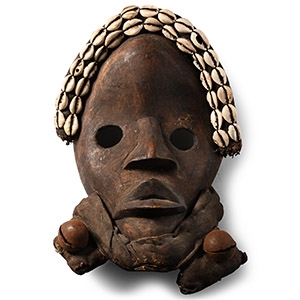
African Wooden Ceremonial Face Mask
Dan Tribe, 20th century A.D.Sold for (Inc. bp): £33
A carved face mask, decorated with cowrie shells, fabric and bells. 547 grams, 29 cm
From Democratic Republic of the Congo, Central Africa. From an old Hampshire ethnographic collection; acquired prior to 1960. From the property of a late Lincolnshire, UK, gentleman. -
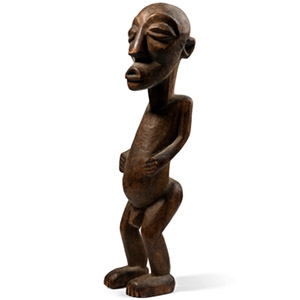
African Wooden Fertility Figure
Lobi Tribe, 20th century A.D.Sold for (Inc. bp): £20
Carved in a standing pose with a bald head, legs slightly bent, hands resting on the abdomen and an elongated neck supporting a face with bulging eyes. 425 grams, 35.8 cm
From Burkina Faso, West Africa. From a Glasgow ethnographical collection; formed 1940s-1950s. From the property of a late Lincolnshire, UK, gentleman. -
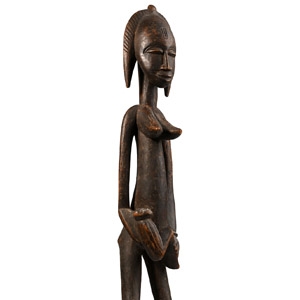
African Wooden Mother with Child Fertility Figure
Fang Tribe, early-mid 20th century A.D.Sold for (Inc. bp): £65
A hand-carved female figure standing on a base holding a child in front of the figure and displaying scarification to the face and breasts. 1.38 kg, 68.5 cm
From Equatorial Guinea, West Coast of Central Africa. From an old Bristol, UK, ethnographical collection. From the property of a late Lincolnshire, UK, gentleman.
The people that are called “Fang” in the geographic or ethnographic literature number 800,000 and constitute a vast mosaic of village communities, established in a large zone of Atlantic equatorial Africa comprising Cameroon, continental Equatorial Guinea and nearly the whole north of Gabon, on the right bank of the Ogowe River. The Fang practice a cult devoted to ancestor lineages, the Bieri, whose aim is to both protect themselves from the deceased and to recruit their aid in matters of daily life. Bieri are reliquary figures placed by the Fang upon their bark boxes to personify the tribal soul, containing the skulls and skeletons of prominent deceased persons. The Bieri also served for therapeutic rituals and, above all, for initiations of young males during the great so festival. The rites included consumption of a plant with stimulant properties, which induced a trance lasting for several hours, and the “resuscitation of the ancestors,” in which figures detached from the reliquaries were moved somewhat playfully from behind a raffia screen as puppets.
