
Loading, please wait...
LOT 2372
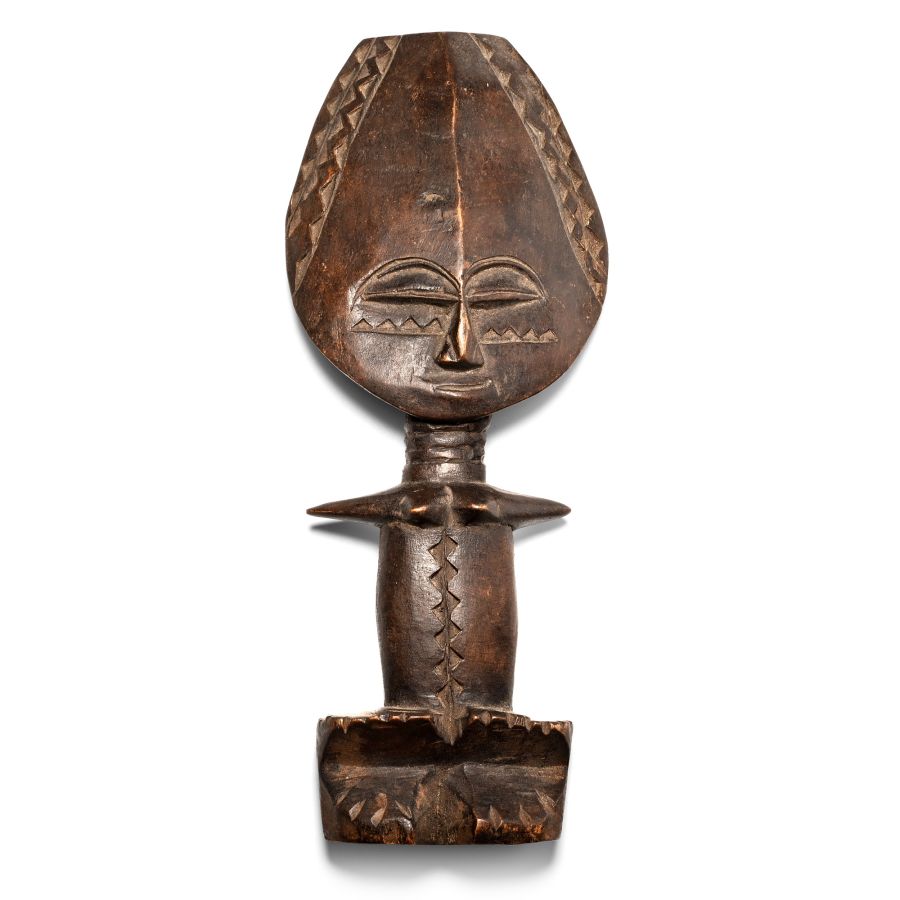
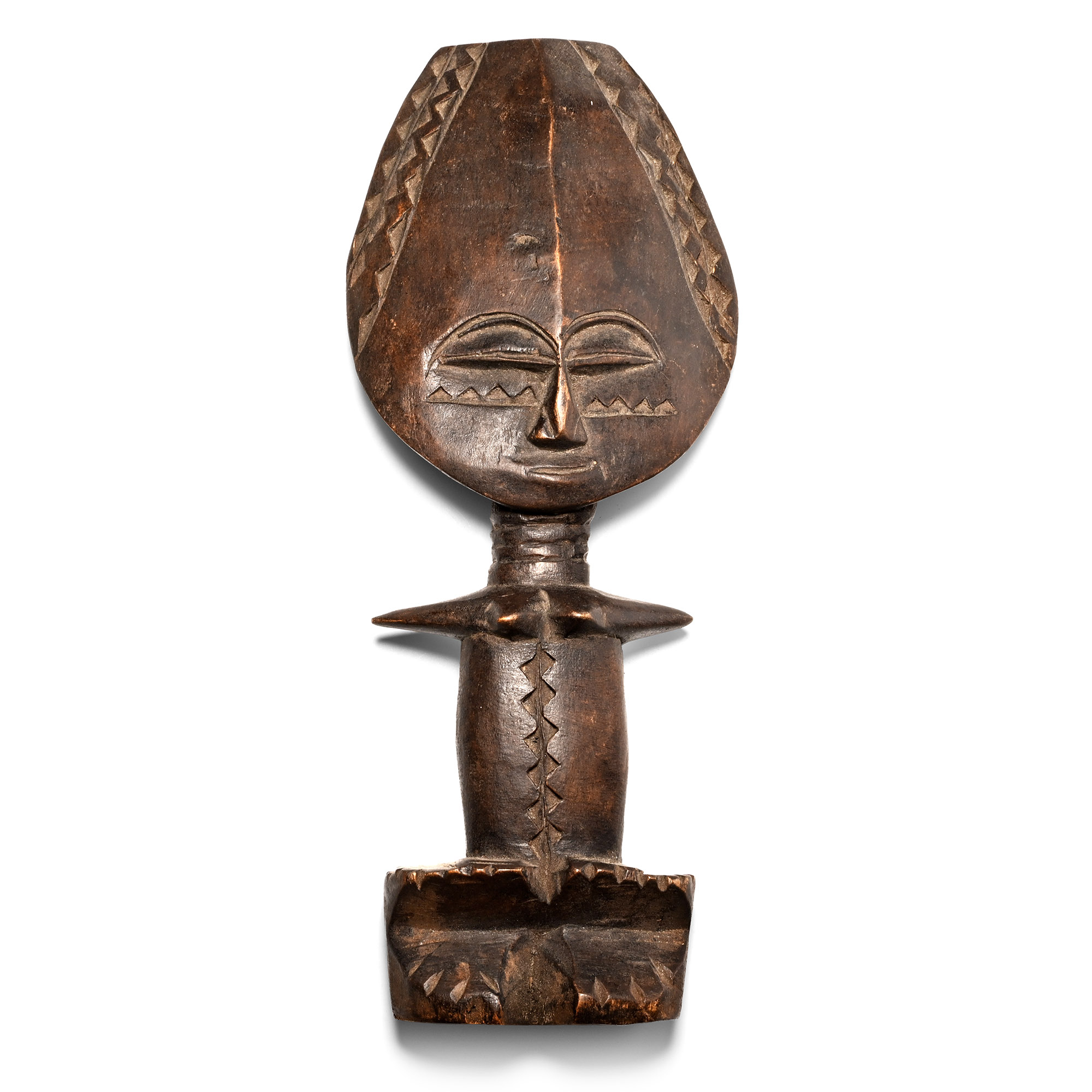
African Wooden 'Akuaba Doll' Fertility Figure
ASHANTI TRIBE, 20TH CENTURY A.D.
12 in. (250 grams, 30.5 cm).
Carved from dark-coloured, lightweight wood in traditional form and dyed dark brown with large, round head with a plain hairstyle, large eyes and zig-zag lines beneath, extending down the back and abdomen representing the typical tribal scarification marks. [No Reserve]
ProvenanceFrom Ghana, West Africa.
Ex private collection of Mr.N.J., Leicester, UK.
From the property of a late Lincolnshire, UK, gentleman.
Among the Ashanti people in Ghana, women hoping for offspring carry these ‘Akuaba dolls’ in their clothes. Traditionally, these ‘Akuaba’ have a large, round, flat head that is reminiscent of its origin as a representation of the moon goddess, which is associated with fertility. Once the ‘Akuaba’ figure has fulfilled its purpose, the mother of the desired child places it on her domestic altar, where it is worshipped in a shrine, or she passes it on to the next generation.
CONDITIONTimeLine Auctions follows a vetting process to ensure the authenticity and legality of all items, reinforcing our commitment to integrity and responsible trading. Each antiquity, antique, and coin lot undergoes thorough examination by a vetting committee of at least ten external specialists, professional trade association members, scientists, and archaeologists: Our Vetting Process
AUCTIONS:
TimeLine is a leading auction house specialising in antiquities, ancient art, collectables, natural history, coins, medals, and books. Our auctions offer museums, collectors, historians, and enthusiasts the opportunity to acquire unique and historically significant pieces.
-
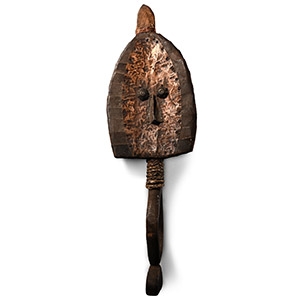
African Wooden Ceremonial Face Mask
Ashanti Tribe, 20th century A.D.Sold for (Inc. bp): £26
A carved tribal mask with copper to the face and back of the head, a single horn to the top of the head and stylised legs. 484 grams, 47.5 cm
From Ghana, West Africa. From an old Surrey, UK, oriental and ethnographical collection; acquired during 1950s. From the property of a late Lincolnshire, UK, gentleman. -
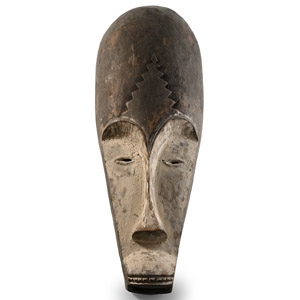
African Wooden Ceremonial Face Mask
Fang Tribe, early-mid 20th century A.D.Sold for (Inc. bp): £143
A large carved mask with a white heart-shaped face and a decoration to the forehead. 764 grams, 43 cm
From Cameroon, Central Africa. From the collection of the late Professor R M Hicks, OBE. From the property of a late Lincolnshire, UK, gentleman.
The Fang used masks in their secret societies. Fang masks, such as those worn by itinerant troubadours and for hunting and punishing sorcerers, are painted white with facial features outlined in black. Typical are large, elongated masks and featuring a face that was usually heart-shaped with a long, fine nose. Apparently, it has been linked with the dead and ancestors, since white is their color. The ngontang dance society also used white masks, sometimes in the form of a four-sided helmet-mask with bulging forehead and eyebrows in heart-shaped arcs. -
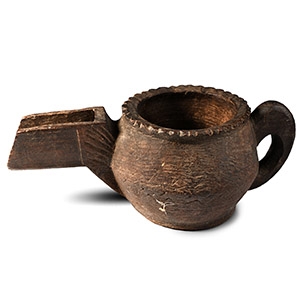
African Wooden Water Jug
Early-mid 20th century A.D.Sold for (Inc. bp): £26
With geometric carved decoration, large spout, strap handle and a serrated rim; West African type. 511 grams, 28.5 cm
From West Africa. From an old Surrey, UK, oriental and ethnographical collection; acquired during 1950s. From the property of a late Lincolnshire, UK, gentleman.
