
Loading, please wait...
LOT 2331
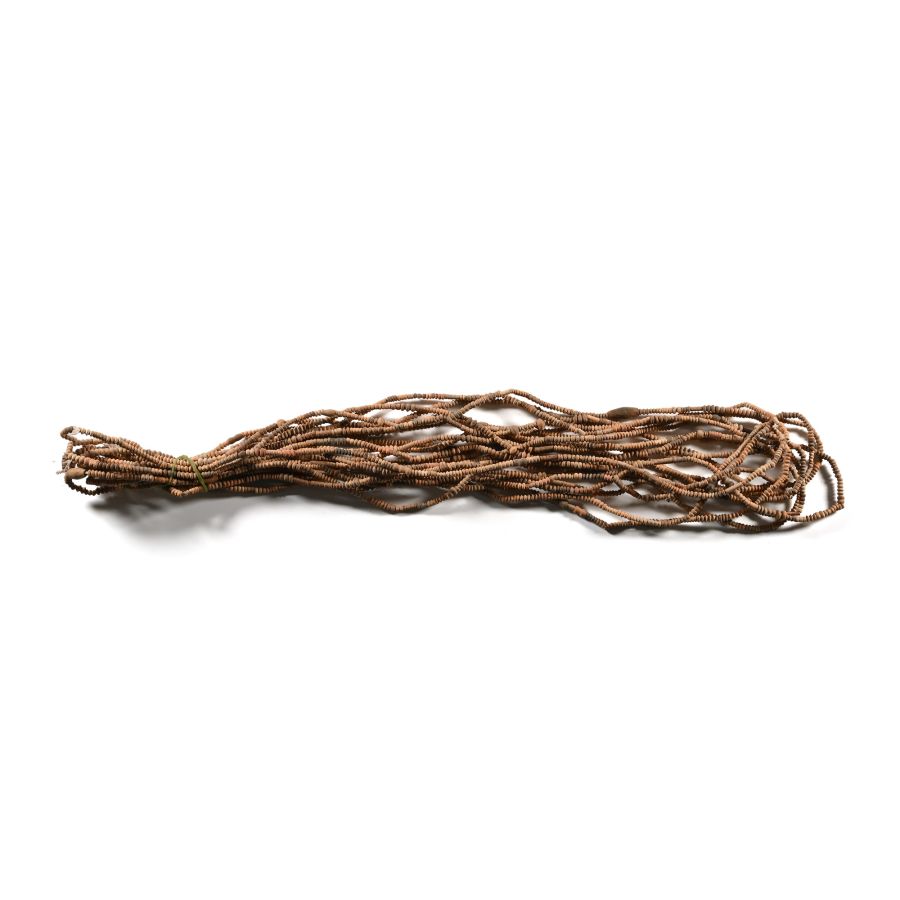
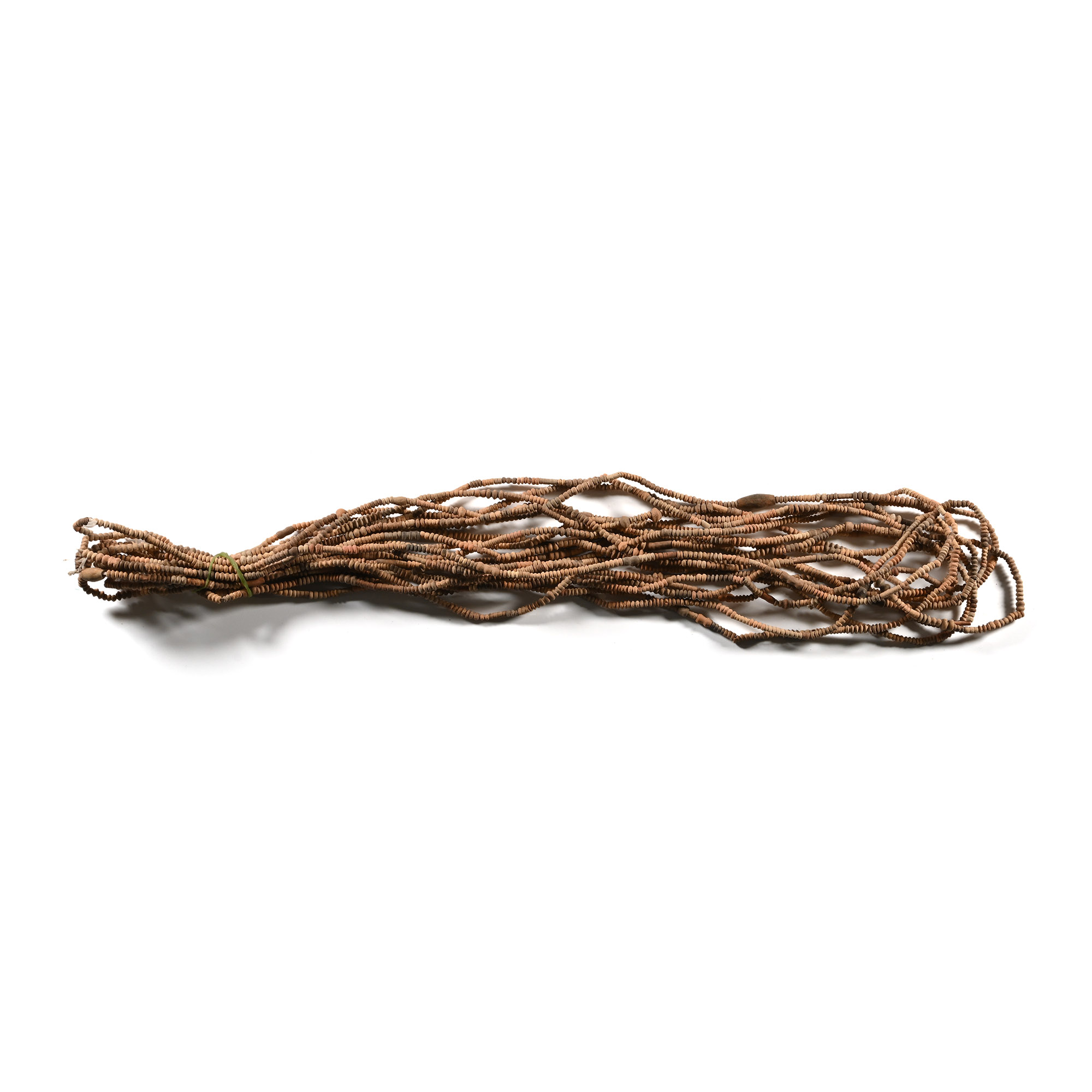
African Terracotta Bead Necklace Group
12TH CENTURY A.D. OR LATER
28 3/8 - 29 1/8 in. (64 grams total, 72-74 cm).
Ten restrung mainly cream and beige-coloured rondelle, tubular and ribbed beads and other types. [10, No Reserve]
ProvenanceEx property of a UK gallery, early 2000s.
CONDITIONTimeLine Auctions follows a vetting process to ensure the authenticity and legality of all items, reinforcing our commitment to integrity and responsible trading. Each antiquity, antique, and coin lot undergoes thorough examination by a vetting committee of at least ten external specialists, professional trade association members, scientists, and archaeologists: Our Vetting Process
AUCTIONS:
TimeLine is a leading auction house specialising in antiquities, ancient art, collectables, natural history, coins, medals, and books. Our auctions offer museums, collectors, historians, and enthusiasts the opportunity to acquire unique and historically significant pieces.
-
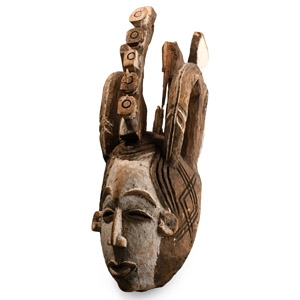
African Wooden Ceremonial 'Maiden Spirit' Face Mask
Igbo Tribe, early 20th century A.D.Sold for (Inc. bp): £46
A mask with long narrow face, painted white; narrow protruding sharp nose; slit eyes; closed mouth; small ears, arching eyebrows, incised hair design and above this is an elaborate openwork construction in brown, yellow and white. 1.4 kg, 56 cm
From South-West Nigeria, West Africa. From an old Newbury, UK, ethnographic collection. From the property of a late Lincolnshire, UK, gentleman.
Agbogho mmwo, or "maiden spirit," masks are worn by men at festivals that honour important deities. They represent the Igbo ideal of female beauty: small, balanced features, elaborate hairstyles, and delicate tattoos. The men who dance in agbogho mmwo masks wear colourful, tight-fitting fibre costumes, entertaining the crowd with exaggerated versions of women's dances. -
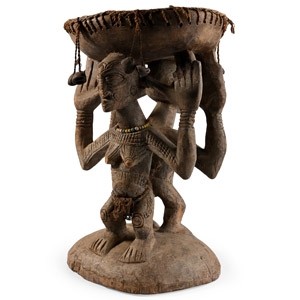
African Wooden Ceremonial Tribal Stool
Yoruba Tribe, early-mid 20th century A.D.Sold for (Inc. bp): £91
A carved tribal stool, an oval seat decorated with beads supported by two female figures displaying scarification, on a plano-convex base. 2.55 kg, 41 cm high
From Republic of Benin, West Africa. From the collection of the late Professor R M Hicks, OBE. From the property of a late Lincolnshire, UK, gentleman. -
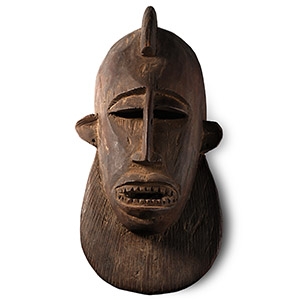
African Wooden Ceremonial Face Mask
Baule Tribe, early-mid 20th century A.D.Sold for (Inc. bp): £39
A wooden tribal oval mask with wide open mouth displaying teeth, a large narrow nose, hatched crest. 1.63 kg, 36 cm
From Côte d'Ivoire, West Africa. From a Glasgow ethnographical collection; formed 1940s-1950s. From the property of a late Lincolnshire, UK, gentleman.
