
Loading, please wait...
LOT 2354
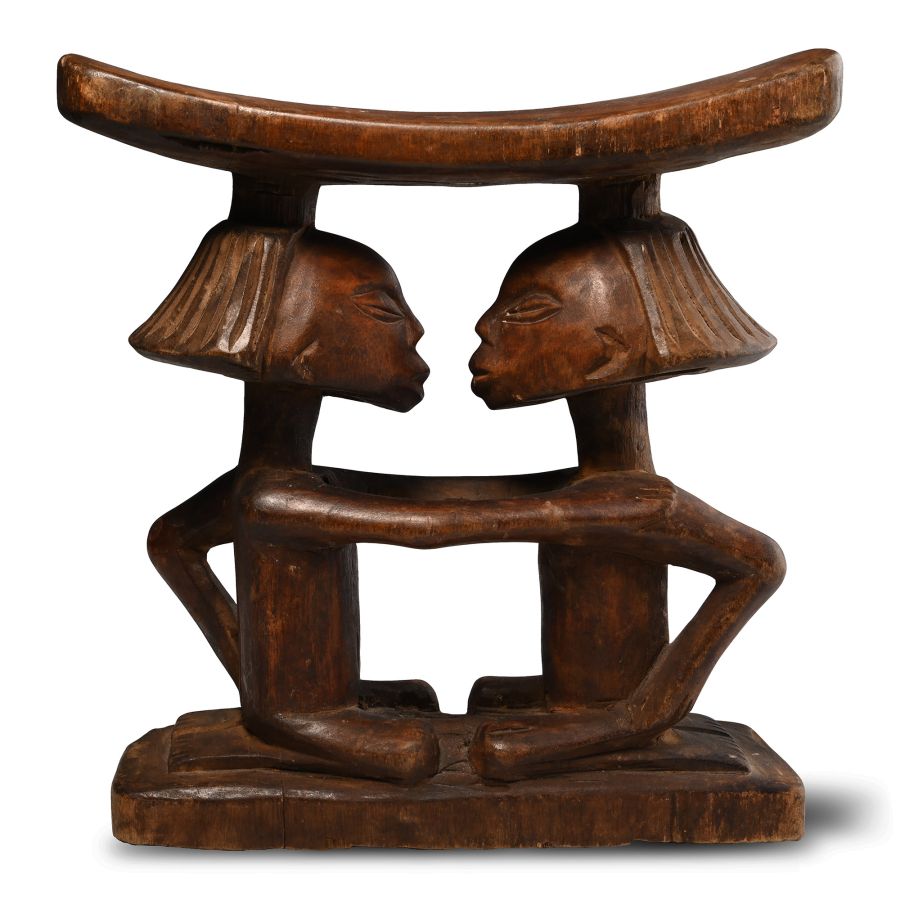
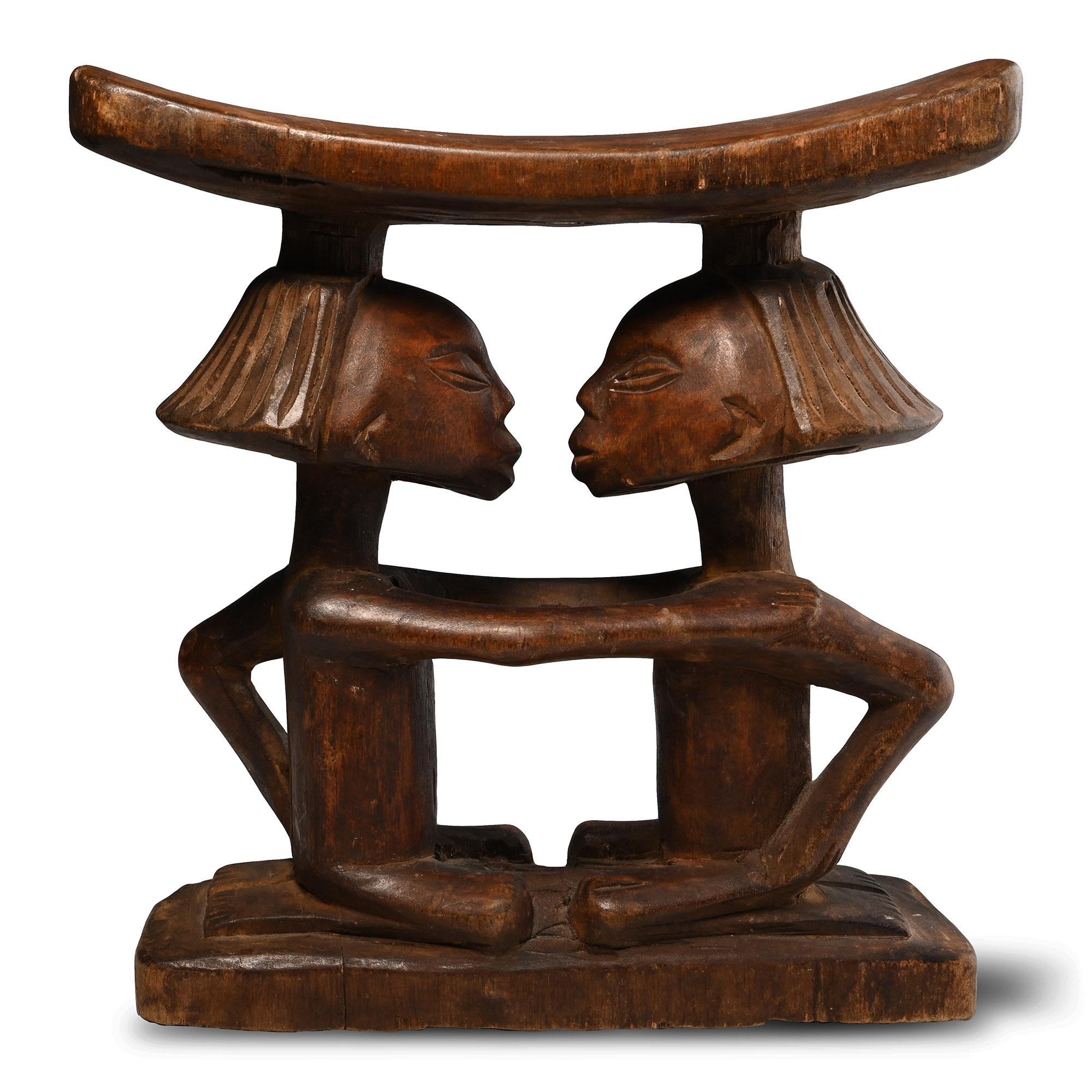
African Congo Wooden Headrest
LUBA TRIBE, 20TH CENTURY A.D.
8 in. (485 grams, 20.5 cm high).
A carved headrest formed as two opposed kneeling figures each with an arm on the other's shoulder; rectangular base. [No Reserve]
ProvenanceEx Walter Steinberg collection; acquired London art market, 1960s-1970s.
CONDITIONTimeLine Auctions follows a vetting process to ensure the authenticity and legality of all items, reinforcing our commitment to integrity and responsible trading. Each antiquity, antique, and coin lot undergoes thorough examination by a vetting committee of at least ten external specialists, professional trade association members, scientists, and archaeologists: Our Vetting Process
AUCTIONS:
TimeLine is a leading auction house specialising in antiquities, ancient art, collectables, natural history, coins, medals, and books. Our auctions offer museums, collectors, historians, and enthusiasts the opportunity to acquire unique and historically significant pieces.
-
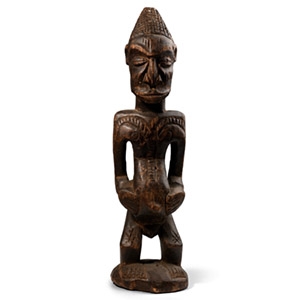
African Wooden Fertility Figure
Yoruba Tribe, mid 20th century A.D.Sold for (Inc. bp): £39
Carved in the round standing male figures with tall hatched headdress extending to the rear, hands placed either side of his distended abdomen, knees flexed, standing on a plano-convex base. 1.1 kg, 48.5 cm
From South West Nigeria, West Africa. From the property of a late Lincolnshire, UK, gentleman.
The Yoruba are the largest nation in Africa with an art-producing tradition. Their figures, more often of Shango (also spelled Sango and Sagoe), deity of thunder and lightning are carved from wood and kept in shrines. -
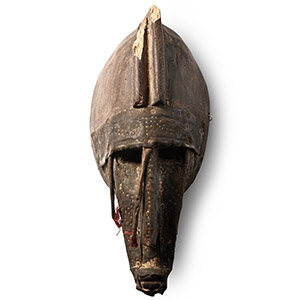
African Wooden Ceremonial Face Mask
Marka, early-mid 20th century A.D.Sold for (Inc. bp): £98
Hollow-formed carved mask with heavy brow, small square eye-holes flanking a triangular-section nose, narrow lower face with tassels. 862 grams, 34.5 cm
From Mali, Guinea and Burkina Faso, West Africa. Private Hampshire, UK, collection of tribal art; acquired in the 1960s. From the property of a late Lincolnshire, UK, gentleman.
The Marka are a Mande subgroup. This ethnic group is independent from the Bambara but their styles show a strong Bambara influence. The Marka are famous for their masks and puppets. Similar to Bambara's ntomo society masks, Marka masks are generally carved with horns, comb or crest on top of the head, but unlike Bambara masks they are often covered with metal sheeting. -
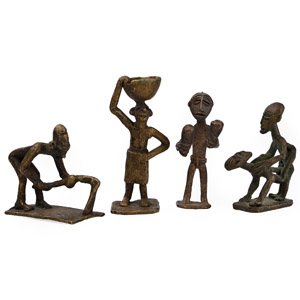
Ashanti Bronze Gold Figural Weight Collection
Akan Tribe, 19th-20th century A.D.Sold for (Inc. bp): £20
Including a figure using a hoe, another carrying a basket on her head and other types. 150 grams total, 49-64 mm
From an old Oxford, UK, collection. From the property of a late Lincolnshire, UK, gentleman.
