
Loading, please wait...
LOT 2338
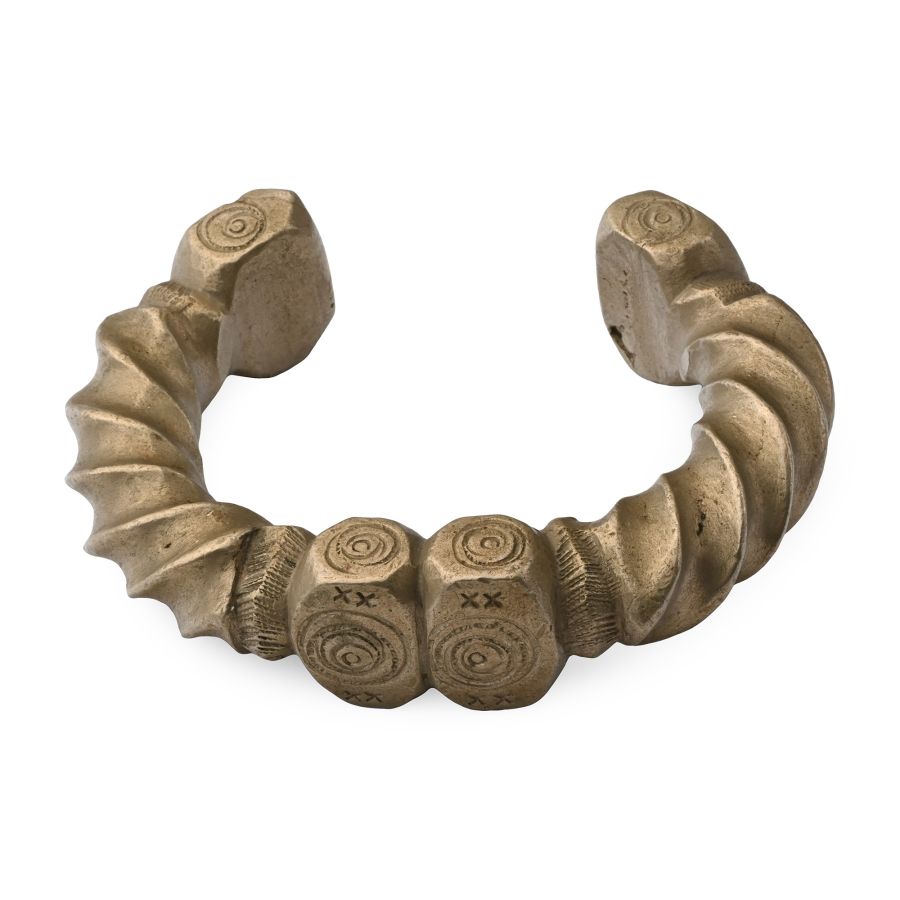
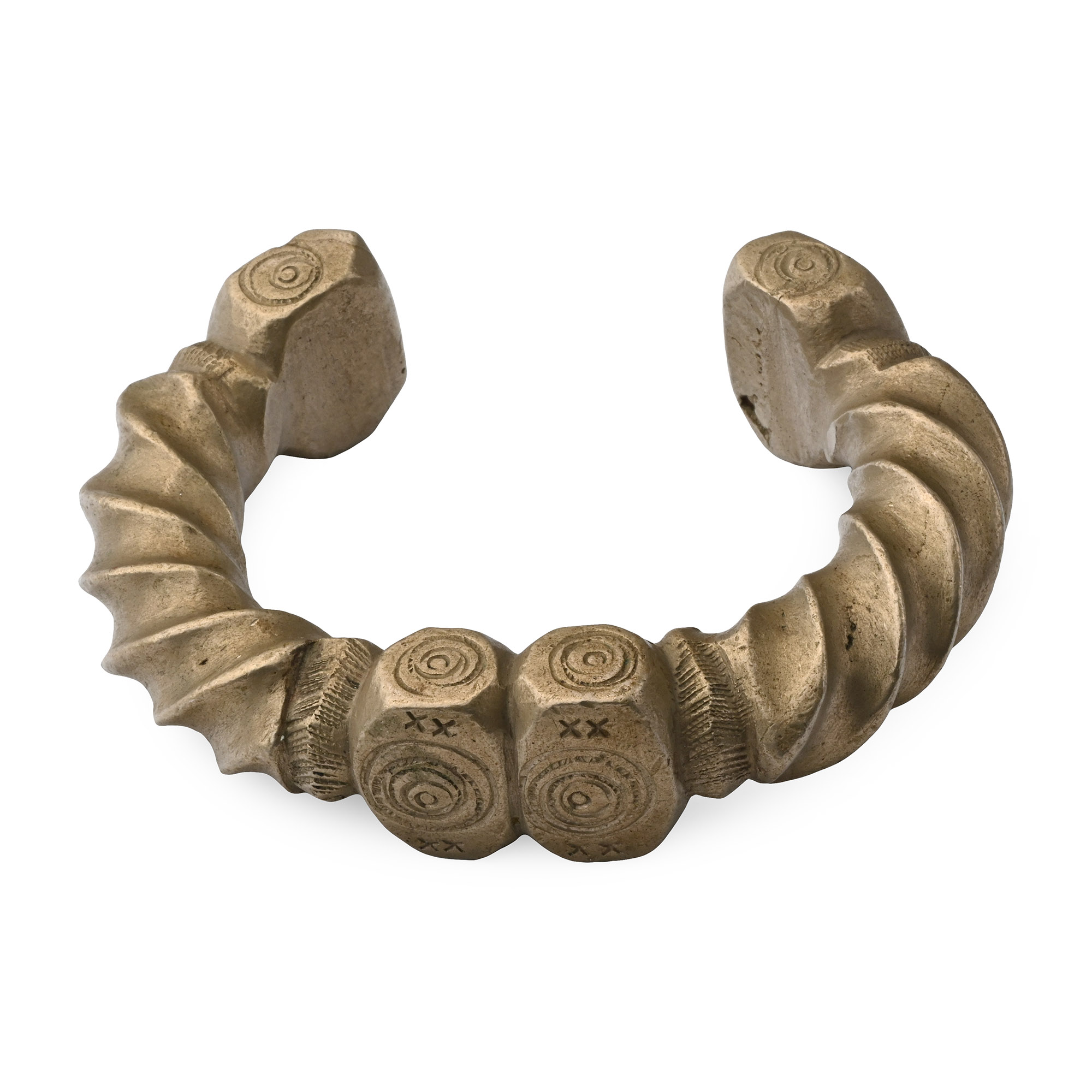
African Brass Manilla Slave Bracelet
OKOMBO TRIBE, LATE 19TH-EARLY 20TH CENTURY A.D.
3 3/8 in. (244 grams, 87 mm).
Penannular in form, comprising rectangular polyhedral blocks with ring-and-dot ornament, spiral form to the arms. [No Reserve]
ProvenanceFrom Nigeria, West Africa.
From an old Derby, UK, specialist collection.
From the property of a late Lincolnshire, UK, gentleman.
Once a form of currency for West African peoples, manillas became one of the main currencies of choice during the slave trade to the Americas. Their usage during this time in history was of such prevalence that they were often referred to as “slave trade money.” Provenance: Private Derby Oriental Collection. The Manilla is in very good condition and measures 105mm wide and weighs about 250gms. Manillas are typically horseshoe-shaped with flared ends and often decorated with balls on each end. Africans from each region had names for each variety of manilla and were very particular about the types they would accept. They valued the Manillas by the sound they made when struck and used them as the dominant form of currency for many things including everyday market purchases, bride price and burials. The main purpose of the manilla – the trading and purchase of slaves- fostered a system where the incoming voyage of Europeans took manillas to West Africa to obtain slaves, who were then taken to the Americas. The price of a slave valued in manillas varied depending on the time, place and type being offered.
CONDITIONTimeLine Auctions follows a vetting process to ensure the authenticity and legality of all items, reinforcing our commitment to integrity and responsible trading. Each antiquity, antique, and coin lot undergoes thorough examination by a vetting committee of at least ten external specialists, professional trade association members, scientists, and archaeologists: Our Vetting Process
AUCTIONS:
TimeLine is a leading auction house specialising in antiquities, ancient art, collectables, natural history, coins, medals, and books. Our auctions offer museums, collectors, historians, and enthusiasts the opportunity to acquire unique and historically significant pieces.
-
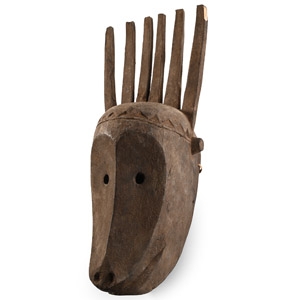
African Wooden Ceremonial Face Mask
Bambara tribe, early-mid 20th century A.D.Sold for (Inc. bp): £221
Carved wooden elongated mask representing an animal head with wide open snout, round ears, small round holes for the eyes and six horns above the brow. 1.47 kg, 49.5 cm
From Mali, West Africa. From a Glasgow ethnographical collection; formed 1940s-1950s. From the property of a late Lincolnshire, UK, gentleman.
The number of horns make reference to specific characteristics of males (three, six, or 9 horns) or females (four or eight horns) and the androgynous (two, five or seven), making this a male mask of six horns. -
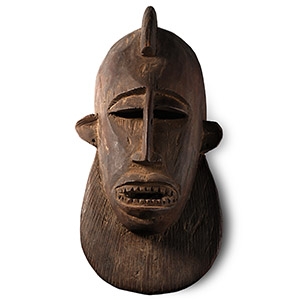
African Wooden Ceremonial Face Mask
Baule Tribe, early-mid 20th century A.D.Sold for (Inc. bp): £39
A wooden tribal oval mask with wide open mouth displaying teeth, a large narrow nose, hatched crest. 1.63 kg, 36 cm
From Côte d'Ivoire, West Africa. From a Glasgow ethnographical collection; formed 1940s-1950s. From the property of a late Lincolnshire, UK, gentleman. -
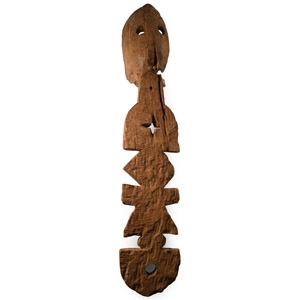
African Wooden Ceremonial Face Mask
Mossi Tribe, early-mid 20th century A.D.Sold for (Inc. bp): £33
Comprising an ellipsoid hollow face with parallel tusks; board of pierced geometric elements. 779 grams, 81 cm
From Burkina Faso, West Africa. Private Hampshire, UK, collection of tribal art; acquired in the 1960s. From the property of a late Lincolnshire, UK, gentleman.
Masks were regarded as the seat of the spirit, but they might also represent the totemic animal of the clan.
