
LOT 3119
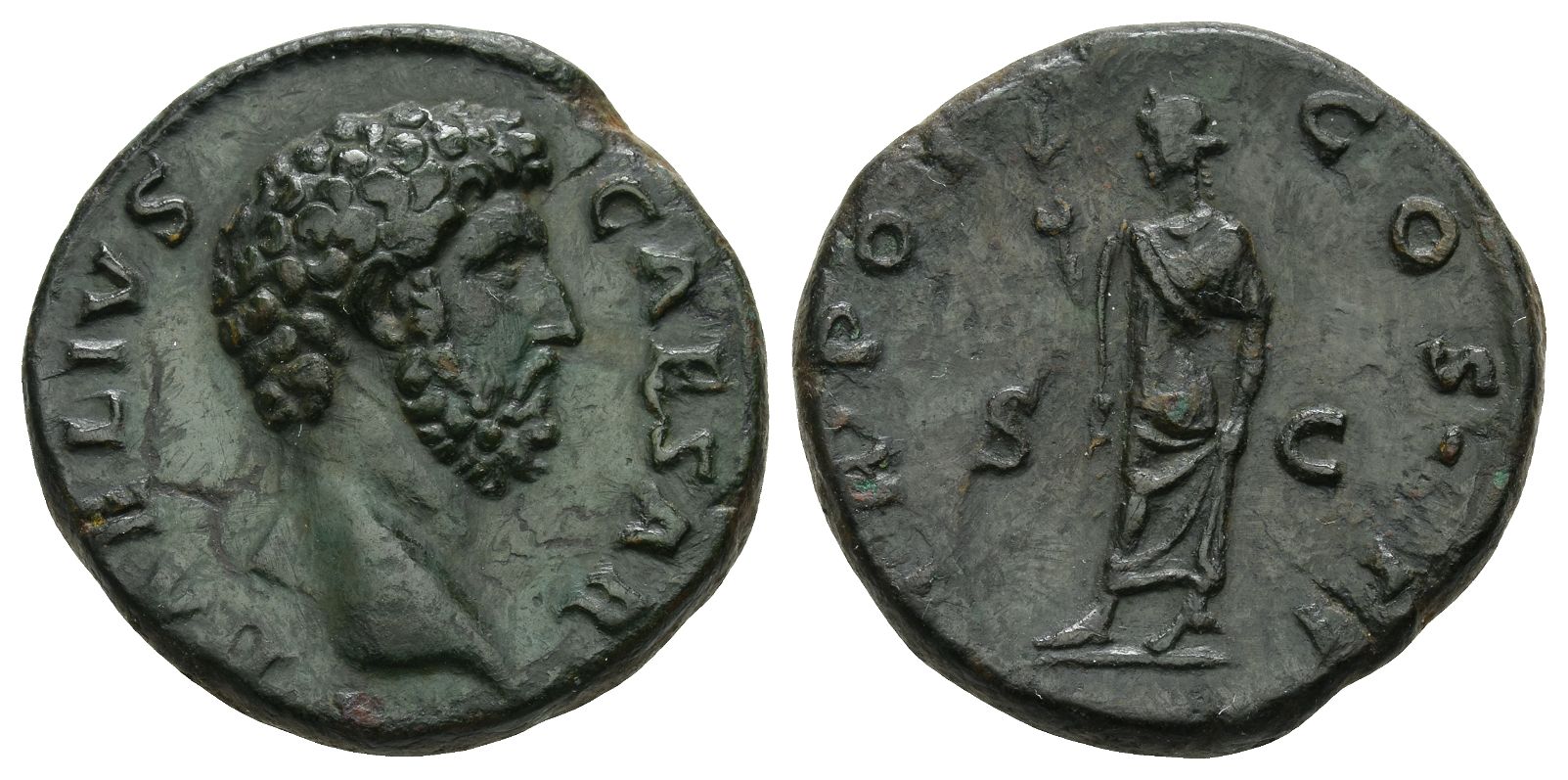
Aelius, Caesar AE As. AD 136-138.
Rome mint; struck AD 137. L AELIVS CAESAR, bare head to right / TR POT COS • II, Spes advancing to left, holding flower in right hand and raising skirt with left, S C across fields. RIC II.3 2700; BMCRE 1931 (Hadrian). Good Very Fine. Dark cypress green patina.(12.98gr, 25mm, 6h.).
ProvenanceFrom UK private collection.
TimeLine Auctions follows a vetting process to ensure the authenticity and legality of all items, reinforcing our commitment to integrity and responsible trading. Each antiquity, antique, and coin lot undergoes thorough examination by a vetting committee of at least ten external specialists, professional trade association members, scientists, and archaeologists: Our Vetting Process
AUCTIONS:
TimeLine is a leading auction house specialising in antiquities, ancient art, collectables, natural history, coins, medals, and books. Our auctions offer museums, collectors, historians, and enthusiasts the opportunity to acquire unique and historically significant pieces.
-
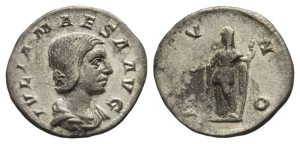
Julia Maesa, Augusta AR Denarius. AD 218-224/5.
Sold for (Inc. bp): £39
Rome mint; struck AD 218-222. IVLIA MAESA AVG, draped bust to right / IVNO, Juno, veiled, standing facing, head to left, holding patera and sceptre. RIC IV 254 (Elagabalus); BMCRE 68 (same); RSC 16. 3.30gr, 19mm, 6h.
Very Fine.
Acquired in the mid 1980s-1990s. Private collection, Switzerland, thence by descent. Private collection, since the late 1990s. -
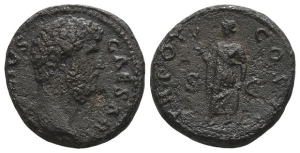
Aelius, as Caesar AE Dupondius or As. AD 137.
Sold for (Inc. bp): £13
Rome mint. L AELIVS CAESAR, bare head to right / TR POT COS II, Spes advancing to left, holding flower in right hand and raising skirt with left, S C across fields. RIC II.3 2700; BMCRE 1931 (Hadrian). 11.96gr, 25mm, 6h.
Near Very Fine.
From a private, UK, collection in the 1980s. Property of a London, UK, antiquarian. -
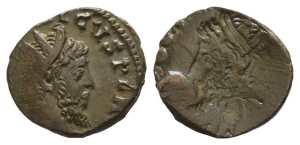
Tetricus I, Romano-Gallic Emperor BI Antoninianus. AD 271-274.
Sold for (Inc. bp): £10
Uncertain mint. [...]CVS P F A[...], radiate bust to right / Incuse of obverse. 1.91gr, 16mm.
Good Very Fine. Brockage of obverse.
From a private, UK, collection in the 1980s. Property of a London, UK, antiquarian.
Brockage errors are caused when an already minted coin sticks to the coin die and impresses onto another blank that hasn't been struck yet, pressing a mirror image of the other coin into the blank.
