
Loading, please wait...
_900x900.jpg "Admiral Thomas Leeke Massie Cased Cocked Naval Hat and Box")
_200x200.jpg "Admiral Thomas Leeke Massie Cased Cocked Naval Hat and Box")
_900x900.jpg "Admiral Thomas Leeke Massie Cased Cocked Naval Hat and Box")
_200x200.jpg "Admiral Thomas Leeke Massie Cased Cocked Naval Hat and Box")
.jpg "Admiral Thomas Leeke Massie Cased Cocked Naval Hat and Box")
.jpg "Admiral Thomas Leeke Massie Cased Cocked Naval Hat and Box")
LOT 1897
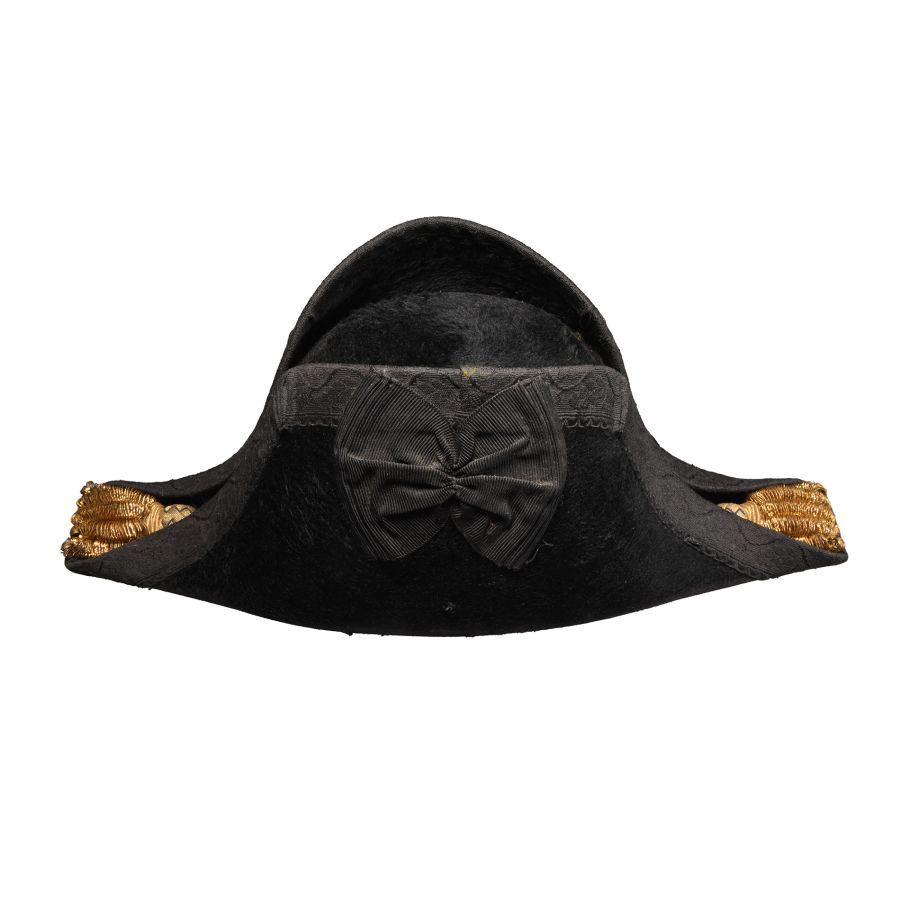
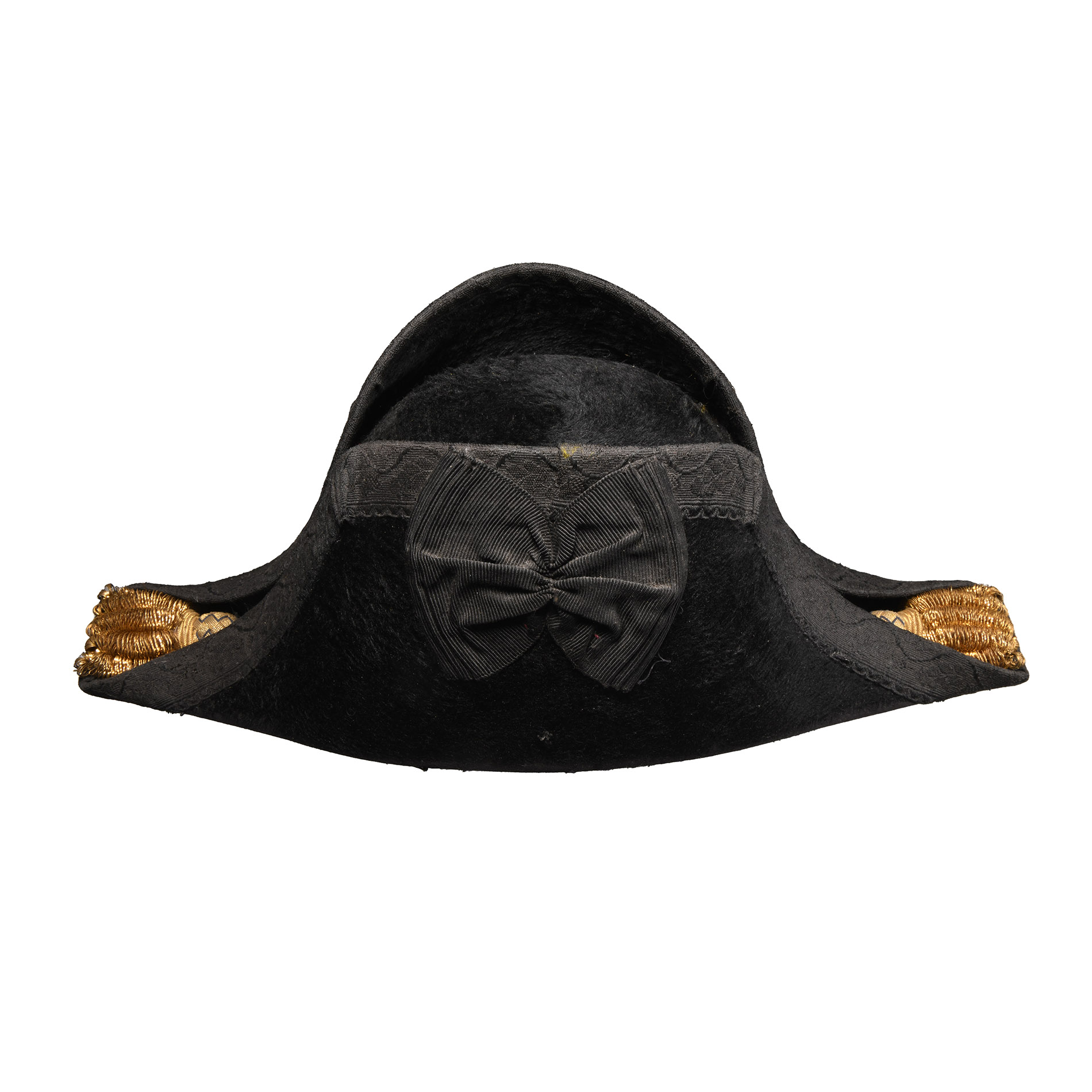
Admiral Thomas Leeke Massie Cased Cocked Naval Hat and Box
19TH CENTURY A.D.
19 3/4 in. (1.8 kg, 50 cm).
Bicorn hat and epaulettes, the left hand side of the bicorn bears a black cockade, with twisted gold bullion wires on both front and back ends, edges are finished with black brocade featuring a continuous oakleaves and acorns, inside is lined with white silk and cream coloured leather ‘sweat band’; together with its original early Japanned tin hat box with brass handle and plaque engraved 'Capt'n T L Massie R.H.', and crowned arms engraved 'Portsmouth'.
ProvenanceAcquired from M D L Historic Military Antiques.
The Kusmirek Collection, UK.
Accompanied by a copy of listing and biographical information.
Leeke was born at Coddington Hall, Cheshire, on 20th October 1802. He entered the navy in 1818, serving in the Mediterranean on board HMS Rochfort, and later on different ships. Leeke was promoted to lieutenant in 1827, was made commander on Queen Victoria's coronation on 28th June 1838, and to second captain in March 1840, and, for the part he played in the capture of Acre during the Oriental Crisis, he was promoted to captain in 1841. In 1849 Leeke was appointed to HMS Cleopatra which he commanded in the East Indies and China during the Second Anglo-Burmese War. In 1854 he commissioned HMS Powerful, becoming rear-admiral in 1860, vice-admiral in 1866 and admiral in 1872. He died in 1898.
CONDITIONTimeLine Auctions follows a vetting process to ensure the authenticity and legality of all items, reinforcing our commitment to integrity and responsible trading. Each antiquity, antique, and coin lot undergoes thorough examination by a vetting committee of at least ten external specialists, professional trade association members, scientists, and archaeologists: Our Vetting Process
AUCTIONS:
TimeLine is a leading auction house specialising in antiquities, ancient art, collectables, natural history, coins, medals, and books. Our auctions offer museums, collectors, historians, and enthusiasts the opportunity to acquire unique and historically significant pieces.
LOT 1897
Admiral Thomas Leeke Massie Cased Cocked Naval Hat and Box
Sold for (Inc. bp): £364
-
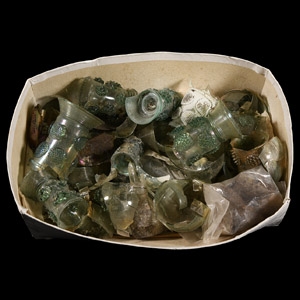
Post Medieval Glass Fragment Group
Circa 16th-17th century A.D.Sold for (Inc. bp): £7
Comprising vessel fragments decorated with appliqués together with plain glass fragments of different colours. 1.6 kg total, 30-92 mm
Acquired 1990s-early 2000s. East Anglian private collection. -
.jpg)
Painted Hardwood Statue of Leda and the Swan
Circa 1800 A.D.Sold for (Inc. bp): £715
Worked in the round from deciduous wood, a classical composition seated on a cloud base, polychrome paint. 3.1 kg, 41.5 cm high
From a German collection. Ex Nagel auctions, Stuttgart, Germany. -
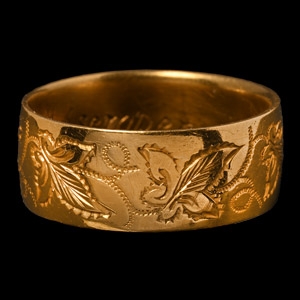
Post Medieval 'Semper Una' Gold Posy Ring
19th century A.D.Sold for (Inc. bp): £293
Engraved with leaf and tendril detailing to the outer face, inscribed to the inner face 'Φ semper vna' (Φ forever one). 9.33 grams, 21.04 mm overall, 18.27 mm internal diameter (approximate size British Q, USA 8, Europe 17.49, Japan 16)
Property of a Jersey gentleman; by inheritance from his father.
