
Loading, please wait...
LOT 0275
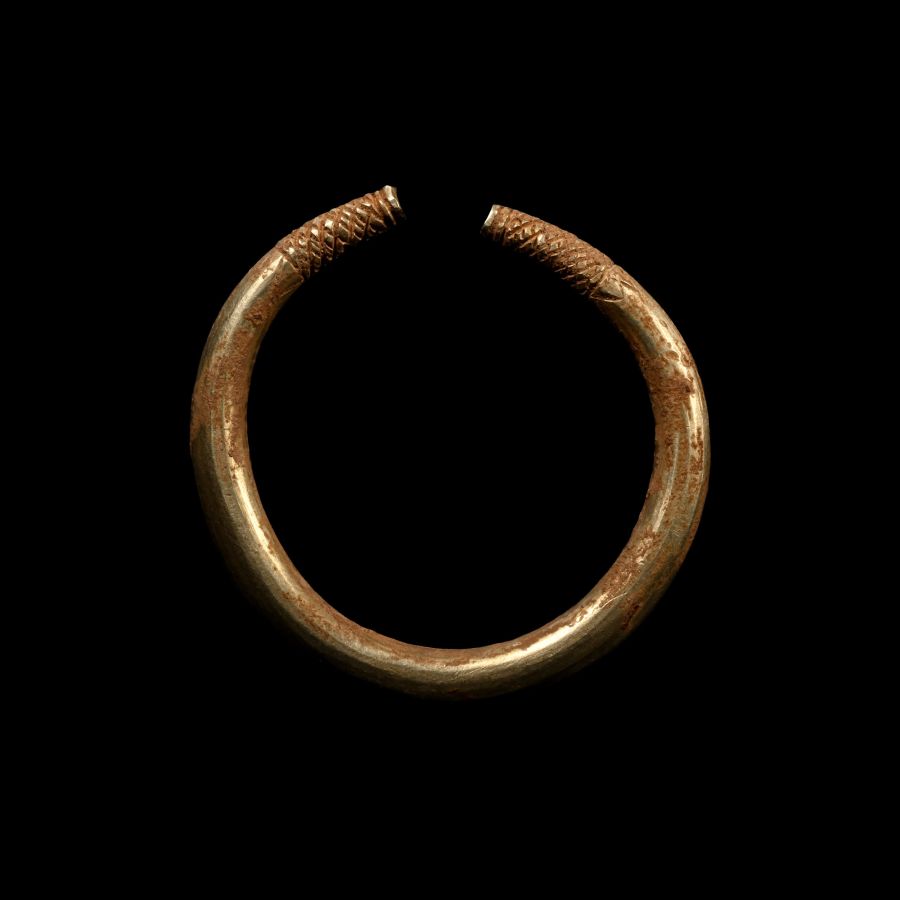
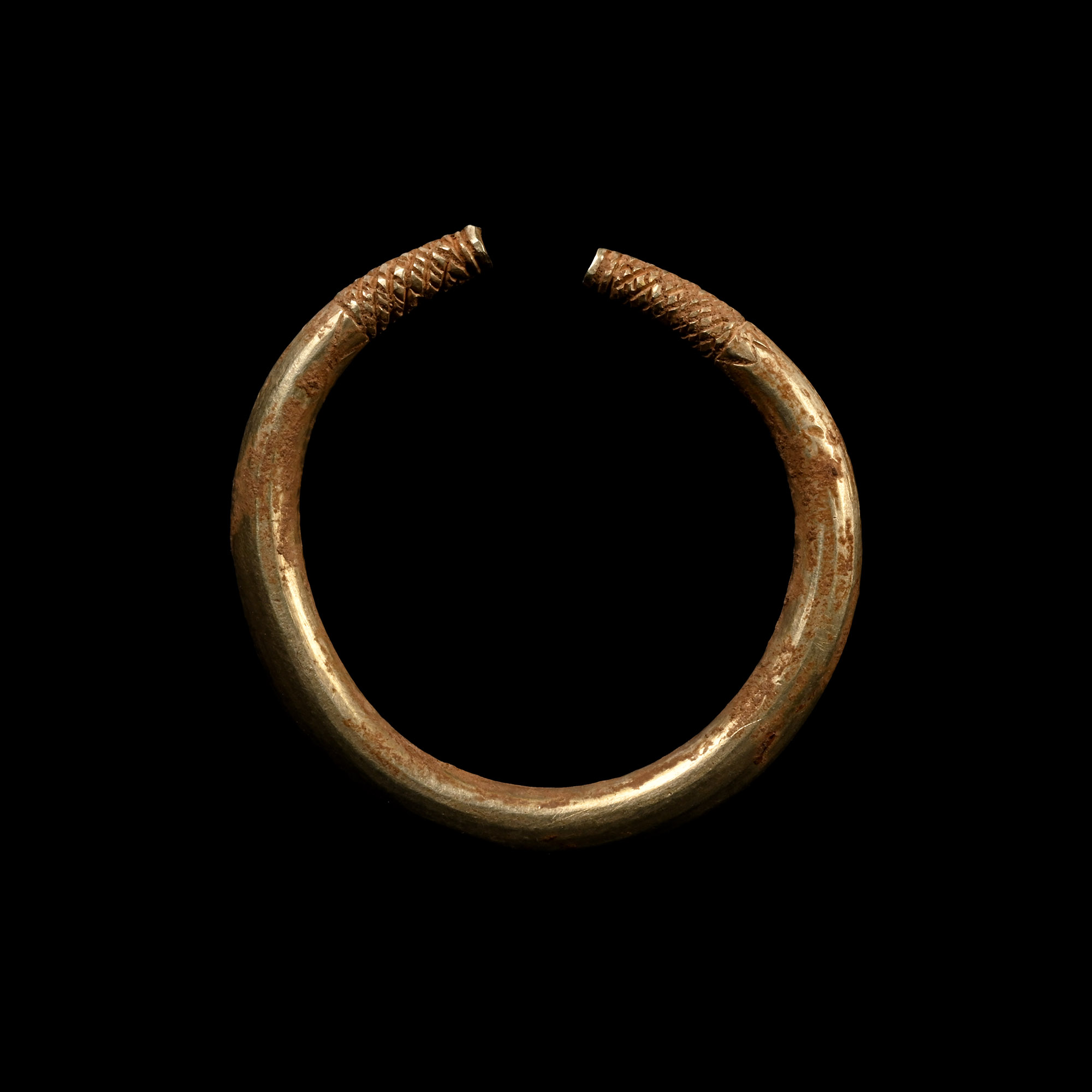
Achaemenid Solid Electrum Bracelet
6TH-4TH CENTURY B.C.
1 5/8 in. (20.8 grams, 41 mm).
Penannular in form and tapering to each end with incised hatching.
ProvenanceAcquired in 1993.
Private collection, Switzerland, thence by descent.
Private collection, since the late 1990s.
This lot has been cleared against the Art Loss Register database, and is accompanied by an illustrated lot declaration signed by the Head of the Antiquities Department, Dr Raffaele D'Amato.
TimeLine Auctions follows a vetting process to ensure the authenticity and legality of all items, reinforcing our commitment to integrity and responsible trading. Each antiquity, antique, and coin lot undergoes thorough examination by a vetting committee of at least ten external specialists, professional trade association members, scientists, and archaeologists: Our Vetting Process
AUCTIONS:
TimeLine is a leading auction house specialising in antiquities, ancient art, collectables, natural history, coins, medals, and books. Our auctions offer museums, collectors, historians, and enthusiasts the opportunity to acquire unique and historically significant pieces.
-
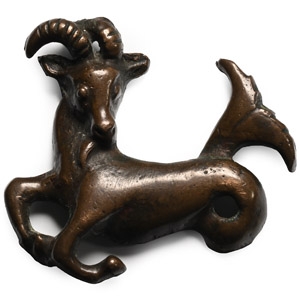
Sasanian Bronze Capricorn Mount
5th-7th century A.D.Sold for (Inc. bp): £156
Modelled in the half-round with hollow reverse, capricorn with head turned, fish-tail coiled to the rear. 12.5 grams, 40 mm
Ex London, UK, gallery, 1971-early 2000s. London, UK, collection. This lot has been cleared against the Art Loss Register database, and is accompanied by an illustrated lot declaration signed by the Head of the Antiquities Department, Dr Raffaele D'Amato. -

Sumerian Terracotta Foundation Cone From Lagash
Circa 2100 B.C.Sold for (Inc. bp): £1,690
Conical with a domed top, ten-line inscription for Gudea of Lagash, giving a record of the building of Eninnu, the temple of Ningirsu: 'For Ningirsu, the powerful warrior of Enlil, Gudea, ruler of Lagaš, brought about perfection: he built and restored his E-ninnu-anzud-babbar.' 172 grams, 12.2 cm
From an important collection formed before 1988. Examined by Professor Wilfrid George Lambert FBA (1926-2011), historian, archaeologist, and specialist in Assyriology and Near Eastern archaeology, in the late 1980s and 1990s. Accompanied by a copy of a scholarly note by Professor Wilfrid George Lambert. This lot has been cleared against the Art Loss Register database, and is accompanied by an illustrated lot declaration signed by the Head of the Antiquities Department, Dr Raffaele D'Amato.
Votive cones are one type of royal foundation deposit, objects that were buried in the walls and beneath the floors of important buildings during construction to sanctify the site and to create a historical memory of the ruler and his achievements. -

Neo-Assyrian Carnelian Cylinder Seal with Worship Scene
Circa 750-600 B.C.Sold for (Inc. bp): £442
Accompanied by a copy of an old scholarly note, typed and signed by W.G. Lambert, late Professor of Assyriology, University of Birmingham, 1970-1993, which states: ' Cylinder seal of Cornelian, 20 x 11 mm. On the right a deity is seated on a throne with a high back decorated with sparkling knobs. This deity holds an unidentified object in one hand while raising the other. Facing stands a worshiper raising the right hand with index finger extended, extending the left and with palm cupped. Between the two figures is a fire-bowl raised on a pole with fire burning in the pan. Three filling motifs serve as a terminal: the lunar crescent, a lozenge-shape, and a fish. This is a Neo-Assyrian seal in late drilled style. c. 750-600 B.C.'; supplied with a museum-quality impression. 4.11 grams, 19 mm
From the private collection of a North American lady, formed 1970s-early 1990s, with collection reference no.P1. Accompanied by a copy of a scholarly note, typed and signed by Professor Wilfrid George Lambert dated March 1992. This lot has been cleared against the Art Loss Register database, and is accompanied by an illustrated lot declaration signed by the Head of the Antiquities Department, Dr Raffaele D'Amato.
