Loading, please wait...

Use mousewheel to zoom in and out, click to enlarge

Details

LOT 0862

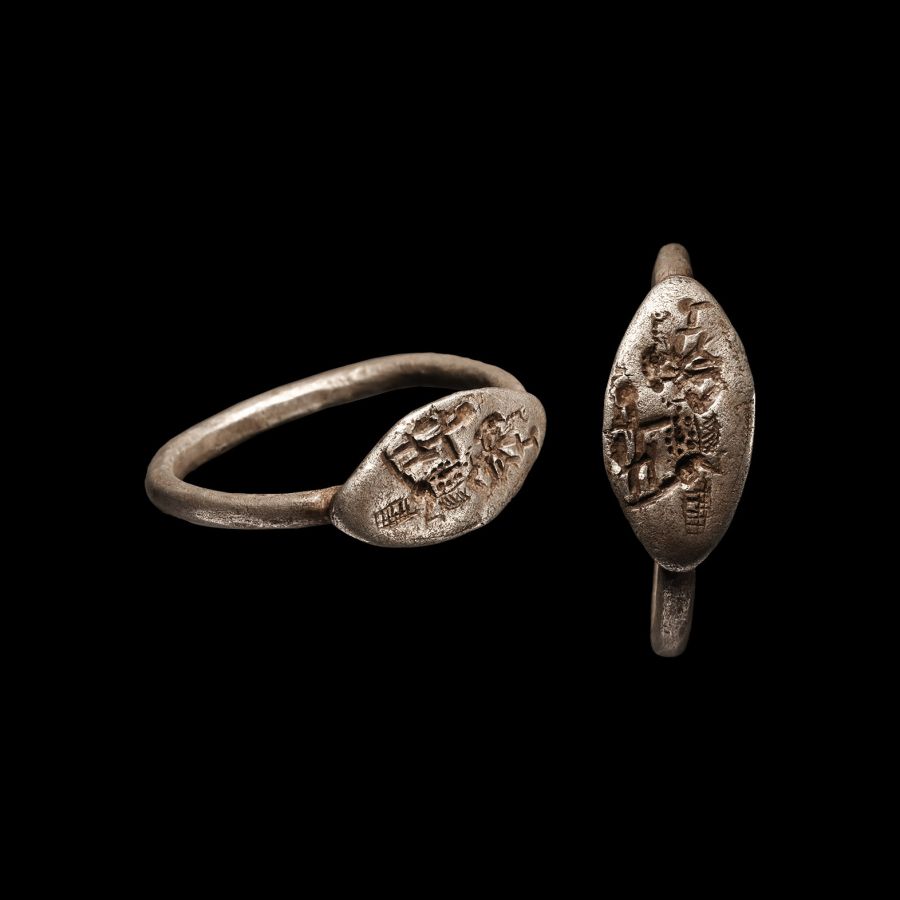
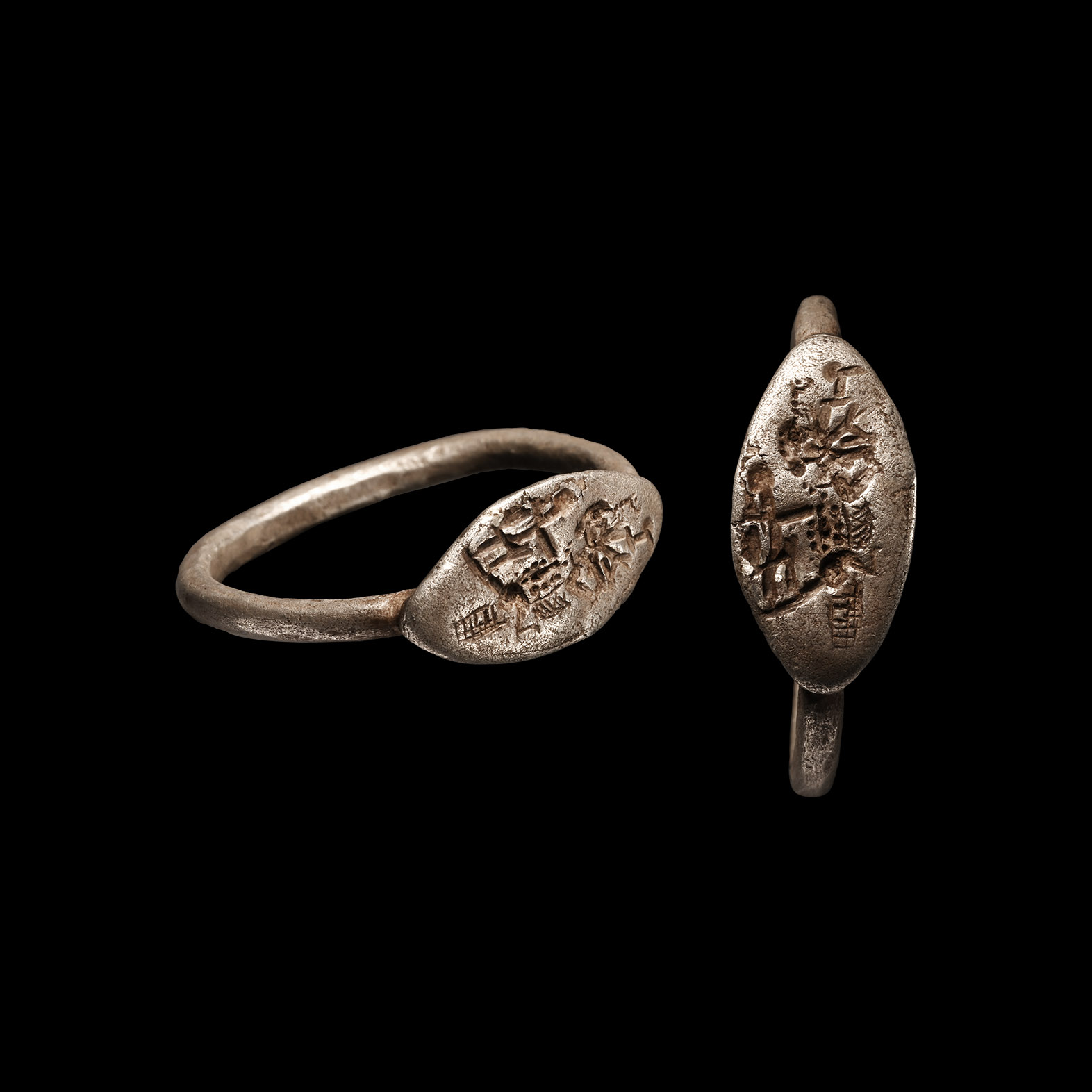
Achaemenid Silver Ring with Warriors

7TH-4TH CENTURY B.C.

1 in. (4.12 grams, 25.84 mm overall, 21.41 mm internal diameter (approximate size British V, USA 10 1/2, Europe 23.77, Japan 22)).

With scaphoid bezel, incuse image of an armoured warrior with shield and spear, a horseman and a hatched gate or wall.

Provenance

Acquired 1980-2015.
Ex Abelita family collection.

Literature

Cf. Chadour, A.B., Rings. The Alice and Louis Koch Collection, volume I, Leeds, 1994, item 25, for similar type.

CONDITION

VETTING:

TimeLine Auctions follows a vetting process to ensure the authenticity and legality of all items, reinforcing our commitment to integrity and responsible trading. Each antiquity, antique, and coin lot undergoes thorough examination by a vetting committee of at least ten external specialists, professional trade association members, scientists, and archaeologists: Our Vetting Process


AUCTIONS:

TimeLine is a leading auction house specialising in antiquities, ancient art, collectables, natural history, coins, medals, and books. Our auctions offer museums, collectors, historians, and enthusiasts the opportunity to acquire unique and historically significant pieces.

LOT 0862

Achaemenid Silver Ring with Warriors

Sold for (Inc. bp): £176

Print page

RELATED LOTS

  • Western Asiatic Stone Mace Head
    Western Asiatic Stone Mace Head
    Circa 2nd-1st millennium B.C.

    Sold for (Inc. bp): £85

    Of bulbous form with short neck; cylindrical socket for insertion of an organic shaft. 482 grams, 87 mm high


    Acquired 1990s-early 2000s. East Anglian private collection.

    Lot Details

  • Central Asian Bronze Compartmented Seal Matrix
    Central Asian Bronze Compartmented Seal Matrix
    3rd-2nd millennium B.C.

    Sold for (Inc. bp): £39

    Segmented wheel with U-shaped loop; accompanied by an old scholarly note, typed and signed by W.G. Lambert, late Professor of Assyriology, University of Birmingham, 1970-1993, which states: 'Stamp Seal of Bronze. 46 x 48 x 18. This is roughly round, compartmented, and open work except for the central star. There is a largish circle in the middle, a six-pointed star around it. and a band of 11 oblongs around the outer edge. 6 in three pairs matching the points of the stars [sic]. This is a seal from west central Asia, c. 2300-2000 B.C. It is well preserved and a largish example of its kind. There is a loop handle on the back.' 35.5 grams, 47 mm


    From an important London, UK, collection, 1970s. Accompanied by a scholarly note by Professor Wilfrid George Lambert FBA (1926-2011), historian, archaeologist, and specialist in Assyriology and Near Eastern archaeology.

    Lot Details

  • Southern Mesopotamian Ceramic Mother Goddess Figure
    Southern Mesopotamian Ceramic Mother Goddess Figure
    2nd millennium B.C.

    Sold for (Inc. bp): £585

    The figure with two pierced ears and painted face detailing, neck ornamentation and arm bangles, continuing to the reverse; mounted on a custom-made display stand. 61 grams total, 13 cm high including stand


    Ex UK collection formed in the 1980s. Acquired on the London art market. Accompanied by an Artemission, London SW5, certificate of authenticity.

    Terracotta was a favoured material for the production of idols in the ancient Near East, the idols themselves representing deities, particularly goddesses that were connected to fertility. Such idols could even represent worshippers themselves. The Neo-Hittite civilisation, also known as the 'Syro-Hittite' civilisation, existed during the Iron Age in the areas that are now modern day northern Syria and Southern Anatolia. The Hittite empire collapsed around the 12th century B.C., an event which was proceeded by the decline of the Eastern Mediterranean trade networks, together with the fall of the major late Bronze Age cities in the Levant, Anatolia, and the Aegean.

    Lot Details

Stay up-to-date with the latest from TimeLine Auctions by joining our mailing list