
Loading, please wait...
LOT 1336
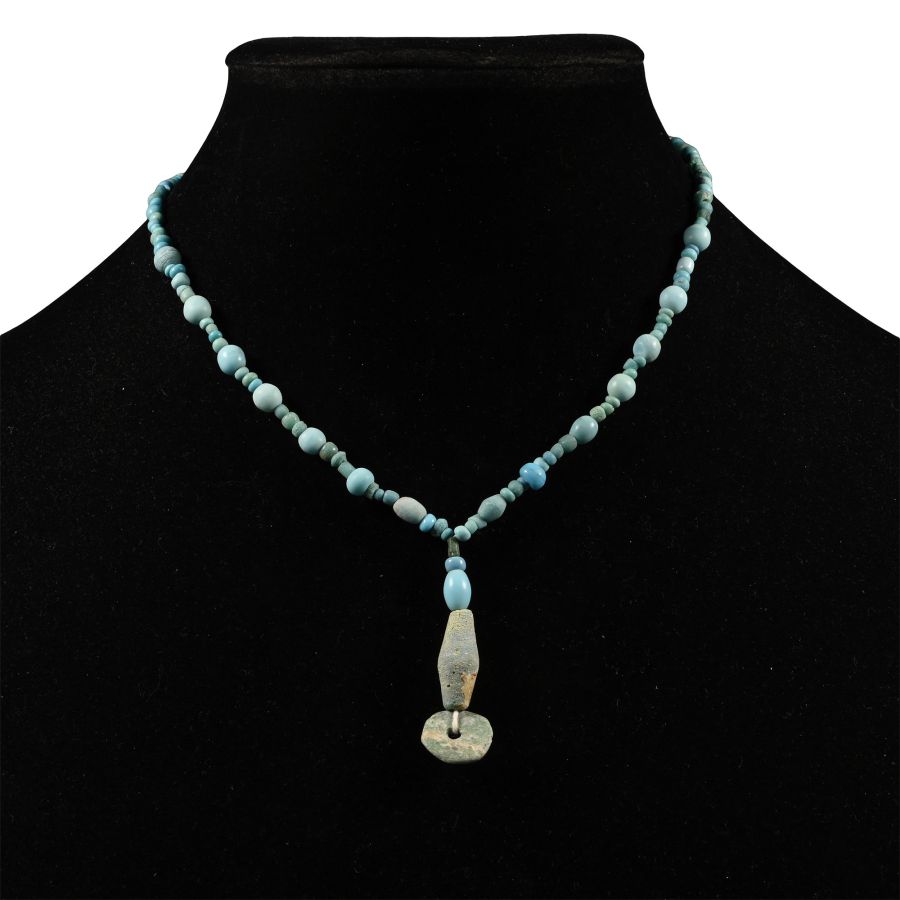
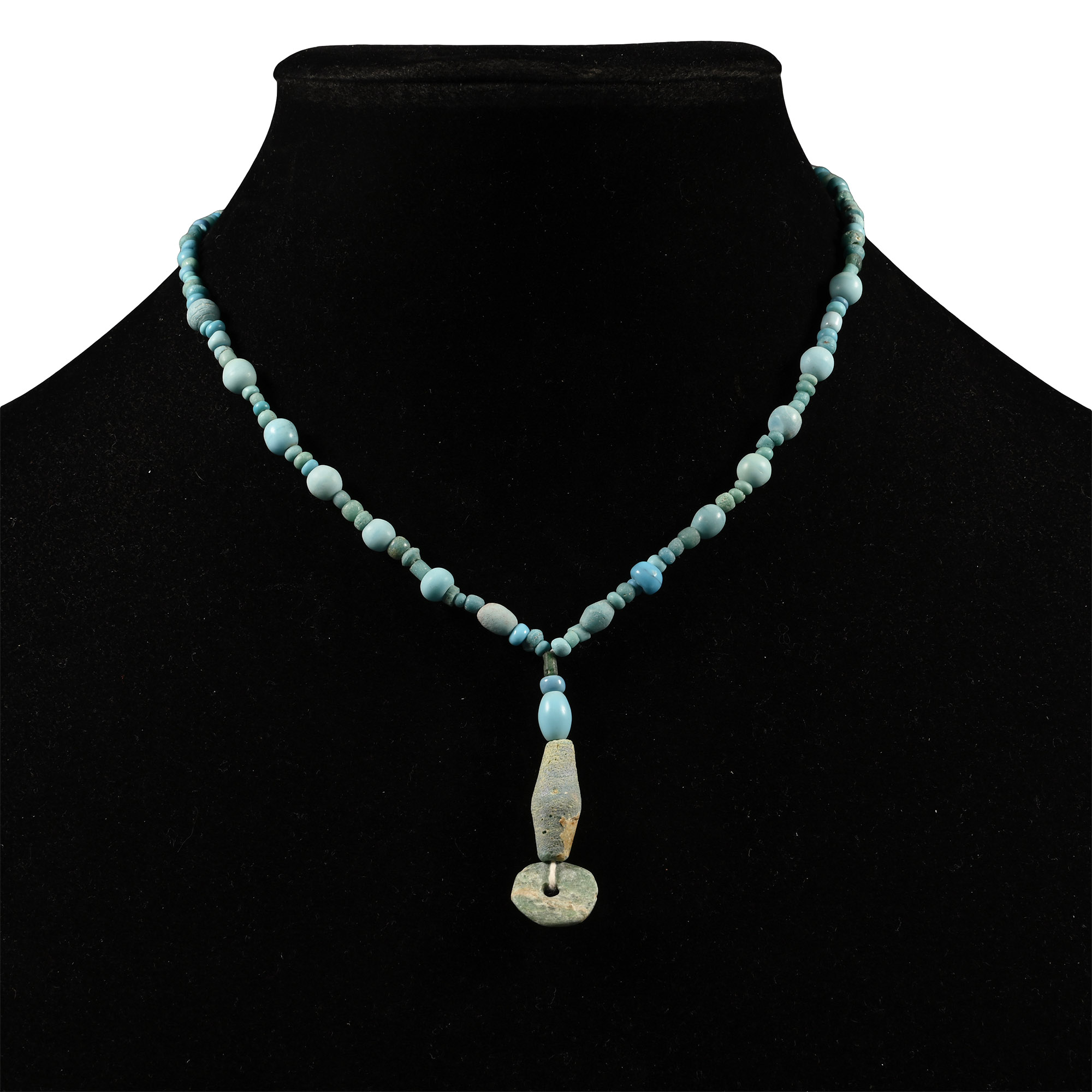
Achaemenid Pale Blue Glass Bead Necklace String
6TH-4TH CENTURY B.C. AND LATER
12 3/8 in. (10.2 grams, 31.5 cm).
Restrung group of spherical, cylindrical and other beads. [No Reserve]
ProvenanceEx London, UK, collection, 1990s.
This lot has been cleared against the Art Loss Register database, and is accompanied by an illustrated lot declaration signed by the Head of the Antiquities Department, Dr Raffaele D'Amato.
TimeLine Auctions follows a vetting process to ensure the authenticity and legality of all items, reinforcing our commitment to integrity and responsible trading. Each antiquity, antique, and coin lot undergoes thorough examination by a vetting committee of at least ten external specialists, professional trade association members, scientists, and archaeologists: Our Vetting Process
AUCTIONS:
TimeLine is a leading auction house specialising in antiquities, ancient art, collectables, natural history, coins, medals, and books. Our auctions offer museums, collectors, historians, and enthusiasts the opportunity to acquire unique and historically significant pieces.
-
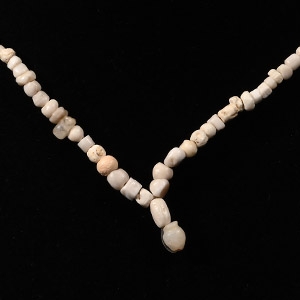
Ancient Bead Necklace String
1st millennium B.C. and laterSold for (Inc. bp): £20
Restrung group of graduated oblate and other beads in stone, ceramic and shell. 7.94 grams, 42 cm
UK gallery, early 2000s. This lot has been cleared against the Art Loss Register database, and is accompanied by an illustrated lot declaration signed by the Head of the Antiquities Department, Dr Raffaele D'Amato.
Similar beads were found in the excavations of the royal tombs of Nimrud. Thousands of beads were discovered in the sarcophagi (for example those of Nimrud’s Queens) probably originally composed as wide collars with multiple strands. -
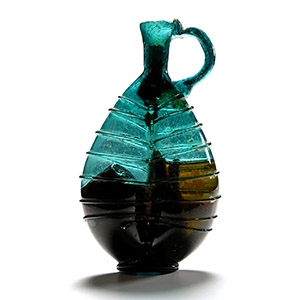
Western Asiatic Glass Ribbed Double Unguent with Contents
7th-8th century A.D.Sold for (Inc. bp): £2,340
Comprising two conjoined kidney-shaped cells decorated with applied trails, extending to a single short neck with everted rim, discoid foot to the base and an applied handle to the shoulder; containing free flowing liquid and congealed organic substance to both cells. 90 grams, 11.1 cm
with Christie's, London, Islamic Art, 16 October 2001, no.285. Private collection, Europe. This lot has been checked against the Interpol Database of stolen works of art and is accompanied by a search certificate number no.12432-226701. This lot has been cleared against the Art Loss Register database, and is accompanied by an illustrated lot declaration signed by the Head of the Antiquities Department, Dr Raffaele D'Amato.
Many objects of this type were made in Syrian and Mesopotamian workshops and under both Eastern Roman and Sassanid domination. The type was probably already produced in the workshops of the Roman Empire, but it lasted until the early Islamic Period. -
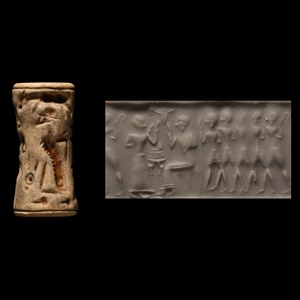
Mitanni Fawn Stone Cylinder Seal with Female Figures
Circa 1400-1200 B.C.Sold for (Inc. bp): £364
Cylinder with cord and bead handles; accompanied by a copy of an old scholarly note, typed and signed by W.G. Lambert, late Professor of Assyriology, University of Birmingham, 1970-1993, which states: 'Cylinder Seal in Fawn Stone, Concave, 25 x 12.5 mm. The main figures are three; a nude female frontally shown save for her head, which is sideways; facing her a standing figure in a long fringed robe, with one arm awkwardly placed behind him; on the other side of the nude female a kneeling figure holding up a bull by the hind leg. Above the main scene are two browsing quadrupeds, one clearly a stag. Between the nude female and the figure on the left is a head of a horned animal. A second such animal's head above a sideways browsing stag forms a terminal. The whole design is placed between two lines. The seal is Mitanni, c 1400-1200 B.C., from anywhere between the eastern Mediterranean and Kurdistan. It has a very full design and looks like a "common style", but it is cut on stone, not made of frit, and the design is very deeply cut so that a fine, well-rounded impression is given. Also, being of stone, it is more durable than those of frit. Though there is some wear, the deep outlining means that nothing has been lost as a result.'; supplied with a museum-quality impression. 6.34 grams, 25 mm
UK private collection, acquired 1980-1983. Accompanied by a copy of a scholarly note, typed and signed by Professor Wilfrid George Lambert in July 1991. This lot has been cleared against the Art Loss Register database, and is accompanied by an illustrated lot declaration signed by the Head of the Antiquities Department, Dr Raffaele D'Amato.
