
Loading, please wait...
LOT 1133
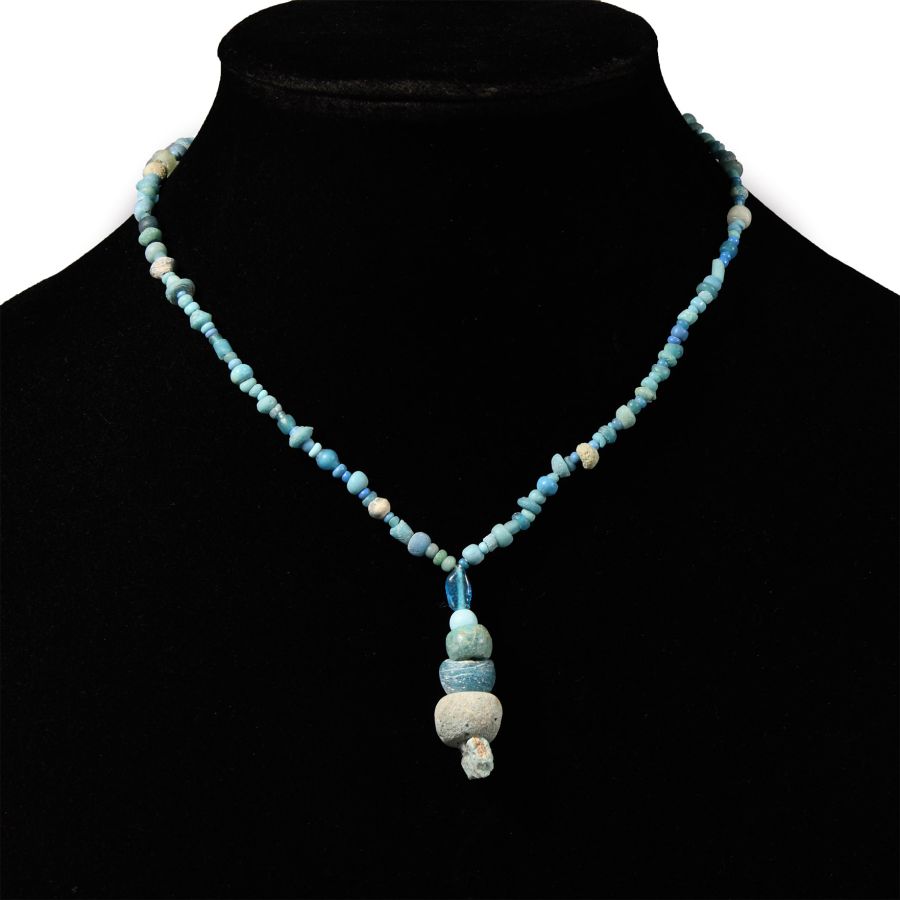
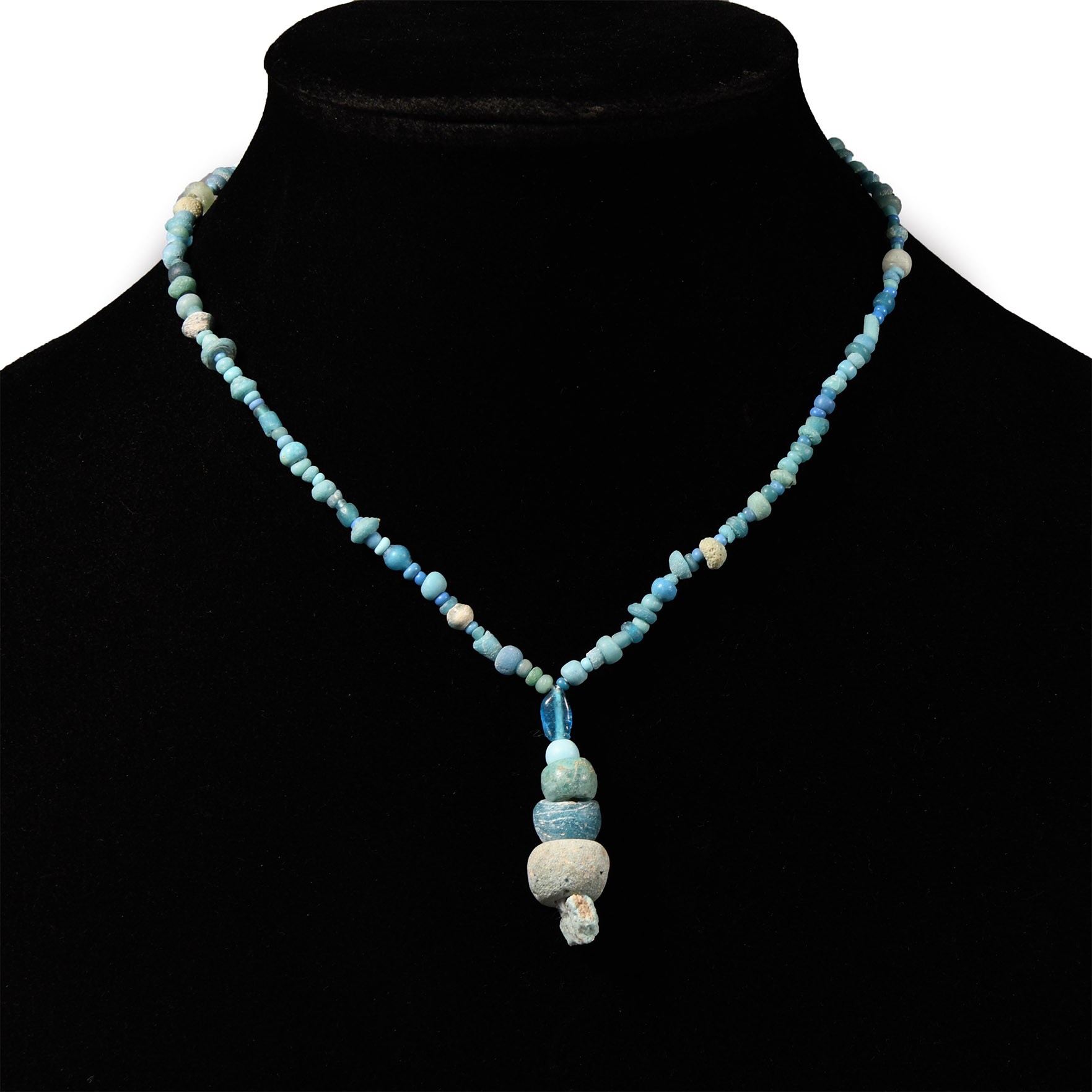
Achaemenid Pale Blue Glass and Other Bead Necklace String
CIRCA 6TH-4TH CENTURY B.C. AND LATER
13 in. (11.16 grams, 33 cm).
Restrung group of graduated beads, mainly oblate and annular types with amulet centrepiece. [No Reserve]
ProvenanceAcquired 1980-2015.
Ex Abelita family collection.
TimeLine Auctions follows a vetting process to ensure the authenticity and legality of all items, reinforcing our commitment to integrity and responsible trading. Each antiquity, antique, and coin lot undergoes thorough examination by a vetting committee of at least ten external specialists, professional trade association members, scientists, and archaeologists: Our Vetting Process
AUCTIONS:
TimeLine is a leading auction house specialising in antiquities, ancient art, collectables, natural history, coins, medals, and books. Our auctions offer museums, collectors, historians, and enthusiasts the opportunity to acquire unique and historically significant pieces.
LOT 1133
Achaemenid Pale Blue Glass and Other Bead Necklace String
Sold for (Inc. bp): £26
-
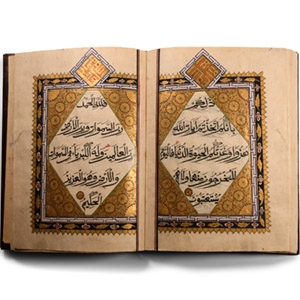
Islamic Leather Bound Chinese Qur'an, Juz' 25, Part 25
18th century A.D.Sold for (Inc. bp): £1,170
Rebound as a hardback with full leather binding, central arabesque foliage panel and foliage frame to front and back covers; title and end pages with liquid gold frame enclosing a pattern of geometric and floral blocks with Kufic script lozenge above calligraphic text; text pages with red-outlined rectangular panel and typically five lines of bold black-ink text with red diacritics and headers. 310 grams, 16.5 x 22.5 cm
From an important family collection started in the late 1950s. Property of a West London, UK, gentleman.
The text is a Chinese version of the Qur'an, Juz' 25, Part 25. -
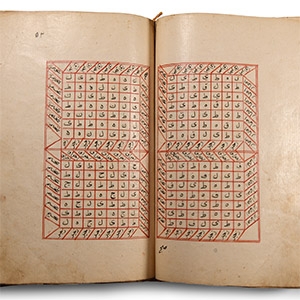
Islamic Manuscript, The Secret of Al-Azhar and the Red Sulfur by the al-Hakim Al-Khemai Dhul-Nun Uthman bin Suwavd Al-Akhmaimi
933 A.H.Estimate: £6,000 - 8,000 (+bp*)
Opening Bid: £3,000
Rebound as a hardback with leather binding to spine and fore-edge envelope flap, marbled boards, title page with triangular block of text in red and black, notes in a different hand below; text pages typically 11 lines of wide-spaced naskh script in black ink with red title and diacritics, six-pointed stars, marginal notation, red-framed numerical and other tables; damaged pages repaired and restored; dense blocks of script to both end pages. 553 grams, 15 x 20.3 cm
From an important family collection started in the late 1950s. Property of a West London, UK, gentleman. This lot has been checked against the Interpol Database of stolen works of art and is accompanied by a search certificate number no.12272-220411.
The text is 'The Secret of Al Azhar and the Red Sulphur' (known as 'The Light of Lights and the Secret of Secrets') by al-Hakim Al-Khemai Dhul-Nun Uthman bin Suwavd Al-Akhmaimi, written out by Yususf bin Yagoub Al Ashiuli in 933 A.H. (1526 A.D.). -
.jpg)
Rolled Aramaic Lead Magical Text Scroll
2nd-8th century A.D.Estimate: £500 - 700 (+bp*)
Opening Bid: £250
A rolled sheet-metal magical document with inscribed text in Aramaic. 41 grams, 60 mm
Fine condition.
Acquired 1979-1999. London collection of the late Mr S.M., thence by descent.
