
Loading, please wait...
LOT 0981
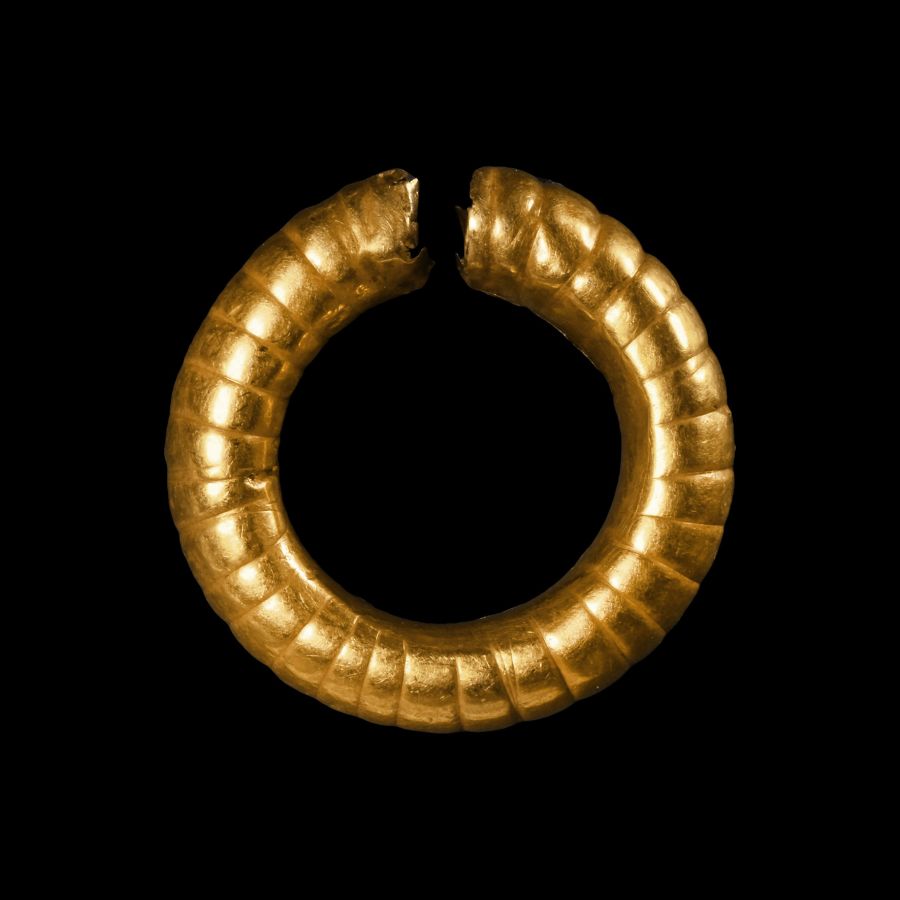
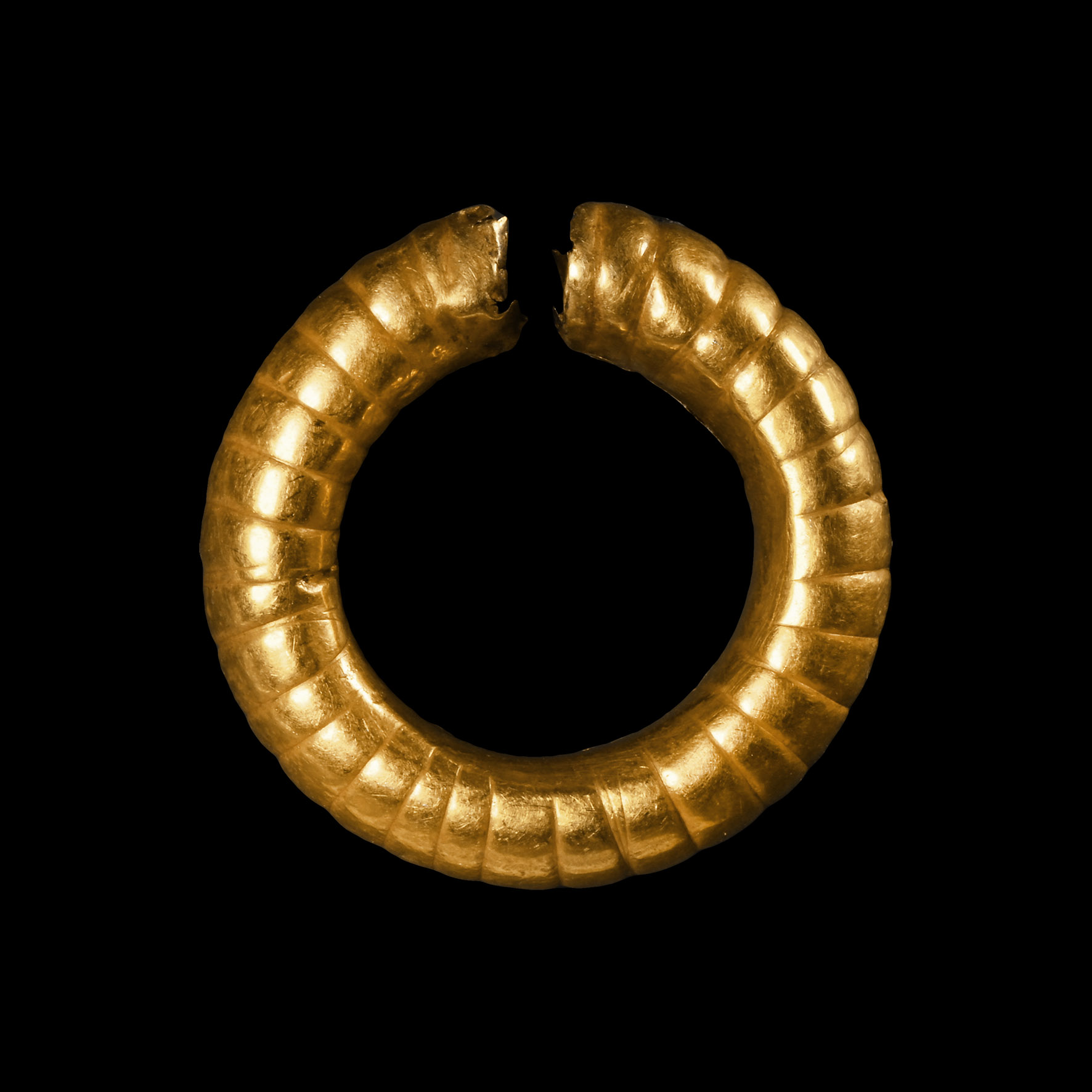
Achaemenid Gold Penannular Hair Ring
CIRCA 5TH CENTURY B.C.
1 1/4 in. (4.83 grams, 32 mm).
Composed of a hollow D-section body, decorative vertical grooves around the outer face. [No Reserve]
ProvenanceFrom the collection of a North American gentleman, formed in the 1990s.
LiteratureCf. Shahryar, S., Reyhaneh, R., Fatemeh, B., ‘Semiotics of Animal Motifs in the Jewelry of the Achaemenid Era’ in Conservation Science in Cultural Heritage, 2018, pp.169-181, fig.1a, for a gold armlet with lion-head terminals in the same style; Christie's, Ancient Jewelry, Wearable Art, auction 29 Nov-8 Dec 2016, London-New York, 2016, lot.63, for comparable example.
FootnotesIn Achaemenid graves, it is possible to determine if the jewellery contained within belonged to an adult female or a child by its size. The jewellery of the adult women included a wreath, as well as three pairs of boat-shaped earrings, two necklaces, two pendants, four finger rings, and a set of dress ornaments. Children's jewellery pieces usually consisted of only three pairs of earrings and a necklace.
CONDITIONTimeLine Auctions follows a vetting process to ensure the authenticity and legality of all items, reinforcing our commitment to integrity and responsible trading. Each antiquity, antique, and coin lot undergoes thorough examination by a vetting committee of at least ten external specialists, professional trade association members, scientists, and archaeologists: Our Vetting Process
AUCTIONS:
TimeLine is a leading auction house specialising in antiquities, ancient art, collectables, natural history, coins, medals, and books. Our auctions offer museums, collectors, historians, and enthusiasts the opportunity to acquire unique and historically significant pieces.
-
.jpg)
Western Asiatic Openwork Lion Incense Burner
Late 20th century A.D.Estimate: £400 - 600 (+bp*)
Opening Bid: £200
Ornamented with a dense series of pierced scrolled vines, stylised face with pricked ears, long nose, almond-shaped eyes; the head hinged. 1 kg, 18 cm wide
Fine condition.
Acquired before 1970. Property of a London gentleman. -
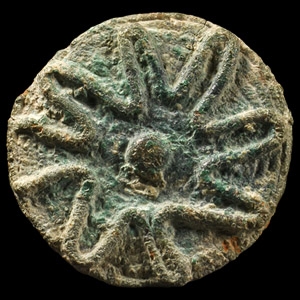
Amlash Decorated Bronze Ring
1st millennium B.C.Sold for (Inc. bp): £98
The discoid bezel displaying a stylised flower head in relief, supported by a quadripartite hoop. 11.13 grams, 25.27 mm overall, 19.71 mm internal diameter (approximate size British Q 1/2, USA 8 1/4, Europe 18.12, Japan 17)
Ex private collection, 1980s. Acquired on the UK art market in the 1990s. -
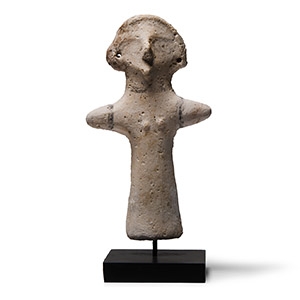
Southern Mesopotamian Ceramic Mother Goddess Figure
2nd millennium B.C.Sold for (Inc. bp): £585
The figure with two pierced ears and painted face detailing, neck ornamentation and arm bangles, continuing to the reverse; mounted on a custom-made display stand. 61 grams total, 13 cm high including stand
Ex UK collection formed in the 1980s. Acquired on the London art market. Accompanied by an Artemission, London SW5, certificate of authenticity.
Terracotta was a favoured material for the production of idols in the ancient Near East, the idols themselves representing deities, particularly goddesses that were connected to fertility. Such idols could even represent worshippers themselves. The Neo-Hittite civilisation, also known as the 'Syro-Hittite' civilisation, existed during the Iron Age in the areas that are now modern day northern Syria and Southern Anatolia. The Hittite empire collapsed around the 12th century B.C., an event which was proceeded by the decline of the Eastern Mediterranean trade networks, together with the fall of the major late Bronze Age cities in the Levant, Anatolia, and the Aegean.
