
Loading, please wait...
LOT 1353
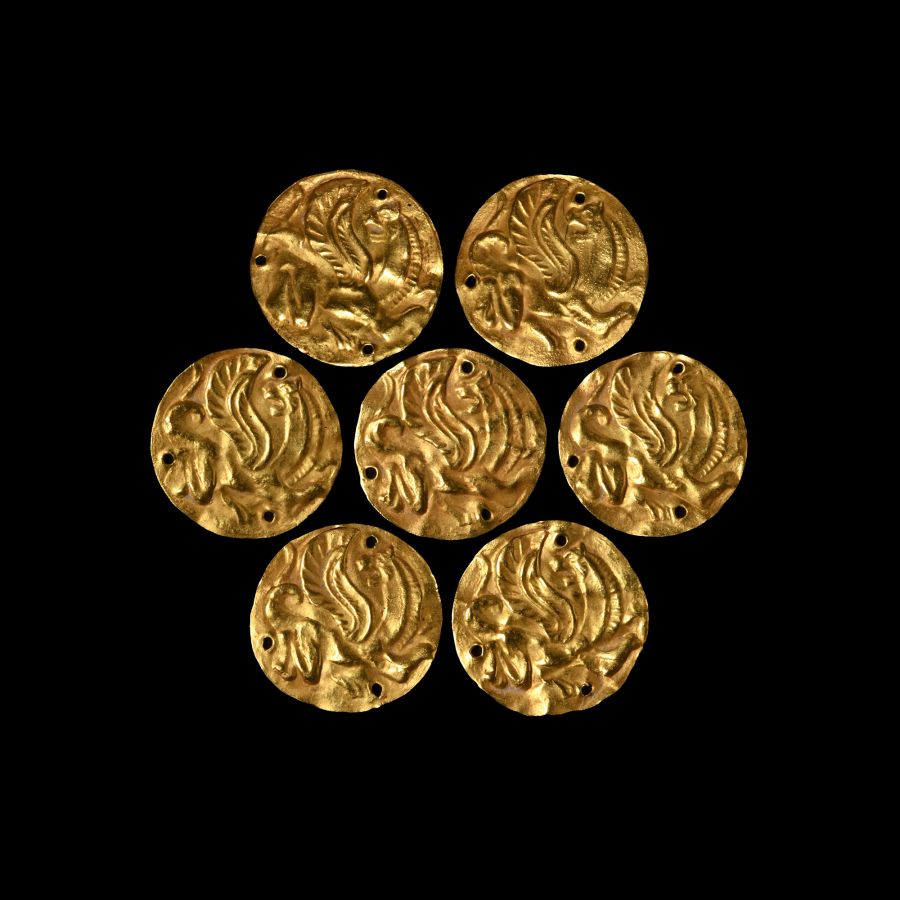
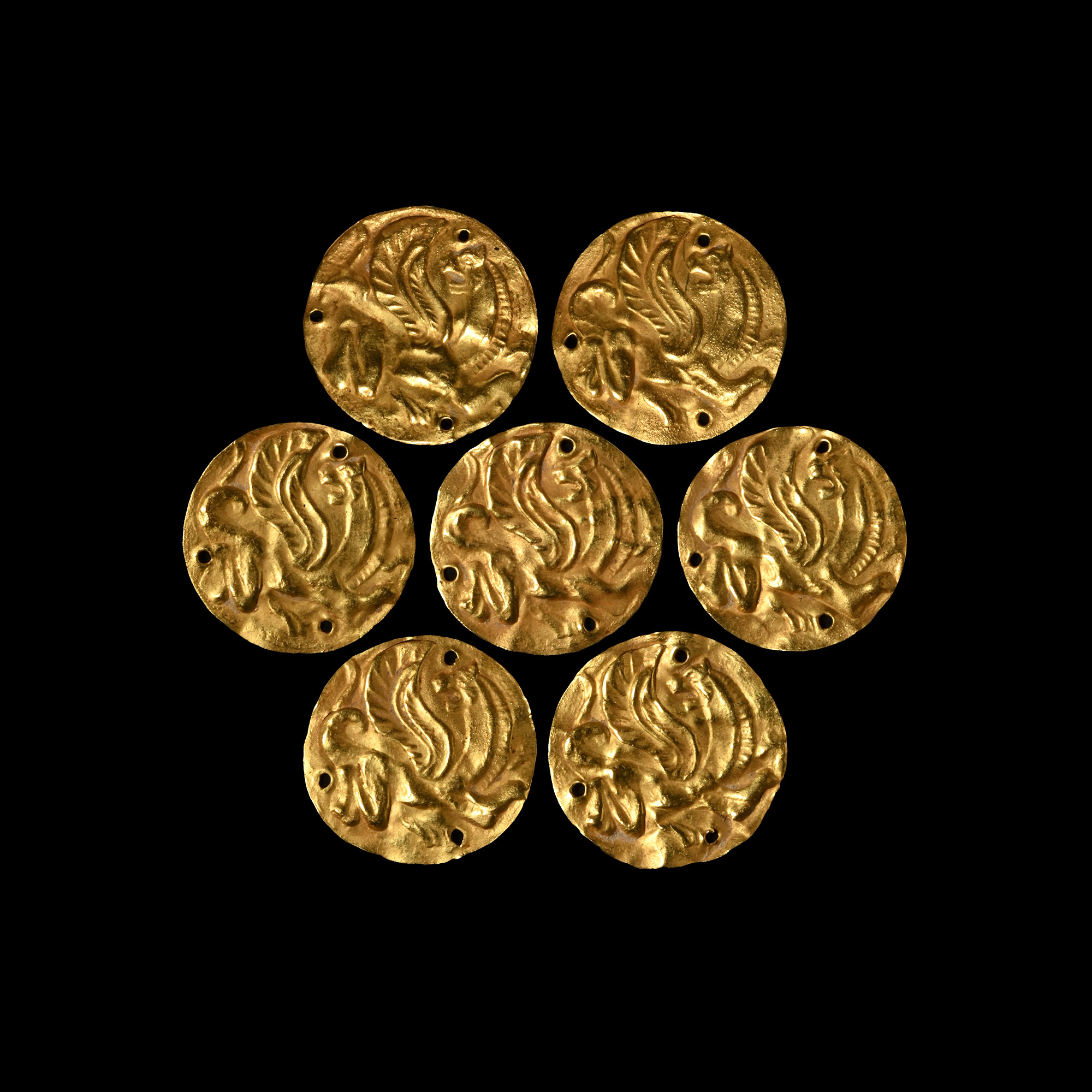
Achaemenid Gold Appliques Depicting Winged Lions
5TH-4TH CENTURY B.C.
1/2 in. (1.92 grams total, 15 mm each).
Comprising seven circular mounts, each with a repoussé winged lion, depicted in a seated pose with its head turned, pierced thrice through the outer rim. [7]
ProvenancePrivate English collection, formed between the late 1970s and early 1990s.
Private collection, UK.
See the Oxus Treasure in the British Museum, London, registration nos. 1897,1231.28–30, for closely related examples.
FootnotesGold held immense significance in the Achaemenid Empire, not only as a symbol of wealth and divine favour but also as a practical medium for art, currency, and royal regalia. It was used in architectural decoration, lavish court objects, jewellery, and ceremonial ware, often reflecting the empire’s vast wealth and cosmopolitan reach. Among the prominent motifs in Achaemenid art is the lion-griffin—a mythical creature combining the body of a lion with the wings of an eagle. This powerful image, frequently seen in gold appliqués, seals, and metalwork, conveyed themes of imperial power, protection, and control over both terrestrial and celestial realms. The lion-griffin stood as an emblem of dominance and guardianship, befitting the grandeur of Persia’s imperial ideology.
CONDITIONTimeLine Auctions follows a vetting process to ensure the authenticity and legality of all items, reinforcing our commitment to integrity and responsible trading. Each antiquity, antique, and coin lot undergoes thorough examination by a vetting committee of at least ten external specialists, professional trade association members, scientists, and archaeologists: Our Vetting Process
AUCTIONS:
TimeLine is a leading auction house specialising in antiquities, ancient art, collectables, natural history, coins, medals, and books. Our auctions offer museums, collectors, historians, and enthusiasts the opportunity to acquire unique and historically significant pieces.
-
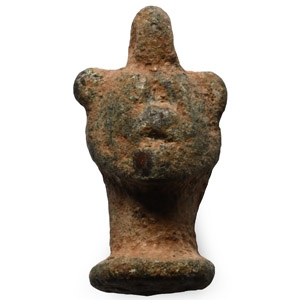
Babylonian Bronze Pazuzu Head Pendant
700-600 B.C.Sold for (Inc. bp): £208
Formed in the round bust of Pazuzu with disc base and loop. 4.45 grams, 19.7 mm
From a collection of a late London, UK, collector, 1980s. This lot has been cleared against the Art Loss Register database, and is accompanied by an illustrated lot declaration signed by the Head of the Antiquities Department, Dr Raffaele D'Amato. -
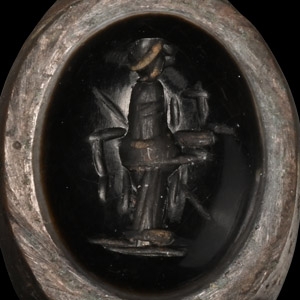
Western Asiatic Silver Ring with Robed Female Gemstone
3rd-1st century B.C.Sold for (Inc. bp): £104
Comprising a tapering D-section hoop, stepped discoid bezel with inset garnet(?) cabochon, intaglio standing robed female with distaff. 8.00 grams, 22.80 mm overall, 18.71 mm internal diameter (approximate size British H, USA 3 3/4, Europe 6.18, Japan 6)
Property of a Mayfair gentleman; collected from 1966-2017. -
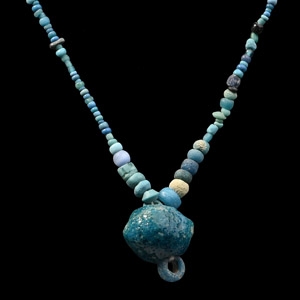
Achaemenid Blue Glass Bead Necklace String
6th-4th century B.C. and laterSold for (Inc. bp): £72
Restrung group of annular, oblate and other types with biconvex pendant centrepiece. 13 grams, 39 cm
London, UK, collection, 2000s.
