
Loading, please wait...

LOT 1037
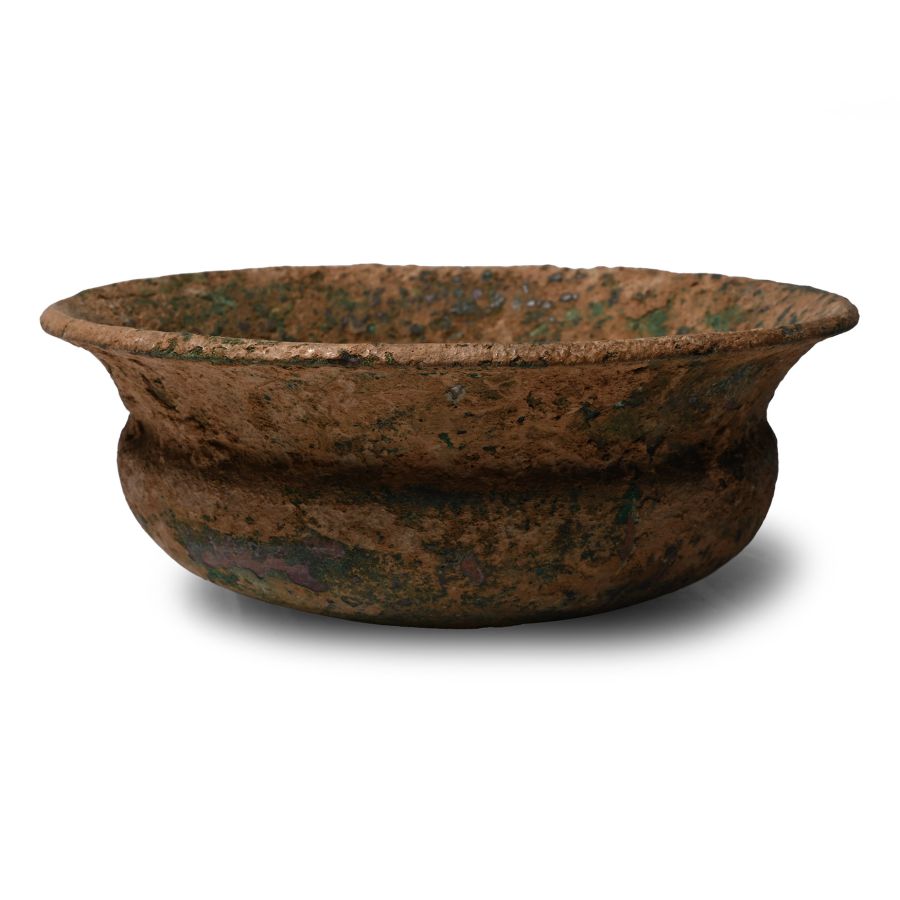
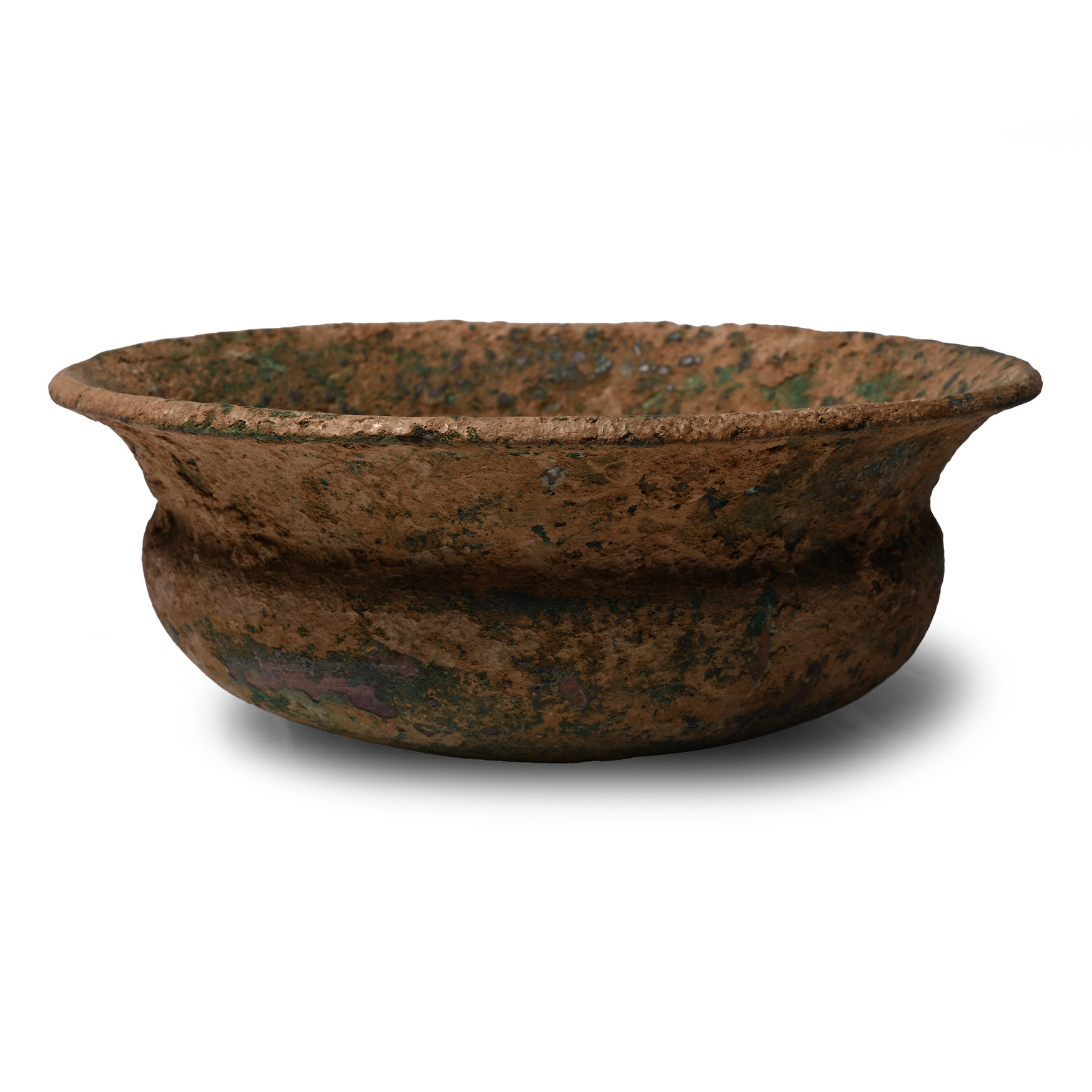
Achaemenid Bronze Phiale
6TH-4TH CENTURY B.C.
5 1/2 in. (254 grams, 13.9 cm).
Low-bodied with carinated shoulder and everted rim, rounded base.
ProvenanceAcquired 1980-2015.
Ex Abelita family collection.
This lot has been cleared against the Art Loss Register database, and is accompanied by an illustrated lot declaration signed by the Head of the Antiquities Department, Dr Raffaele D'Amato.
TimeLine Auctions follows a vetting process to ensure the authenticity and legality of all items, reinforcing our commitment to integrity and responsible trading. Each antiquity, antique, and coin lot undergoes thorough examination by a vetting committee of at least ten external specialists, professional trade association members, scientists, and archaeologists: Our Vetting Process
AUCTIONS:
TimeLine is a leading auction house specialising in antiquities, ancient art, collectables, natural history, coins, medals, and books. Our auctions offer museums, collectors, historians, and enthusiasts the opportunity to acquire unique and historically significant pieces.
LOT 1037
Achaemenid Bronze Phiale
Estimate £100 - 140€120 - 160 (for guidance only)$140 - 190 (for guidance only)
-
Large Akkadian Black Stone Cylinder Seal with Figures
Circa 2300-2200 B.C.Sold for (Inc. bp): £4,160
Accompanied by a copy of an old scholarly note, typed and signed by W.G. Lambert, late Professor of Assyriology, University of Birmingham, 1970-1993, which states: 'Cylinder Seal of Black Stone, 40 mm. high. The scene shows a seated god with four standing figures in front of him. He is seated on an angular seat, wears a long flounced robe and a horned tiara, and raises one hand in greeting. Immediately before him standing is a god with similar clothes and headdress, gripping the wrist of a second god who standing behind him and holds a kid as an offering to the seated god. This third god has a robe which falls in creases to the ankles. Behind the god with goat stands a human figure with bare head and clothing distinct from all the other figures. He or she (there is no beard) holds a bucket in one hand. The final figure of the row is a god with dress similar to that of the one immediately in front of the seated god, though he holds both hands at the waist. This is a Akkadian seal, c. 2300-2200 B.C., from southern Mesopotamia or a nearby area. It is a large one and in fine condition.'; supplied with a museum-quality impression. 49.5 grams, 41 mm
From the private collection of a North American lady, formed 1970s-early 1990s, with collection reference no.P26. Accompanied by a copy of a scholarly note, typed and signed by Professor Wilfrid George Lambert dated November 1991. This lot has been cleared against the Art Loss Register database, and is accompanied by an illustrated lot declaration signed by the Head of the Antiquities Department, Dr Raffaele D'Amato. -
Sasanian Bronze Ring with Gemstone
4th-7th century A.D.Sold for (Inc. bp): £442
Comprising a slender hoop and wide bezel, intaglio engraved with a facing bearded bust. 2.85 grams, 22.66 mm overall, 19.92 mm internal diameter (approximate size British N 1/2, USA 6 3/4, Europe 14.35, Japan 13)
Acquired on the UK art market before 2000. Property of an Essex, UK, gentleman. This lot has been cleared against the Art Loss Register database, and is accompanied by an illustrated lot declaration signed by the Head of the Antiquities Department, Dr Raffaele D'Amato. -
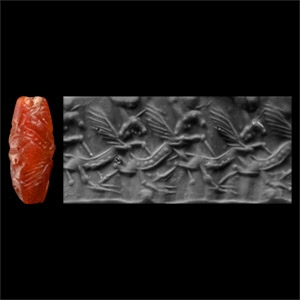
Neo-Babylonian Carnelian Cylinder Seal with Two Winged Quadrupeds
Circa 900-750 B.C.Sold for (Inc. bp): £520
Cylinder with cord and bead handles; accompanied by a copy of an old scholarly note, typed and signed by W.G. Lambert, late Professor of Assyriology, University of Birmingham, 1970-1993, which states: 'Cylinder Seal of Carnelian 19 x 8.5 mm, The scene shows two winged quadrupeds in a frieze. Each has the body of a bull, but with wings. Each is running and the front part of the body is reared up, overlapping the one in front. It is meant as a scene of one animal chasing the other. The seal is engraved mainly with the cutting wheel, but there are dots along the animals' bodies and at other points down with the drill. The seal is convex in shape, like a bead. This is a seal in the Neo-Babylonian style, c. 900-750 B.C., though examples have been found both in Babylonia and in south-west Iran. It is in very good condition and is an attractive piece.'; supplied with a museum-quality impression. 3.18 grams, 19 mm
UK private collection, acquired 1980-1983. Accompanied by a copy of a scholarly note, typed and signed by Professor Wilfrid George Lambert in May 1992. This lot has been cleared against the Art Loss Register database, and is accompanied by an illustrated lot declaration signed by the Head of the Antiquities Department, Dr Raffaele D'Amato.
