
Loading, please wait...

LOT 1349
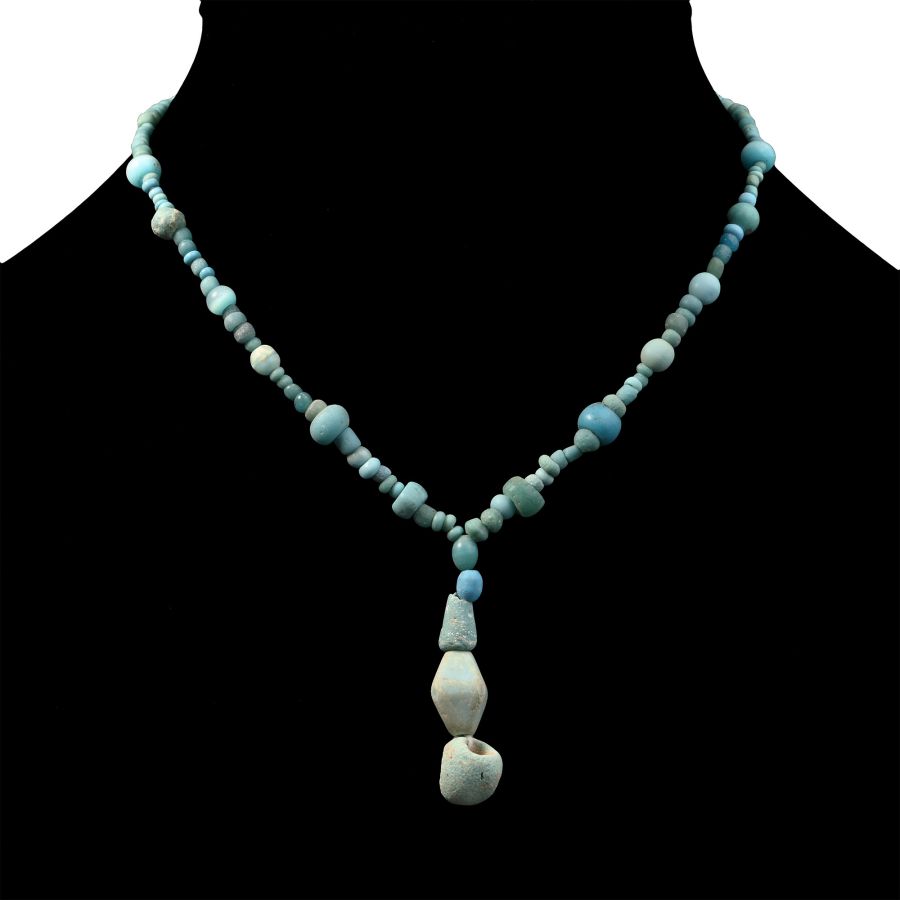
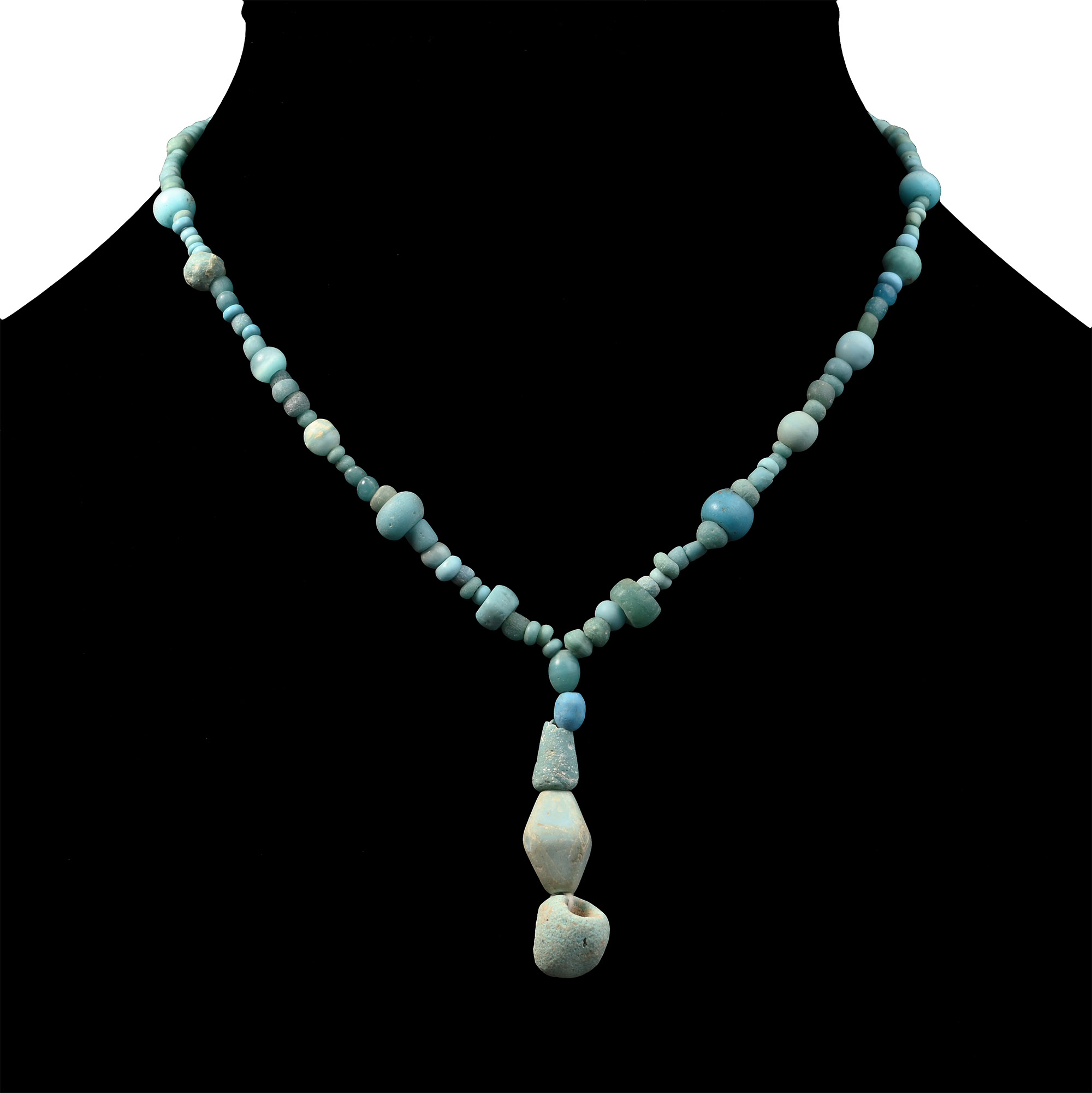
Achaemenid Blue Glass Bead Necklace String
6TH-4TH CENTURY B.C. AND LATER
13 in. (12.4 grams, 33 cm).
Restrung designer necklace string of globular, oblate and other types with polyhedral and annular pendant centrepiece. [No Reserve]
ProvenanceLondon, UK, collection, 2000s.
CONDITIONTimeLine Auctions follows a vetting process to ensure the authenticity and legality of all items, reinforcing our commitment to integrity and responsible trading. Each antiquity, antique, and coin lot undergoes thorough examination by a vetting committee of at least ten external specialists, professional trade association members, scientists, and archaeologists: Our Vetting Process
AUCTIONS:
TimeLine is a leading auction house specialising in antiquities, ancient art, collectables, natural history, coins, medals, and books. Our auctions offer museums, collectors, historians, and enthusiasts the opportunity to acquire unique and historically significant pieces.
-
Mesopotamian Black and Grey Mottled Stone Macehead
3rd-2nd millennium B.C.Sold for (Inc. bp): £117
Piriform in profile with flared tubular socket and flat rim, carination to the bulb. 481 grams, 96 mm
Ex 1990s collection and with a central London gallery. -
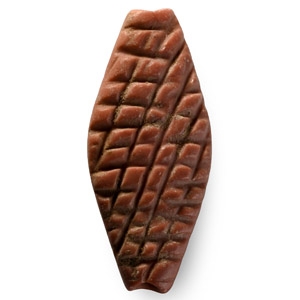
Mesopotamian Pink Stone Stamp Seal
Circa 4th millennium B.C.Sold for (Inc. bp): £65
Modelled as an elongated rhomb pierced lengthways; accompanied by a copy of an old scholarly note, typed and signed by W.G. Lambert, late Professor of Assyriology, University of Birmingham, 1970-1993, which states: 'Stamp seal of pink stone, 51 x 23 x 10 mm,, [sic] an elongated rhomb, pierced lengthways. Design: criss-cross. Mesopotamia or Syria, c. 3500 B.C. Condition very good.' 13.8 grams, 52 mm
Previously in an old British collection formed in the 1960s. Ex 1990s London collections, having been studied and catalogued by professor Lambert in the early 1990s. Formerly with a Mayfair art dealer S.A. Property of a London gallery. Accompanied by an original scholarly note, typed and signed by Professor Wilfrid George Lambert. -
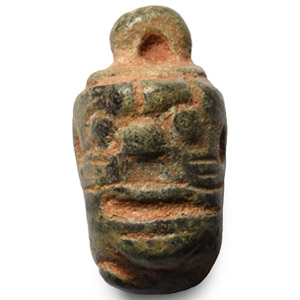
Babylonian Bronze Pazuzu Head Pendant
1st millennium B.C.Sold for (Inc. bp): £208
Drum-shaped with addorsed grotesque masks beneath a sturdy loop. 14 grams, 23.5 mm
From a collection of a late London, UK, collector, 1980s. This lot has been cleared against the Art Loss Register database, and is accompanied by an illustrated lot declaration signed by the Head of the Antiquities Department, Dr Raffaele D'Amato.
