
Loading, please wait...
LOT 1344
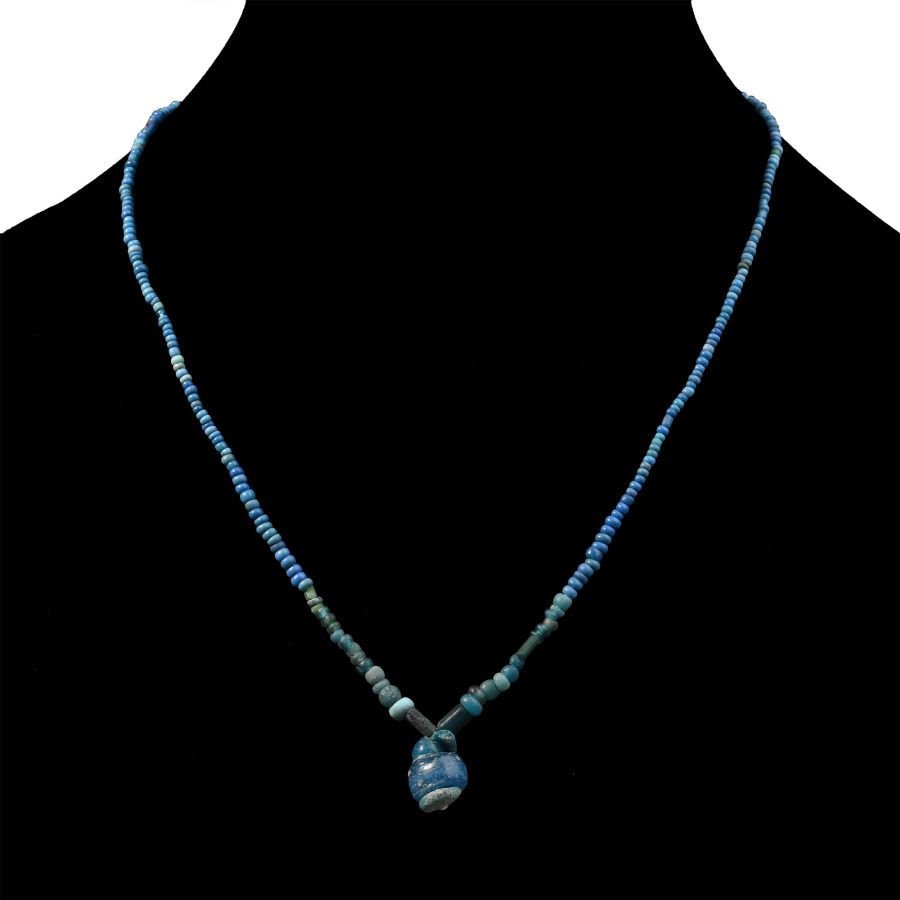
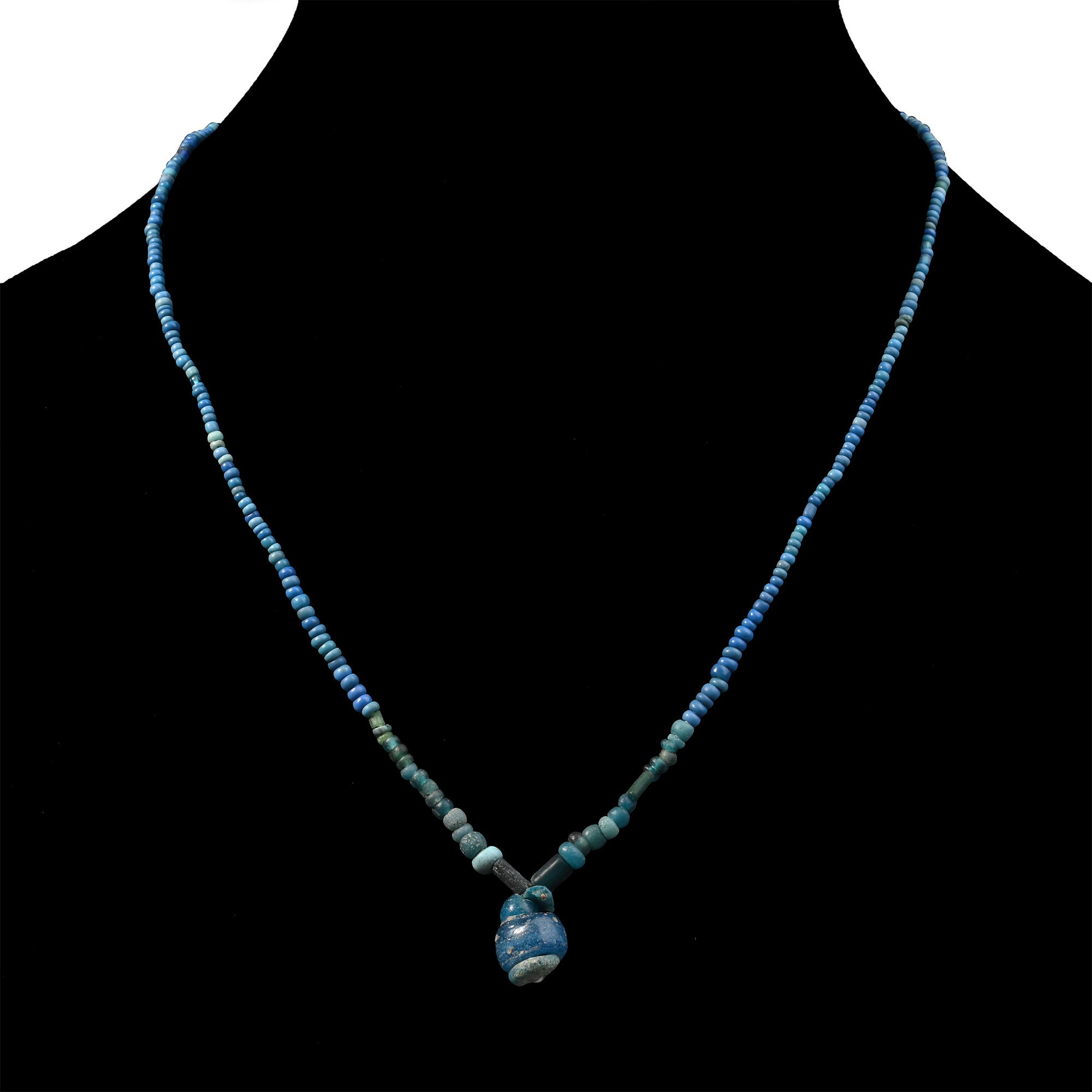
Achaemenid Blue Glass Bead Necklace String
6TH-4TH CENTURY B.C. AND LATER
15 3/8 in. (7.46 grams, 39 cm).
Restrung group of oblate and other types with annular centrepiece. [No Reserve]
ProvenanceLondon, UK, collection, 2000s.
CONDITIONTimeLine Auctions follows a vetting process to ensure the authenticity and legality of all items, reinforcing our commitment to integrity and responsible trading. Each antiquity, antique, and coin lot undergoes thorough examination by a vetting committee of at least ten external specialists, professional trade association members, scientists, and archaeologists: Our Vetting Process
AUCTIONS:
TimeLine is a leading auction house specialising in antiquities, ancient art, collectables, natural history, coins, medals, and books. Our auctions offer museums, collectors, historians, and enthusiasts the opportunity to acquire unique and historically significant pieces.
-
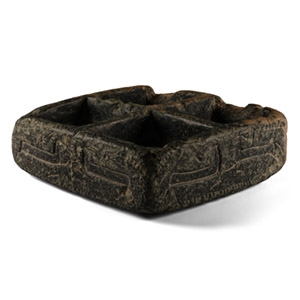
Syro-Hittite Steatite Container with Engraved Pairs of Animals
3rd-2nd millennium B.C.Sold for (Inc. bp): £910
Rectangular tray with segmented upper face, each sidewall with incuse scene of two opposed animals (horses, goats), one with a human figure interposed. 820 grams, 10.9 cm
Private collection. Acquired in 2001. Private collection, Europe. -
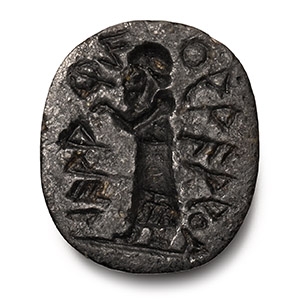
Judean Gemstone with Aramaic Inscription
800-600 B.C.Sold for (Inc. bp): £1,300
With incuse standing robed figure in profile, surrounded by Aramaic text. 1.84 grams, 16 mm
Ex late London, UK, gentleman, 1970s. This lot has been cleared against the Art Loss Register database, and is accompanied by an illustrated lot declaration signed by the Head of the Antiquities Department, Dr Raffaele D'Amato. -
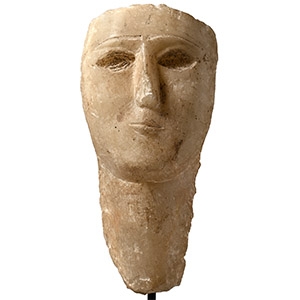
South Arabian Alabaster Head of a Woman
6th-4th century B.C.Sold for (Inc. bp): £1,105
Large female head with angular nose with straight ridge, rounded cheeks and chin, large sockets for inlaid eyes with rounded depressions in the centre of the eyes, grooved eyebrows and outlines of the eyes, the tapering neck long and cylindrical, the back left roughly tooled; mounted on a custom-made display stand. 3.66 kg total, 31.4 cm including stand
UK collection, 1990s. Acquired on the UK art market, before 2000. Private collection, Mr M.V., a London-based businessman.
This finely carved calcite-alabaster head was originally set within a stela and inscribed with the name of the deceased. Six hundred of these funerary stelae were discovered in localities like Mārib, and other examples were later found during the excavations of the Awwam temple cemetery.
