
Loading, please wait...
LOT 1316
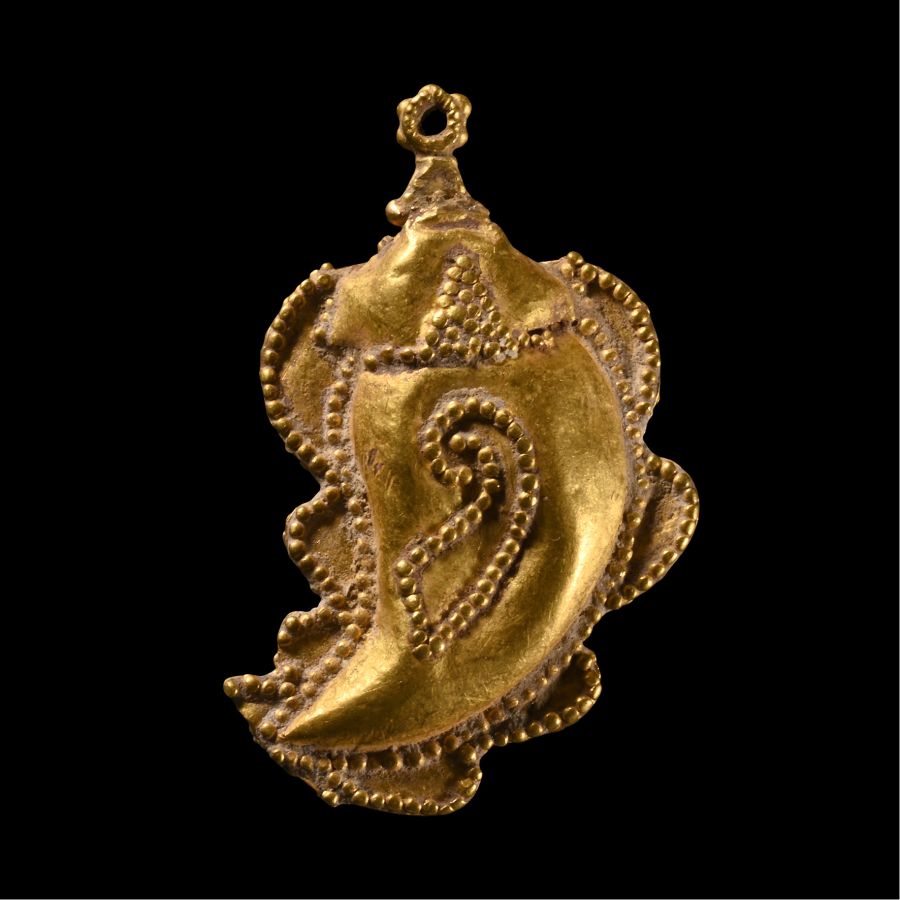
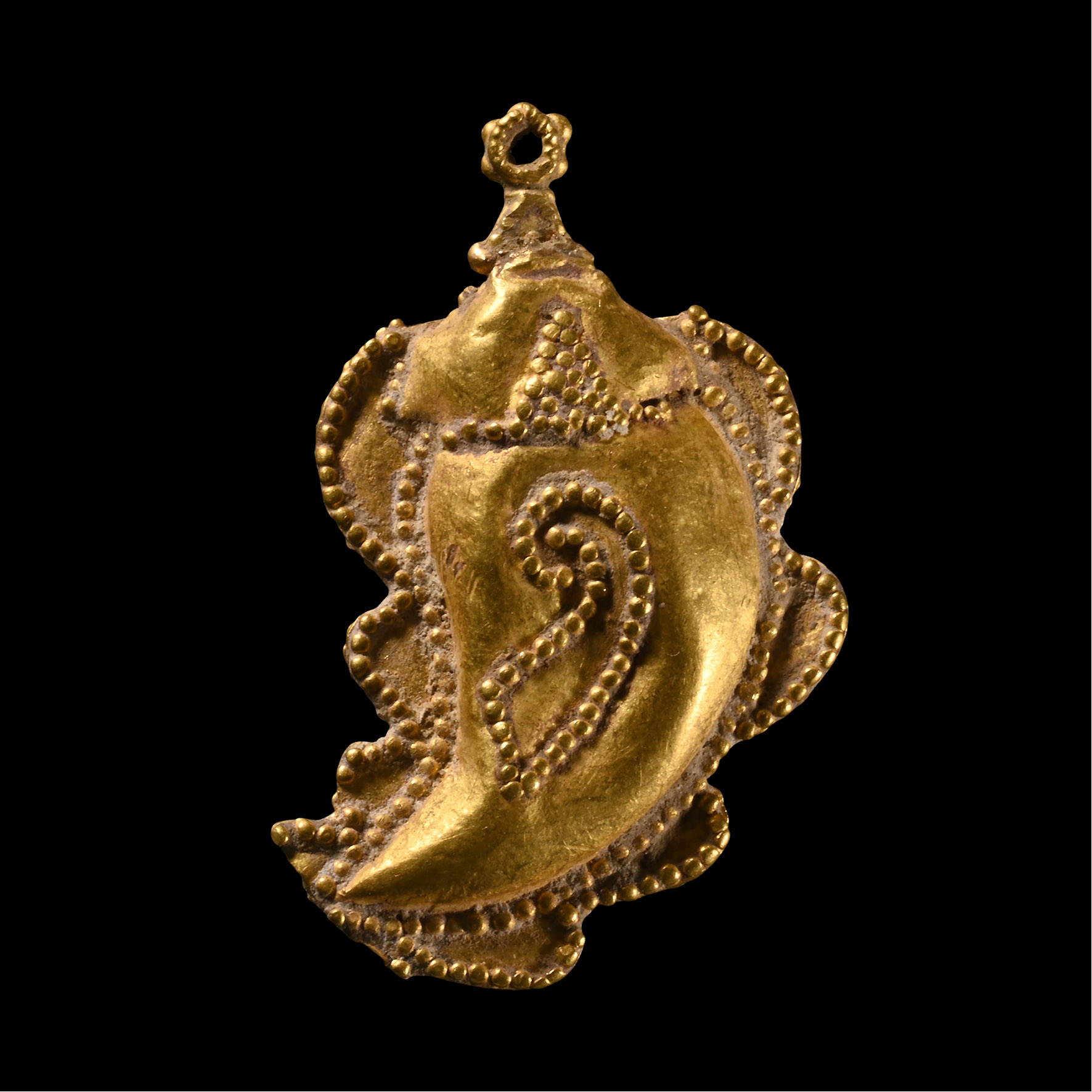
Abbasid Gold Pendant
CIRCA 8TH-10TH CENTURY A.D.
1 3/8 in. (5.50 grams, 34.60 mm).
Formed as a paisley motif with a cusped edge and applied granulation; granulated suspension loop to the top.
ProvenanceFrom a late Japanese specialist collector, 1970-2000s.
Accompanied by a previous catalogue information slip.
TimeLine Auctions follows a vetting process to ensure the authenticity and legality of all items, reinforcing our commitment to integrity and responsible trading. Each antiquity, antique, and coin lot undergoes thorough examination by a vetting committee of at least ten external specialists, professional trade association members, scientists, and archaeologists: Our Vetting Process
AUCTIONS:
TimeLine is a leading auction house specialising in antiquities, ancient art, collectables, natural history, coins, medals, and books. Our auctions offer museums, collectors, historians, and enthusiasts the opportunity to acquire unique and historically significant pieces.
-
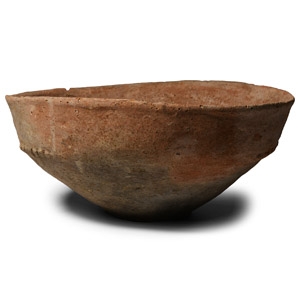
Jordanian Terracotta Dish
Early Bronze Age, 3rd millennium B.C.Sold for (Inc. bp): £117
Broad dish or bowl with carianted profile, thick rim, three radiating pelleted handles at the shoulder. 1.26 kg, 27.5 cm wide
From a family collection pre 1988. -
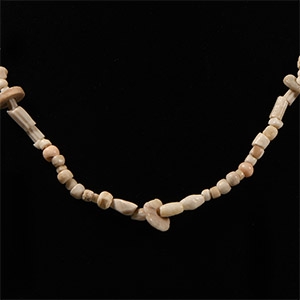
Western Asiatic Bead Necklace String
2nd-1st millennium B.C. and laterSold for (Inc. bp): £20
Restrung; composed primarily of shell and ceramic beads of various types, including decoratively ribbed examples. 23 grams, 50 cm long
UK gallery, early 2000s.
Similar beads were found during the excavations of the royal tombs of Nimrud. Thousands of beads were discovered in the sarcophagi, including those of Nimrud’s Queens; they probably originally formed part of wide collars with multiple strands. -
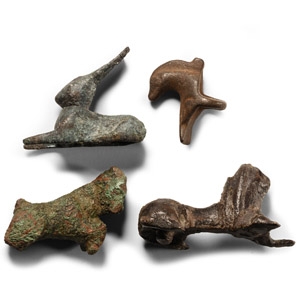
Western Asiatic Bronze Animal Collection
1st millennium B.C. and laterSold for (Inc. bp): £65
Mixed group comprising: lion, resting with forelegs spread, inset glass eyes (one absent); hare resting, with long ears; rooster(?) with head turned to the rear, annular socket; leaping horse with forelegs raised. 76 grams total, 25-45 mm
From a collection acquired on the UK art market from various auction houses and collections mostly before 2000. From an important Cambridgeshire estate; thence by descent.
