
Loading, please wait...
LOT 0098
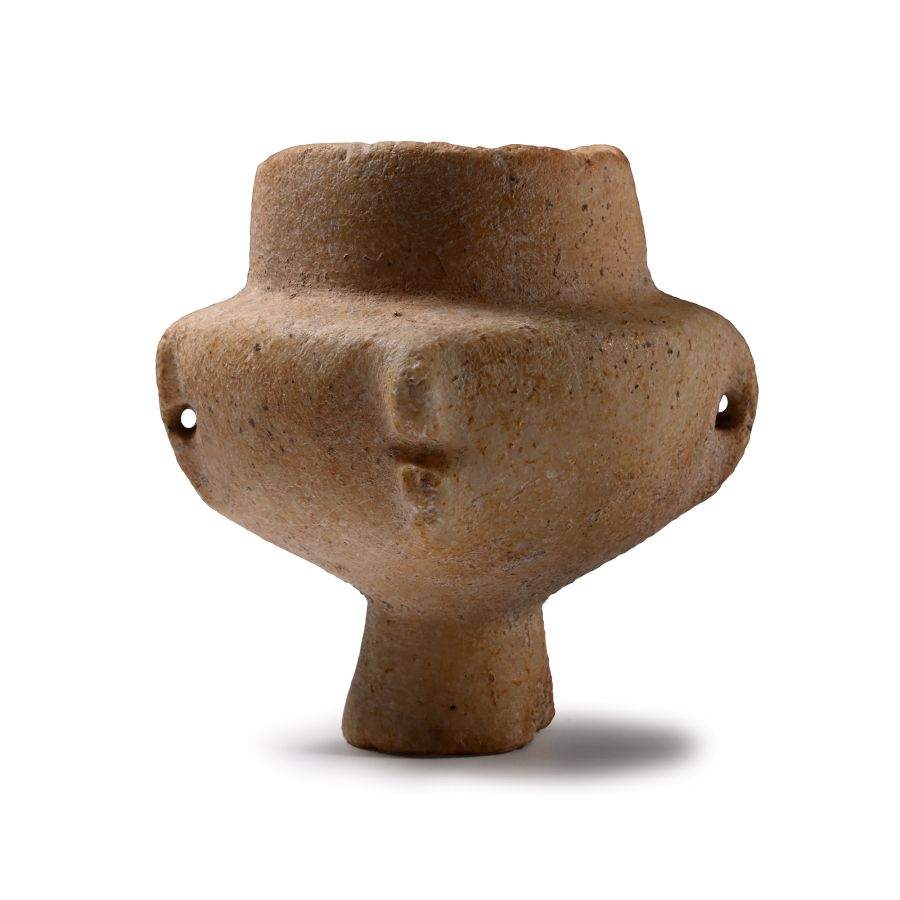
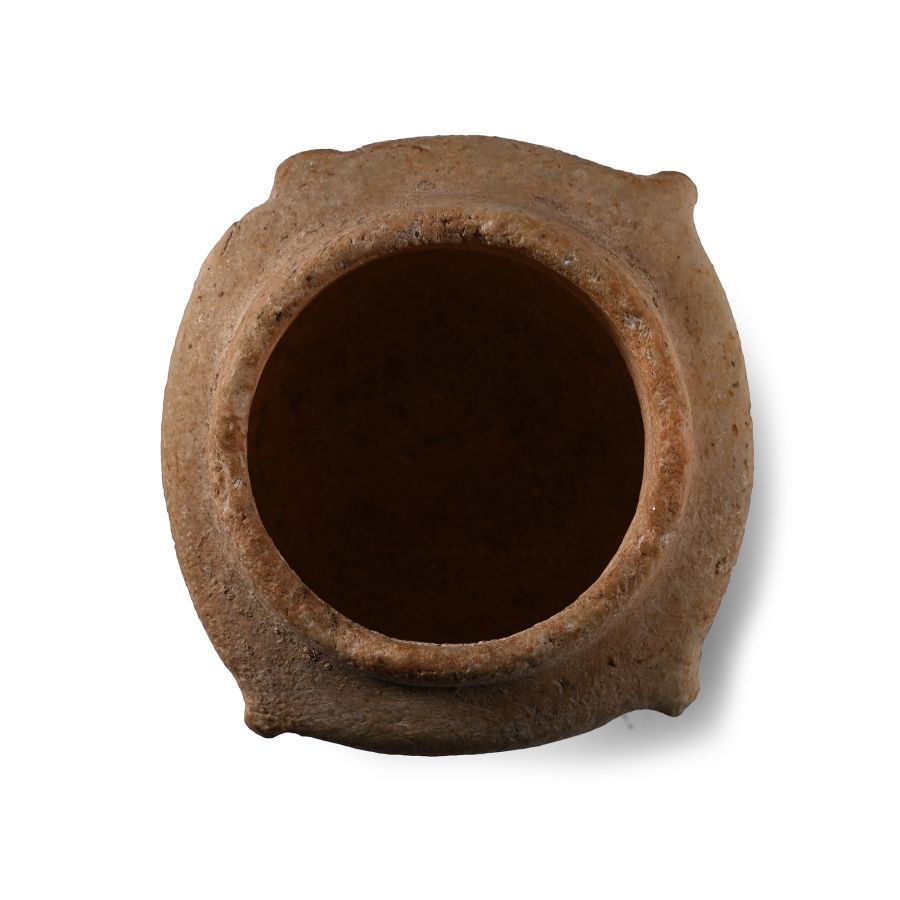
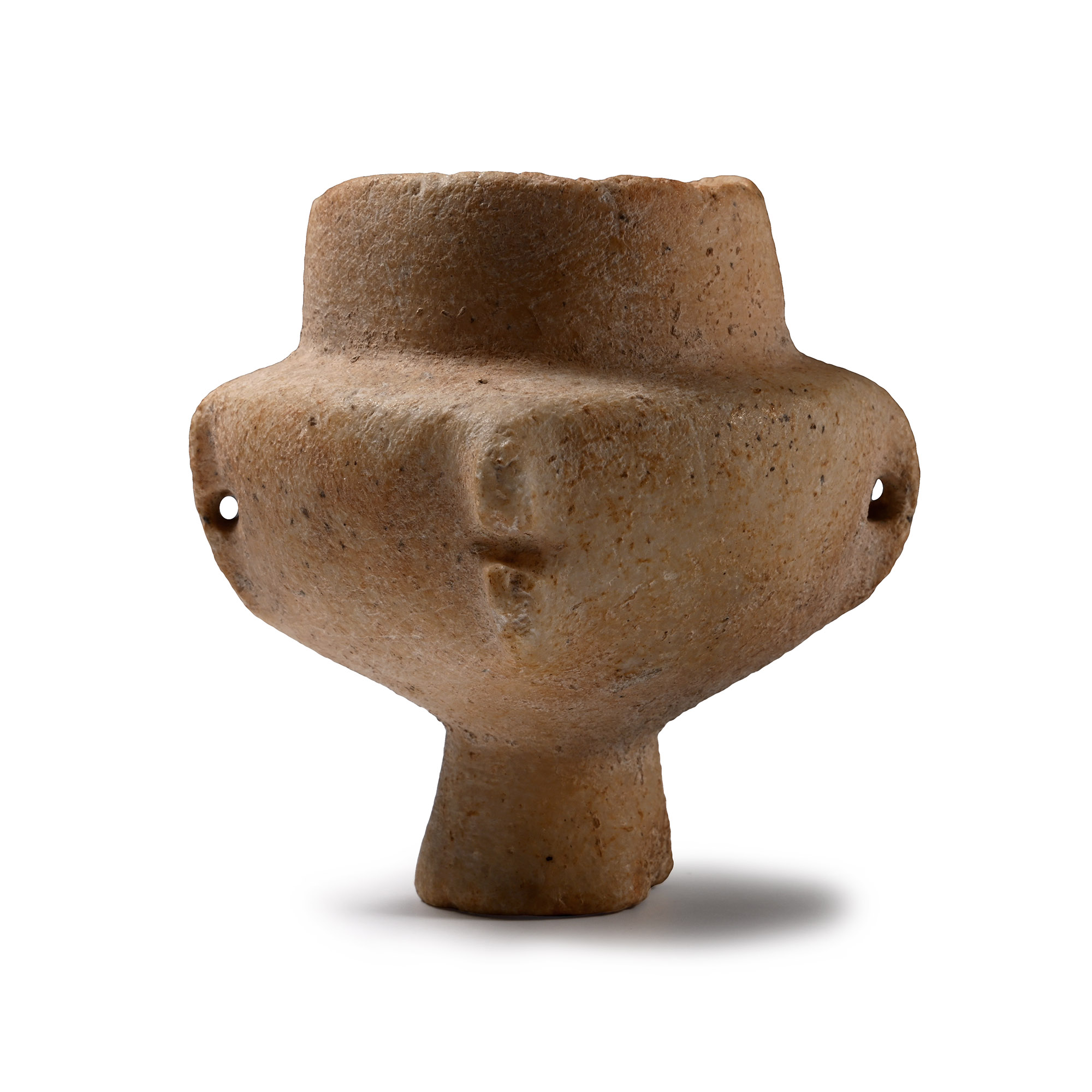
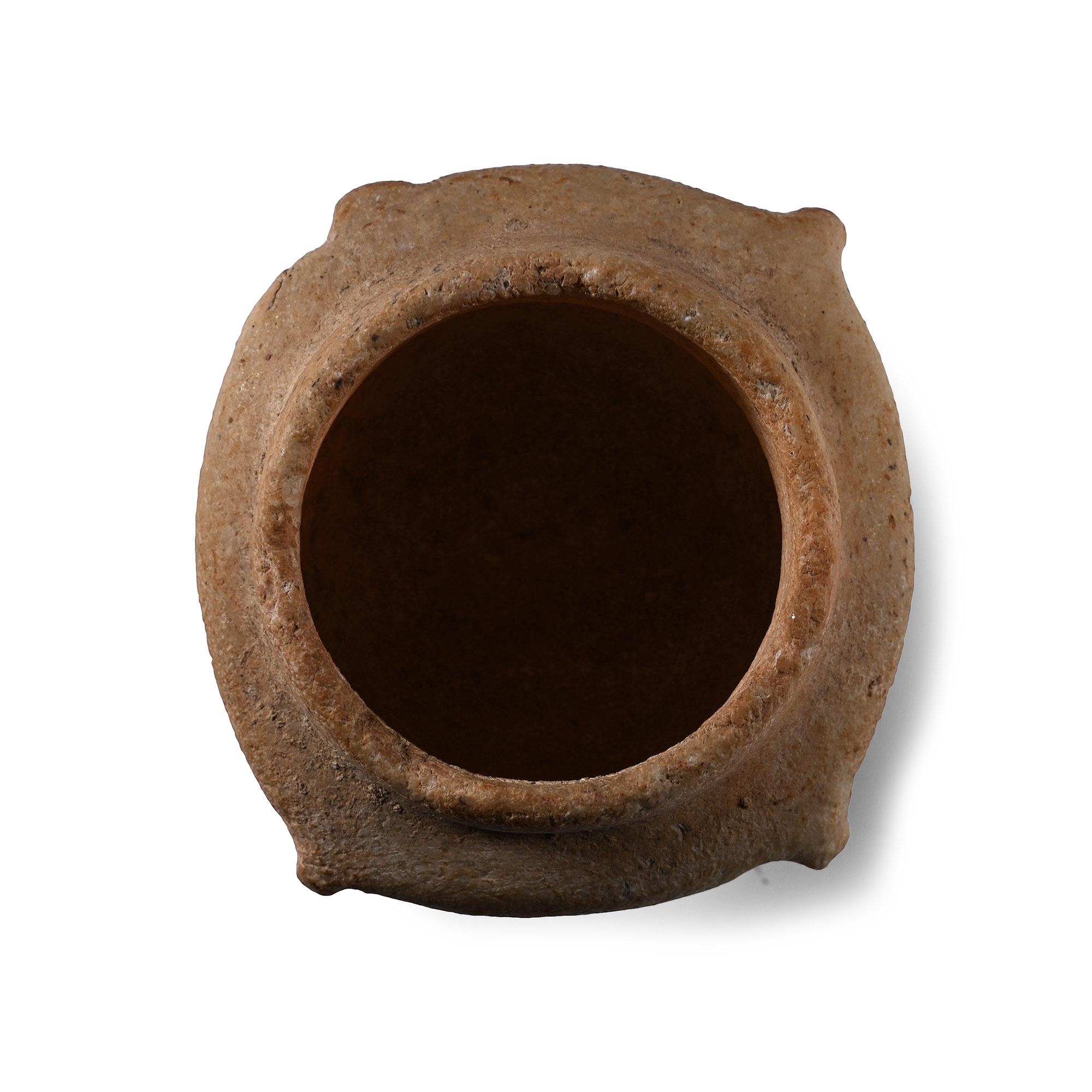
A Cycladic Marble Kandila Vase
EARLY CYCLADIC I, CIRCA 3200-2800 B.C.
3 1/2 in. (400 grams, 89 mm high).
Carved from fine marble and raised on a tall, conical pedestal foot, supporting a hemispherical body; four prominent evenly spaced elongated vertical lugs, each pierced for suspension.
Provenancewith Münzen und Medaillen, Weil am Rhein, 1975, Katalog 51, no.9.
Private German collection.
Private collection, Europe.
This lot has been checked against the Interpol Database of stolen works of art and is accompanied by a search certificate number no.12663-236275.
This lot has been cleared against the Art Loss Register database, and is accompanied by an illustrated lot declaration signed by the Head of the Antiquities Department, Dr Raffaele D'Amato.
Cf. Thimme, Art and Culture of the Cyclades in the Third Millennium B.C., Chicago, 1977, pp.310-312.
FootnotesThe overall form is both functional and elegantly balanced, characteristic of Early Cycladic craftsmanship. The Cyclades, a group of thirty-nine islands and numerous islets in the southwestern Aegean, formed a cultural ring - kyklades in ancient Greek - around the sacred island of Delos, site of the revered sanctuary of Apollo. By the fourth millennium B.C., a distinctive civilisation had emerged on these islands, flourishing for over two thousand years. The Cycladic culture thrived due to its strategic maritime location and its rich deposits of iron and copper - vital commodities during a period of rapidly developing metallurgy throughout the Mediterranean. While existing alongside the more dominant Minoan and Mycenaean civilisations, the Cycladic people are recognised as one of the three principal Aegean cultures. Vessels such as this, known as kandila, were typically crafted in marble or clay and are believed to have held liquids such as oil or wine. The pierced lugs may have supported suspension cords or secured a lid. Often found in tomb contexts alongside marble figurines, these vessels likely played a role in funerary rituals. Regardless of their original function, kandila vessels remain enduring examples of Cycladic artistry. Their minimalist design, elegant proportions, and subtle detailing reflect a culture that placed equal value on utility and aesthetic form.
CONDITIONTimeLine Auctions follows a vetting process to ensure the authenticity and legality of all items, reinforcing our commitment to integrity and responsible trading. Each antiquity, antique, and coin lot undergoes thorough examination by a vetting committee of at least ten external specialists, professional trade association members, scientists, and archaeologists: Our Vetting Process
AUCTIONS:
TimeLine is a leading auction house specialising in antiquities, ancient art, collectables, natural history, coins, medals, and books. Our auctions offer museums, collectors, historians, and enthusiasts the opportunity to acquire unique and historically significant pieces.
LOT 0098
A Cycladic Marble Kandila Vase
Estimate £6,000 - 8,000€6,960 - 9,280 (for guidance only)$8,100 - 10,800 (for guidance only)
-
Hellenistic Lapis Lazuli Lotus Bead Necklace
1st century B.C. and laterSold for (Inc. bp): £1,690
Restrung group of lapis lazuli seed beads with seven dangles, each a gold cell with three-petalled flower. 18.42 grams, 43 cm
Private collection of a London, UK, gentleman, acquired between 1965-2020. This lot is accompanied by an illustrated lot declaration signed by the Head of the Antiquities Department, Dr Raffaele D'Amato. -
Greek Attic Red-Figure Kylix with Dancing Nymphs and Satyrs
5th century B.C.Estimate: £4,000 - 6,000 (‡+bp*)
Opening Bid: £1,800
With short stem and broad bowl with carination at the shoulder; two strap handles with an ivy-leaf with tendrils and volutes underneath; the underside of the bowl with a frieze of four satyrs and four maenads performing a dance, the maenads dressed in fancy Ionian dress, long peplos and himation, and a kekrykephalos (hair net) on their heads, and holding a thyrsus in their right hands; the centre of the cup showing dancing Silenus and a nymph, dressed in a similar manner and holding a thyrsus, border of meanders and chequered squares surrounding; restored. 875 grams, 37 cm wide
Ex Dr Gonik and the late Mr Wirth, 1960-1970s. Private collection, Switzerland. Accompanied by an academic report by Dr Raffaele D’Amato. This lot has been checked against the Interpol Database of stolen works of art and is accompanied by a search certificate number no.12573-232109. This lot has been cleared against the Art Loss Register database, and is accompanied by an illustrated lot declaration signed by the Head of the Antiquities Department, Dr Raffaele D'Amato.
Silenus, the only individualised satyr, was a companion and tutor to the wine god Dionysus, and he is represented here in the place of honour. He is typically older than the satyrs of the Dionysian retinue (thiasos) and his representation on the tondo symbolises respect towards his senior position. -
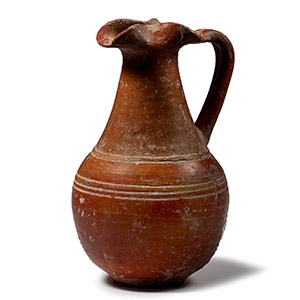
Phoenician Terracotta Jug with Handle
8th-7th century B.C.Estimate: £700 - 900 (‡+bp*)
Opening Bid: £350
Globular body decorated with circumferential banding, low foot, conical neck with pinched spout, strap handle to the rear. 395 grams, 18.5 cm
Acquired in the mid 1980s-1990s. Private collection, Switzerland, thence by descent. Private collection, since the late 1990s. This lot is accompanied by an illustrated lot declaration signed by the Head of the Antiquities Department, Dr Raffaele D'Amato.
