
Loading, please wait...
LOT 1343
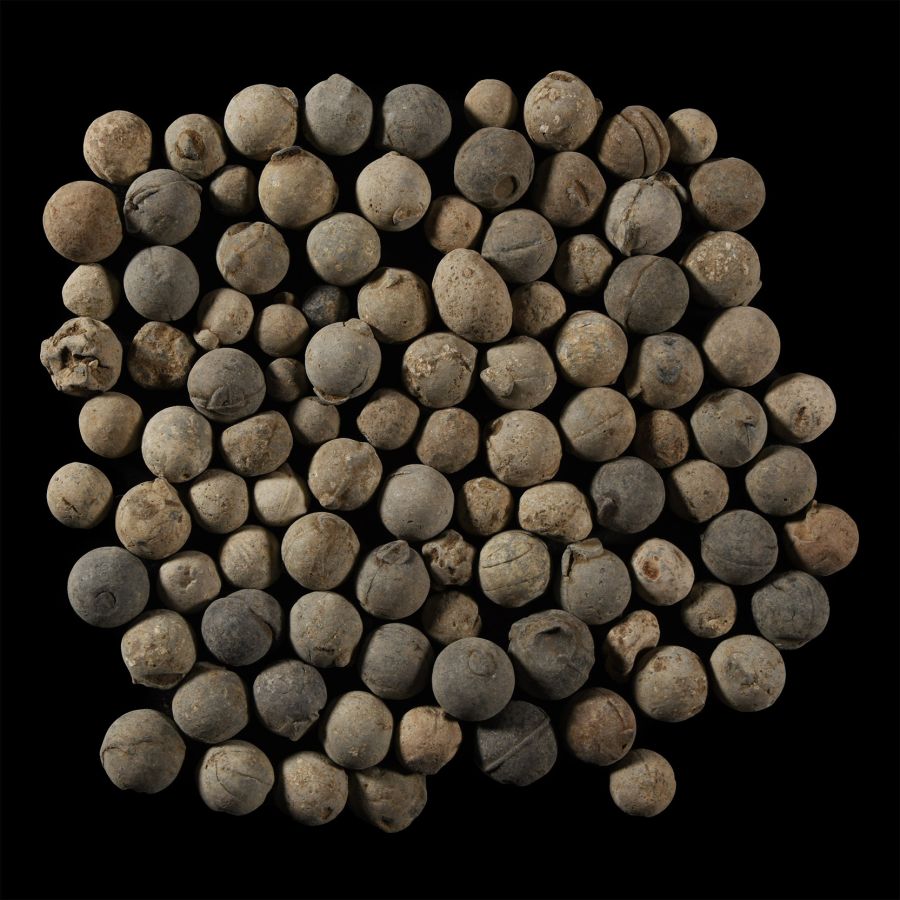
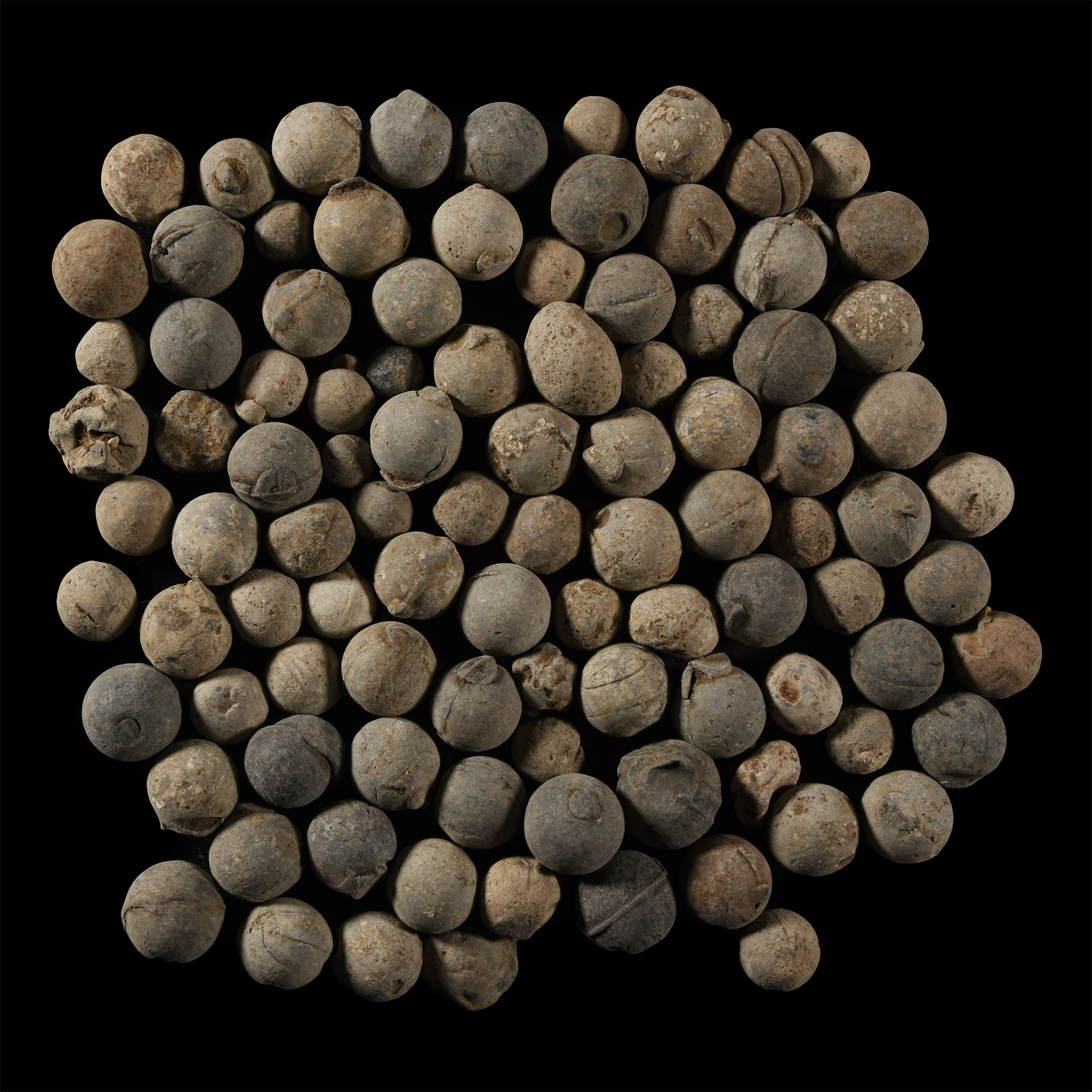
100 Civil War Period Lead Musket Balls
CIRCA 17TH-18TH CENTURY A.D.
1/4 - 3/4 in. (1.57 kg total, 9-19 mm).
Mixed group of lead-alloy musket and carbine balls,some with casting seam and sprue nipple. [100, No Reserve]
ProvenanceFound Hertfordshire, UK.
CONDITIONTimeLine Auctions follows a vetting process to ensure the authenticity and legality of all items, reinforcing our commitment to integrity and responsible trading. Each antiquity, antique, and coin lot undergoes thorough examination by a vetting committee of at least ten external specialists, professional trade association members, scientists, and archaeologists: Our Vetting Process
AUCTIONS:
TimeLine is a leading auction house specialising in antiquities, ancient art, collectables, natural history, coins, medals, and books. Our auctions offer museums, collectors, historians, and enthusiasts the opportunity to acquire unique and historically significant pieces.
-
.jpg)
Khazar Iron Sabre with Gilt Bronze Cross Guard
9th century A.D.Sold for (Inc. bp): £975
A single-edged hand-forged sabre with a gently curving blade, an iron band welded beneath the cross guard, together with a tongue along the side of the blade; the separate gilt cross guard with spherical ornamented finials to the quillons, the central panel with a stylised face flanked by a pair of leaping lions biting the top of the head, the other side with a lozenge within a ropework frame. 610 grams, 80.5 cm
Fine condition.
Acquired 1971-1972. From the collection of the vendor's father. Property of a London, UK, collector. Accompanied by an academic report by military specialist Dr Raffaele D'Amato. This lot has been checked against the Interpol Database of stolen works of art and is accompanied by search certificate no.114437-196034.
This exceptional sabre shows similarity with examples from the Caucasus and Kuban regions. The blade could be Khazar-Magyar, and certainly its best parallels are the specimens from Verchne-Szaltovo area. According to M. Gorelik, some of these sabres were produced by the Kabarians, a breakaway tribe from the Khazar State, who formed an alliance with the Magyars. The extra band welded beneath the quillons, together with the side tongue, not only protected the scabbard from being cut by the blade but, more importantly, defended the warrior’s fingers which were wrapped around the quillons when fighting. -
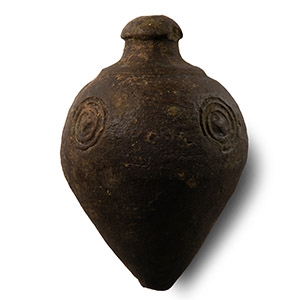
Byzantine 'Greek Fire' Ceramic Fire Bomb or Hand Grenade
10th-13th century A.D.Sold for (Inc. bp): £208
Piriform body decorated with concentric circles, with sphero-conical filler-hole, intended to be filled with explosive liquid and wick, used as a hand grenade. 472 grams, 13 cm
Acquired 1980-2015. Ex Abelita family collection. Accompanied by an academic paper by military specialist Dr Raffaele D'Amato, dated 15 July 2019 and titled 'Eastern Roman Empire - Greek Fire Bomb or Hand Grenade (μεσαίον kακάβιον) 9th-11th century AD'.
Apart from the use of siphons or manual flame-throwers called cheirosiphona, special corps of Roman soldiers employed terracotta grenades, in the form of small jars, abundantly evidenced in archaeological excavations. They were called μεσαία kακαβιά or κυτροκακάβια where the former had a bulbous shape and the latter a more cylindrical form. -
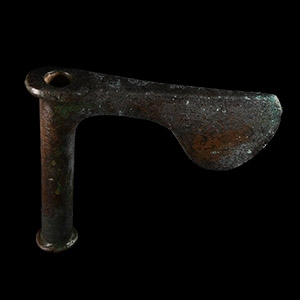
Elamite Bronze Crescentic Axehead
Mid 3rd-early 2nd millennium B.C.Estimate: £150 - 200 (+bp*)
Opening Bid: £80
With slender tubular socket, horizontal upper cheek and curved lower one, scooped profile to blade with convex cutting edge. 333 grams, 12.5 cm
Acquired 1980-2015. Ex Abelita family collection.
