
Loading, please wait...
LOT 1373
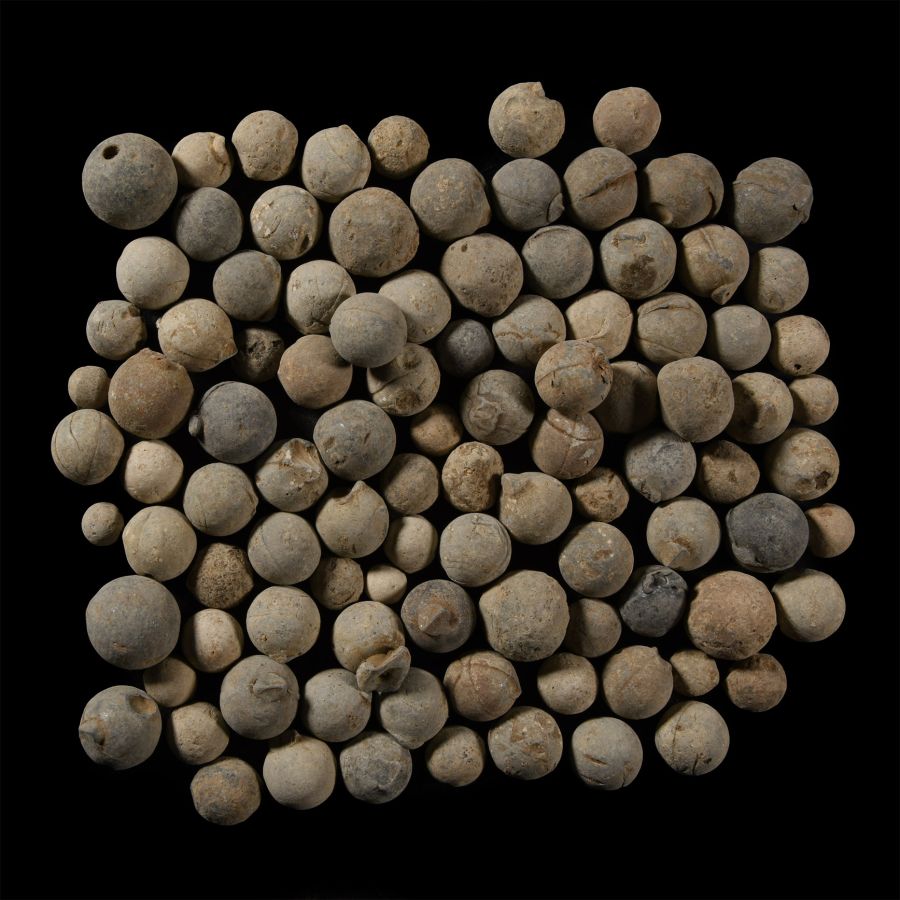
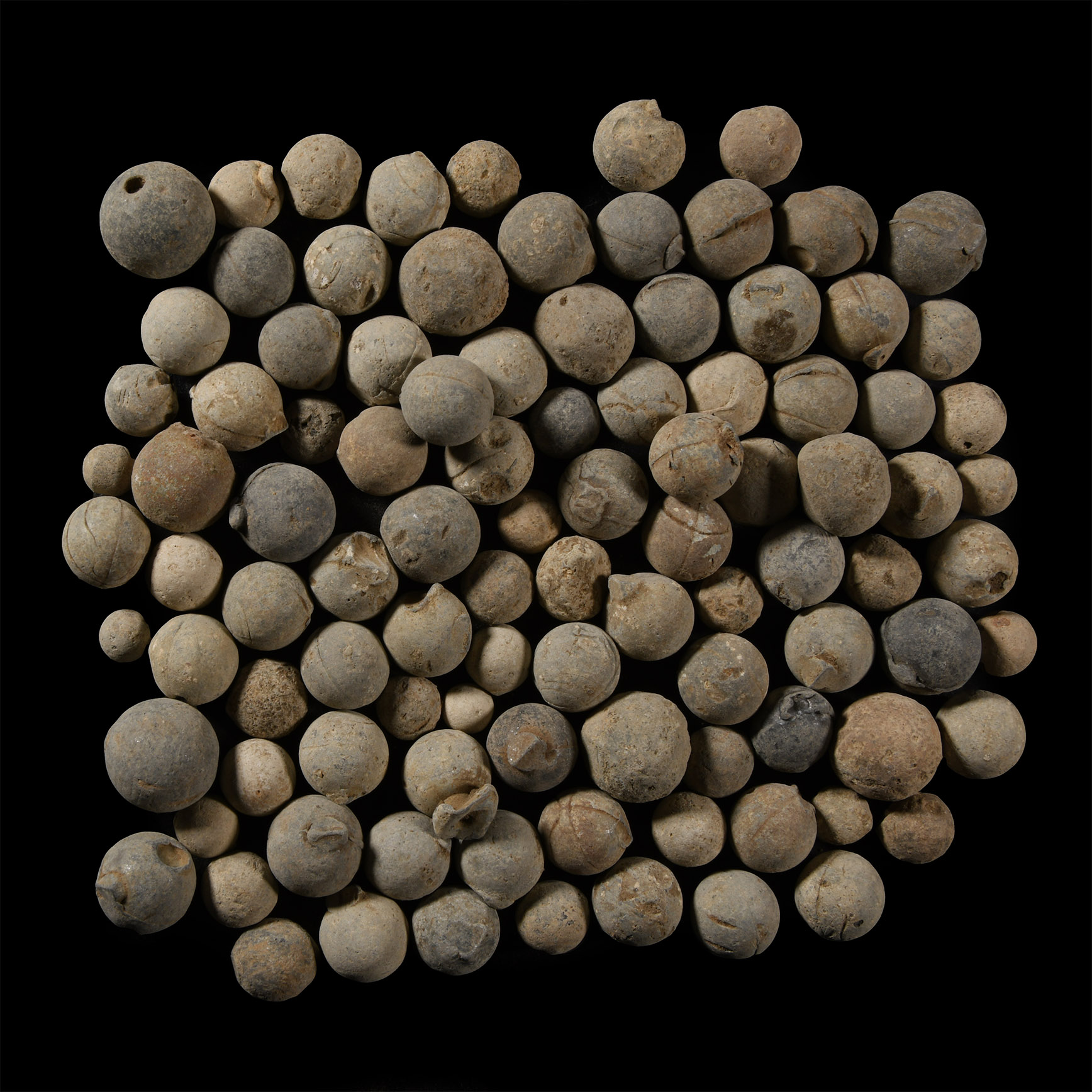
100 Civil War Period Lead Musket Balls
CIRCA 17TH-18TH CENTURY A.D.
1/4 - 3/4 in. (1.71 kg total, 9-19 mm).
Mixed group of lead-alloy musket and carbine balls, some with casting seam and sprue nipple. [100, No Reserve]
ProvenanceFound Hertfordshire, UK.
CONDITIONTimeLine Auctions follows a vetting process to ensure the authenticity and legality of all items, reinforcing our commitment to integrity and responsible trading. Each antiquity, antique, and coin lot undergoes thorough examination by a vetting committee of at least ten external specialists, professional trade association members, scientists, and archaeologists: Our Vetting Process
AUCTIONS:
TimeLine is a leading auction house specialising in antiquities, ancient art, collectables, natural history, coins, medals, and books. Our auctions offer museums, collectors, historians, and enthusiasts the opportunity to acquire unique and historically significant pieces.
-
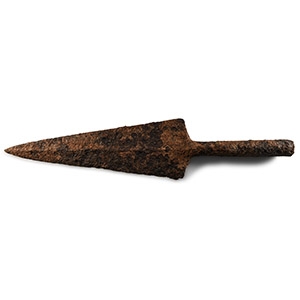
Large Roman Socketted Iron Spearhead
3rd-5th century A.D.Sold for (Inc. bp): £546
With a large triangular blade, fitted with a central shallow groove, squared shoulders and a socketted shaft. 834 grams, 46.5 cm
From a collection acquired on the UK art market from various auction houses and collections mostly before 2000. From an important Cambridgeshire estate; thence by descent.
This spear was probably part of the armament of the Imperial Guards of the late Roman Empire. Similar spears are visible on the recently found reliefs of Nicomedia, in the hands of a protector divini lateris (guard of the Divine Flanks) of the Emperor Diocletian (Agturk, 2021, p.115) and other Imperial infantrymen. The same kind of spear is visible on a recently discovered sarcophagus of a protector of Diocletian, Tziampo, from the same locality. -
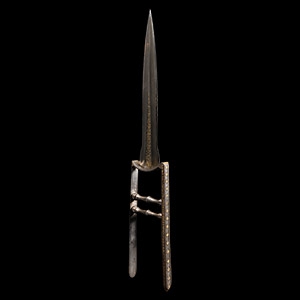
Indian Quatar Iron Dagger
18th-19th century A.D.Estimate: £1,000 - 1,400 (+bp*)
Opening Bid: £550
Comprising a broad blade tapering to an armour-piercing point, the steel side bars and balustered grips decorated with copper Koftgari work flowers and scrolls. 488 grams, 48 cm
General condition very good.
Property of a London gallery.
Unique to South Asia, the quatar or katar was a dagger that held at the crossbars with a clenched fist. The weapon was meant to be thrust into the opponent or prey from a close range. Rajput and Mughal royalty used this weapon to hunt tigers and even crocodiles to demonstrate their bravery and martial skill. -
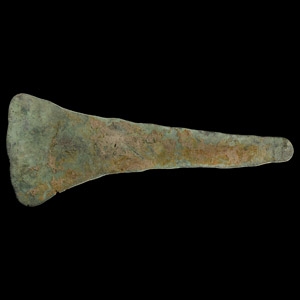
Western Asiatic Copper Flat Axe
2nd millennium B.C.Sold for (Inc. bp): £59
Flat in section with rounded butt and flared blade. 152 grams, 17.2 cm
From an old English collection formed in the 1980s. Property of an Essex gentleman; acquired on the UK art market.
