
Loading, please wait...
LOT 1441
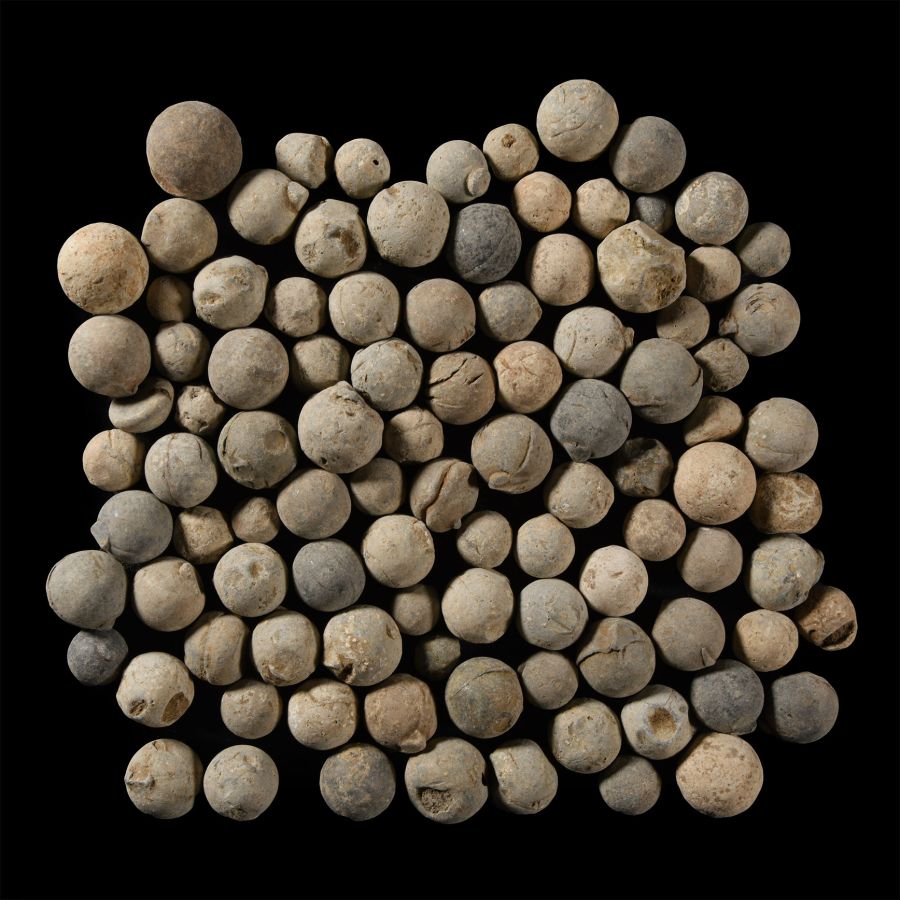
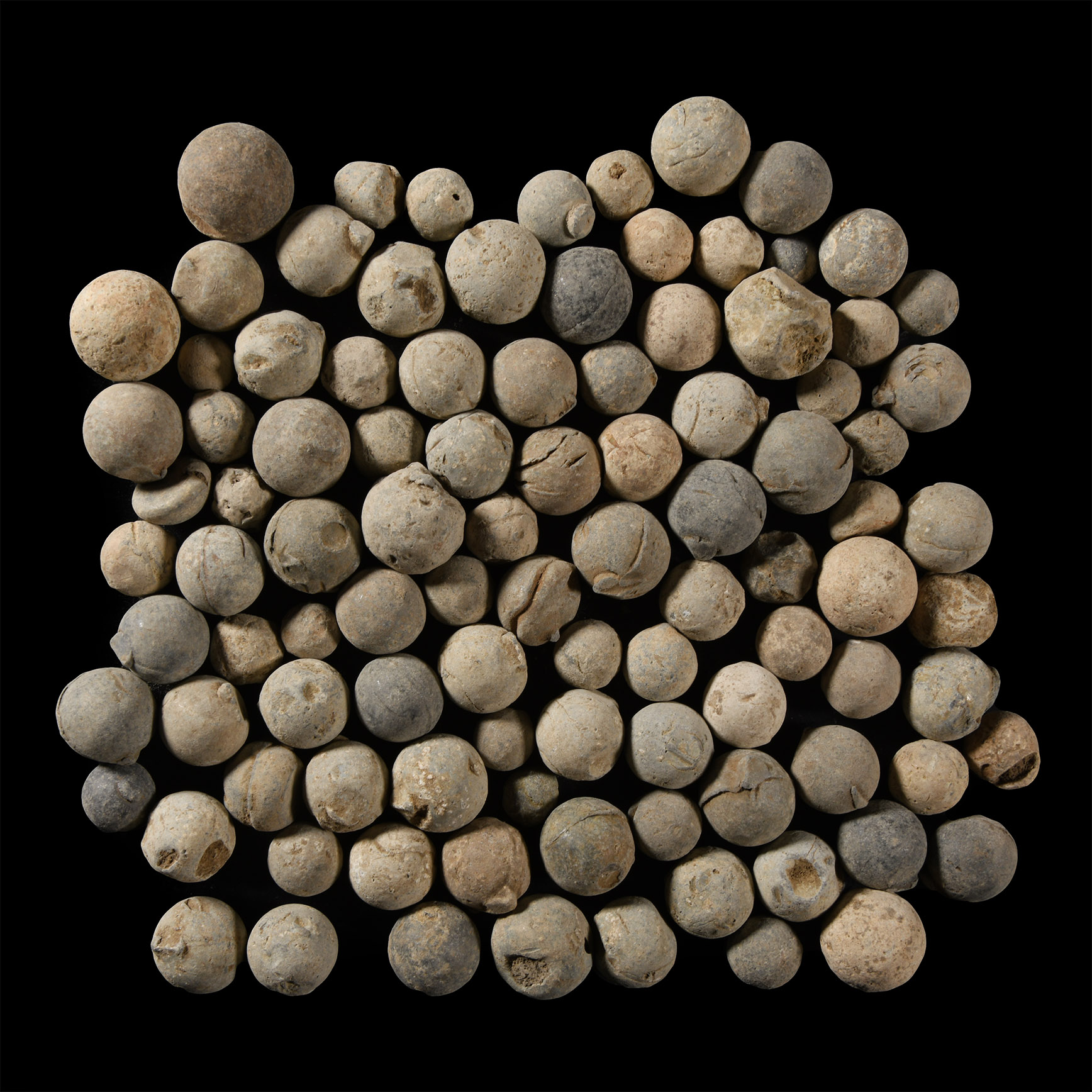
100 Civil War Period Lead Musket Balls
CIRCA 17TH-18TH CENTURY A.D.
1/4 - 3/4 in. (1.64 kg total, 9-19 mm).
Mixed group of lead-alloy pistol, musket and carbine balls, some with casting seam and sprue nipple. [100, No Reserve]
ProvenanceFound Hertfordshire, UK.
CONDITIONTimeLine Auctions follows a vetting process to ensure the authenticity and legality of all items, reinforcing our commitment to integrity and responsible trading. Each antiquity, antique, and coin lot undergoes thorough examination by a vetting committee of at least ten external specialists, professional trade association members, scientists, and archaeologists: Our Vetting Process
AUCTIONS:
TimeLine is a leading auction house specialising in antiquities, ancient art, collectables, natural history, coins, medals, and books. Our auctions offer museums, collectors, historians, and enthusiasts the opportunity to acquire unique and historically significant pieces.
-
Large Romano-British Bronze Military Boss
1st century A.D.Sold for (Inc. bp): £111
Substantial cast cupola with dimple to the apex, reverse with two ferrous attachment spikes; possibly from a field artillery piece. 174 grams total, 74 mm wide
Reputed to have been excavated near Viables in Hampshire at the end of the 19th century. From the estate of the late Jennifer Simmonds. Acquired from Jacobs & Hunt auctioneers, Petersfield, Hampshire, UK. -
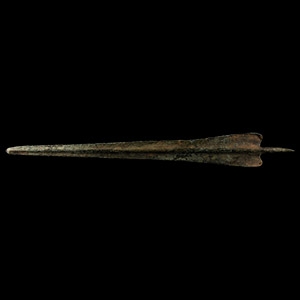
Large Western Asiatic Bronze Rapier Blade
2nd-1st millennium B.C.Sold for (Inc. bp): £234
Composed of a tanged and barbed blade with raised midrib to both faces. 327 grams, 43.5 cm
Acquired 1980-2015. Ex Abelita family collection.
In the last ninety years, many such tanged blades have been considered to be coming from centres of production in Amlash and Marlik. Without context accurate dating is impossible, but the shape recalls the rapiers of the Bronze or Early Iron Age. -
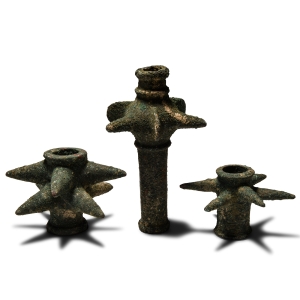
Western Asiatic Spiked Bronze Macehead Group
2nd-1st millennium B.C.Estimate: £3,000 - 4,000 (‡+bp*)
Opening Bid: £1,500
Comprising: one with two unaligned rows, each with four horizontal spikes, topped by a tooth helping to secure the mace to a wooden shaft; the second with a long socket and a row of six spikes, three pointed and three rounded, double tipped edge for securing the shaft; the third with six horizontal spikes; all with solid heads and hollow tubular sockets; of North-West Iranian typology. 1.35 kg total, 10-15 cm
Acquired from Artemis Gallery, Munich in 1995. European private collection. Accompanied by an academic report by Dr Raffaele D’Amato. This lot has been checked against the Interpol Database of stolen works of art and is accompanied by search certificate number no.11997-211853.
A variety of similar bronze mace heads have been recovered in Hasanlu and Marlik, mainly of spiked variety. Excavations at 8th-7th century B.C. War Kabud and Chamzhi-Mumah in Luristan have produced related types, with smaller spikes or knobs and with an elongated socket, like one of our examples. These spiked maces are a specifically Iranian type. In general, they were used from the 9th century B.C. although some scholars support the thesis of their use in the late 2nd-early 1st millennium based on finds from Marlik.
