
Loading, please wait...
LOT 1422
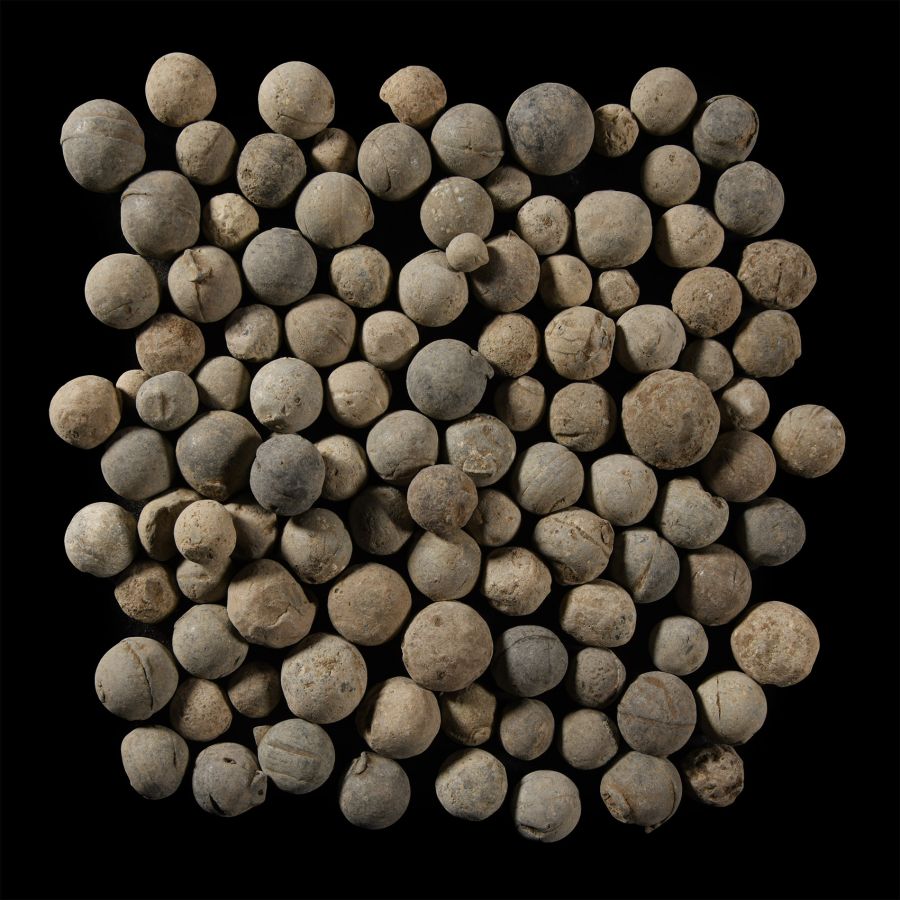
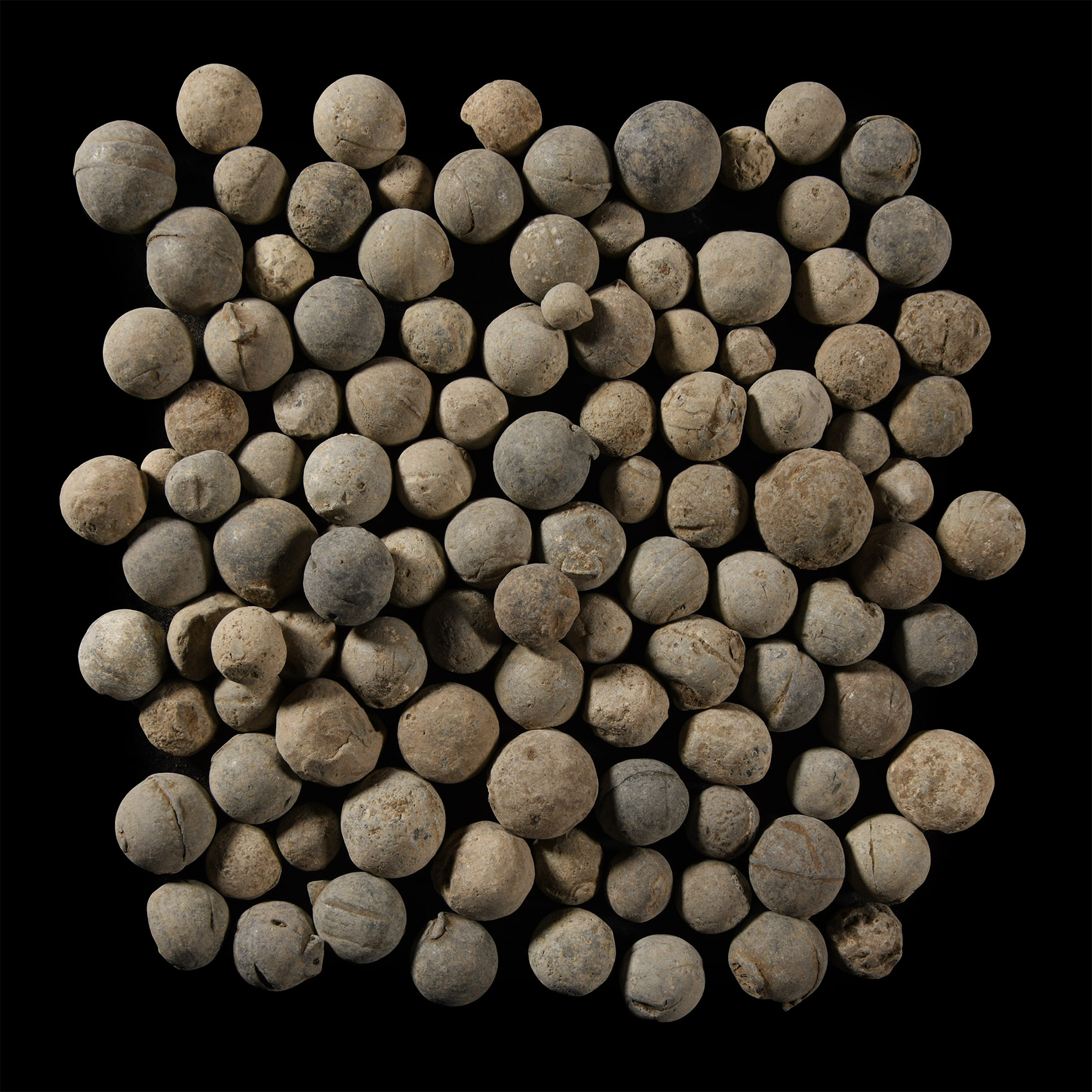
100 Civil War Period Lead Musket Balls
CIRCA 17TH-18TH CENTURY A.D.
1/4 - 3/4 in. (1.74 kg total, 9-19 mm).
Mixed group of lead-alloy musket and carbine balls, some with casting seam and sprue nipple. [100, No Reserve]
ProvenanceFound Hertfordshire, UK.
CONDITIONTimeLine Auctions follows a vetting process to ensure the authenticity and legality of all items, reinforcing our commitment to integrity and responsible trading. Each antiquity, antique, and coin lot undergoes thorough examination by a vetting committee of at least ten external specialists, professional trade association members, scientists, and archaeologists: Our Vetting Process
AUCTIONS:
TimeLine is a leading auction house specialising in antiquities, ancient art, collectables, natural history, coins, medals, and books. Our auctions offer museums, collectors, historians, and enthusiasts the opportunity to acquire unique and historically significant pieces.
-
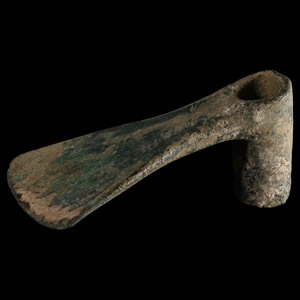
Luristan Bronze Socketted Adze
13th-7th century B.C.Sold for (Inc. bp): £117
With short tubular socket and flared cutting edge perpendicular to the socket. 590 grams, 14.5 cm
From an old English collection formed in the 1980s. Property of an Essex gentleman; acquired on the UK art market. -
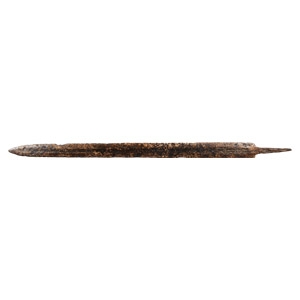
Roman Pattern-Welded Iron Sword
3rd-4th century A.D.Estimate: £2,000 - 3,000 (+bp*)
Opening Bid: £1,000
A Spatha with double-edged blade of Osterburken-Kemathen Type, fullers with damask pattern (rosette damask technique B.II.I.2), sturdy tang with remains of wood; the blade cleaned and conserved on one side. 659 grams, 85.5 cm
Excellent preserved blade
From the private collection of a London gentleman, from his grandfather's collection formed before the early 1970s. Accompanied by an academic report by Dr Raffaele D’Amato. This lot has been checked against the Interpol Database of stolen works of art and is accompanied by search certificate number no. 11923-209660. -
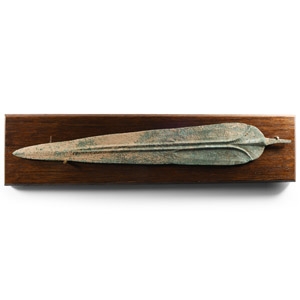
North West Persian Short Sword with Blood Channels
2nd-1st millennium B.C.Estimate: £250 - 350 (+bp*)
Opening Bid: £125
With short tang for an organic hilt, the blade showing multiple grooves forming a pronounced mid-rib spanning roughly more than three-quarters of the blade; accompanied by a custom-made display stand. 1.18 kg total, 45.5 cm (49 cm including stand)
Ex P.A., Hertfordshire, UK, specialist collection of Greek art, 1980-1990s.
Luristan was hardly an ethnic or political entity, but the people of Luri had relations through warfare and traded with Sumerians, Lullubi, Assyrians, Babylonians and Elamites over a long period of time, spanning from the 3rd to the 2nd millennium B.C. The ruling elites of warrior horsemen were buried with their weapons and horses.
